


 matt@aihealthician.co.uk


TL;DR:
- Data-driven health uses continuous measurements and advanced analytics for personalized recommendations.
- AI enhances diagnostics, medication dosing, and disease risk prediction by recognizing subtle patterns.
- Combining data with clinical judgment and self-awareness optimizes health outcomes and resilience.
Generic health advice is everywhere, and most of it is useless for you specifically. Your metabolism, genetics, and lifestyle create a biological fingerprint that no broad population guideline can fully address. Data-driven health changes that by collecting precise measurements, running them through advanced analytics, and returning recommendations built around your actual physiology. The examples in this article span AI-powered diagnostics, precision nutrition, predictive disease risk, and post-hospital recovery. Each one illustrates how moving from intuition to evidence transforms not just individual outcomes but the entire logic of how we approach long-term performance and resilience.
Table of Contents
- What makes a health strategy data-driven?
- Personalised dosing and diagnostics using AI
- AI-powered metabolic health and precision nutrition
- Reducing disease risk with predictive analytics
- Causal machine learning for improving care transitions
- Why data-driven does not mean one-size-fits-all
- How to put data-driven health into action
- Frequently asked questions
Key Takeaways
| Point | Details |
|---|---|
| True data-driven health is personal | The best outcomes come from tailoring interventions using your data and needs. |
| AI enables rapid, safer decisions | Machine learning enhances diagnostics and personalises medication safely and quickly. |
| Predictive analytics reduce risk | Analysing big data can identify at-risk patients and prevent complications before they arise. |
| Combine data with expert support | Data insights are most effective when interpreted with clinical advice and self-awareness. |
What makes a health strategy data-driven?
Not every strategy that involves a number qualifies as data-driven. True data-driven health integrates continuous data collection with advanced analytics to produce recommendations that shift as your biology shifts. The role of data in diagnostics confirms that data-driven models enhance diagnostic accuracy and enable personalised patient care, which is a fundamentally different standard than reviewing annual bloodwork and adjusting a generic protocol.
Four criteria separate genuine data-driven interventions from wellness trends wearing a technical costume:
- Actionable insights: The output must tell you what to do, not just what is happening.
- Personalisation: Recommendations must be built on your data, not population averages.
- Measurable outcomes: You need feedback loops that confirm whether the intervention is working.
- Adaptability: The strategy must update when your data changes, not remain static.
The practical process looks like this: wearables, blood biomarkers, and clinical records feed into machine learning or AI in health models, which identify patterns invisible to the human eye. Personalised care with AI uses deep learning and reinforcement learning to enable diagnostic and prescription improvements that would be impossible through manual analysis alone.
The contrast with intuition-led decision making is stark. A clinician relying on experience might notice a trend across dozens of patients. A machine learning model trained on millions of cases identifies subtle risk signals weeks or months earlier, then adjusts its outputs as new data arrives.
Pro Tip: When evaluating any health intervention, ask whether it provides a measurable feedback loop. If you cannot track change over time, you cannot optimise.
Personalised dosing and diagnostics using AI
With our criteria established, AI-powered personalisation in medicine offers some of the most compelling real-world evidence available. AI-driven health outcomes show that AI-driven models enable personalised antiarrhythmic drug dosing and faster patient management, reducing the trial-and-error that historically made medication optimisation slow and risky.
The core capability here is pattern recognition at scale. AI models ingest a patient’s genomic data, organ function markers, real-time vitals, and medication history simultaneously. They then calculate dosing ranges that maximise therapeutic effect while minimising the risk of adverse reactions. This is not a marginal improvement. Diagnostic personalisation advances show up to a 30% increase in diagnostic accuracy when AI tools are applied to image analysis and risk scoring.
The proven benefits include:
- Enhanced medication safety through individualised dose calculations
- Faster diagnosis via automated image pattern matching and anomaly detection
- Fewer adverse effects because dosing is anchored to real biological data rather than bodyweight estimates
- Scalable personalisation that applies equally to rare conditions and common chronic diseases
‘AI has revolutionised the clinical workflow, making care safer and more targeted.’
Consider a concrete scenario: a patient with atrial fibrillation requires antiarrhythmic therapy. Traditionally, a clinician would start at a standard dose and monitor for side effects. With precision health outcomes informed by AI modelling, the system identifies this patient’s specific metabolic profile and recommends a lower starting dose with a faster titration schedule, reducing hospitalisation risk from the outset. The difference is not theoretical. It is measurable and repeatable.
AI-powered metabolic health and precision nutrition
Data-driven health is not confined to clinical settings. Continuous glucose monitoring (CGM) combined with machine learning is reshaping how individuals understand and respond to food. Metabolic subphenotype research shows that CGM combined with ML identifies subphenotypes and predicts insulin response, enabling targeted nutrition that would be impossible through standard dietary advice.
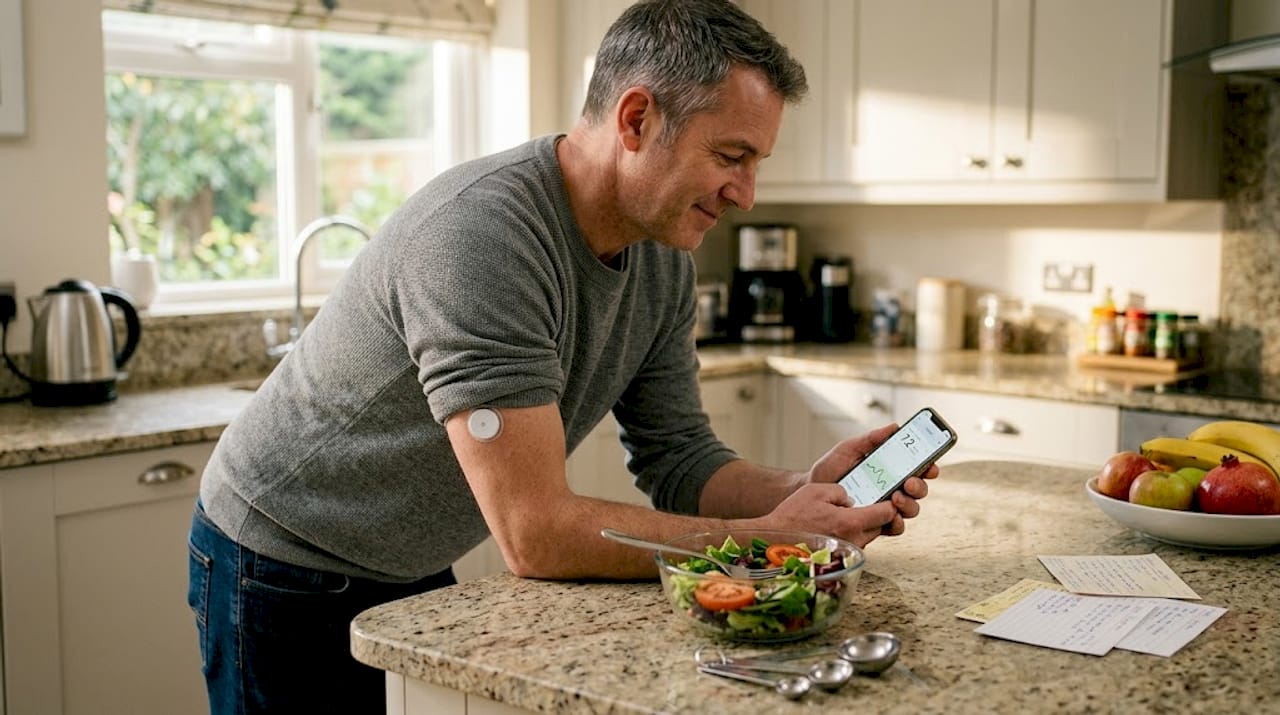
The critical insight here is individual variability. Two people eating identical meals can produce dramatically different glucose responses. One person’s blood sugar spikes sharply after white rice, while another’s remains stable. ML models trained on CGM streams identify these divergences and assign individuals to metabolic subphenotypes, each with a distinct nutritional prescription.
Practical use cases enabled by this approach include:
- Matching diet composition to phenotype rather than macronutrient ratios alone
- Adjusting meal timing to align with individual circadian metabolic rhythms
- Personalising exercise intensity and timing to optimise glucose clearance
- Identifying hidden triggers such as stress or sleep deprivation on glucose regulation
| Metabolic subphenotype | Key characteristic | Recommended intervention |
|---|---|---|
| Carbohydrate sensitive | Sharp glucose spikes post-meal | Reduce refined carbs, increase fibre |
| Fasting hyperglycaemic | Elevated morning glucose | Adjusted eating window, earlier dinner |
| Insulin resistant | Slow glucose clearance | Resistance training, lower glycaemic load |
| Metabolically flexible | Stable responses across food types | Maintain diversity, monitor periodically |
For a full breakdown of how biological data analysis translates raw CGM readings into actionable protocols, the principles align closely with what the metabolic health improvement guide outlines for structuring interventions around measured responses.
Pro Tip: Pair your CGM data with an activity tracker. Glucose responses change significantly with exercise timing, so combined data gives you a far richer picture than either source alone.
Reducing disease risk with predictive analytics
Nutrition is one frontier. Predictive analytics extends data-driven health into proactive, population-scale risk reduction. By linking electronic health records (EHR) with insurance claims data, researchers and clinicians can identify risk patterns long before a condition becomes acute.
A landmark example involves diabetes medication safety. SGLT-2 inhibitor outcomes show that EHR-claims linkage and real-world evidence models accurately estimated reduced pancreatitis risk with SGLT-2i vs DPP-4i, providing clinicians with a data-backed basis for treatment selection rather than relying on general prescribing guidelines.
| Medication class | Acute pancreatitis risk | Data source |
|---|---|---|
| SGLT-2 inhibitors | Lower observed risk | FDA Sentinel real-world evidence |
| DPP-4 inhibitors | Higher observed risk | EHR-claims linked cohort |
The process by which predictive analytics inform treatment choices follows a clear sequence:
- Real-world data from EHR and claims records is aggregated and cleaned.
- Statistical models identify associations between treatment choices and clinical outcomes.
- Risk scores are generated at the individual patient level.
- Clinicians use these scores to guide therapy selection and monitoring intensity.
- Outcomes data feeds back into the model, improving future predictions.
This applies far beyond diabetes care. Chronic disease management, oncology therapy selection, and even public health resource allocation all benefit from continuous health monitoring approaches that anticipate problems rather than simply responding to them. The result is fewer avoidable adverse events and significantly smarter allocation of clinical resources.
Causal machine learning for improving care transitions
Proactive risk management matters most when someone is most vulnerable, typically in the days immediately following hospital discharge. Causal machine learning now guides these critical transitions with a precision that generic discharge protocols simply cannot match.
Causal ML in care transitions demonstrates that a Predicted Benefit Intervention (PBI) score reduced observed 30-day readmissions when used to expand at-risk patient support. This is a meaningful clinical outcome. Readmissions are costly, distressing, and often preventable with the right post-discharge support.
The key features of this approach include:
- Individual risk scoring at the point of discharge using clinical and demographic data
- Tailored intervention intensity based on predicted benefit rather than blanket enrolment
- Continuous outcome feedback that refines the model’s accuracy over successive patient cohorts
- Resource efficiency by concentrating support where it will achieve the greatest reduction in risk
Consider the scenario: a patient recovering from heart failure is discharged after five days. Without causal ML, they receive a standard discharge pack and a follow-up appointment in four weeks. With a PBI score flagging them as high-risk, they receive daily remote monitoring, a pharmacist review within 48 hours, and a nurse-led check-in at day seven. Their personalised protocols for recovery are built around their specific risk profile, not a generic pathway.
Pro Tip: If you or a family member is discharged from hospital, ask whether a risk stratification tool was used to determine follow-up intensity. It is a reasonable and increasingly standard expectation.
Why data-driven does not mean one-size-fits-all
The examples above are genuinely impressive. But it is worth being direct about what data cannot do alone. Algorithms are only as good as the data they are trained on and the context in which they are applied. A model built on hospital populations may not translate cleanly to high-performing individuals optimising for longevity rather than disease recovery.
Over-reliance on numbers is a real risk. People sometimes chase biomarker targets at the expense of how they actually feel, sleep, or function. Numbers are signals, not destinations. The best outcomes consistently come from combining targeted health strategies with professional clinical judgement and genuine self-awareness.
‘No machine learning model knows you like you do. Your lived experience is irreplaceable.’
Data should prompt questions, not replace them. When your CGM shows an unexpected glucose spike, the right response is curiosity, not panic. When an AI model flags a risk, it opens a conversation with a clinician, not closes one. Use data as a tool for sharper self-knowledge, not as a substitute for it.
How to put data-driven health into action
If these examples have shifted how you think about your own health, the next step is straightforward: get the data that makes personalisation possible.
At AI Healthician, we translate biological data into precise, actionable protocols. Whether you are starting with a metabolic test with 3D body scan to understand your resting and active energy systems, or exploring DNA health testing to uncover genetic predispositions that shape your responses to nutrition and training, our approach is built on measurement first. Generic advice cannot optimise a unique physiology. Your data can. Real change starts with understanding what your biology is actually doing, and then building a strategy that responds to it directly.
Frequently asked questions
What is an example of data-driven health in everyday life?
Using a wearable device to track activity, sleep, and glucose, then adjusting meals or exercise based on that feedback is a practical example. CGM and machine learning enable personal nutrition and activity recommendations grounded in your individual metabolic responses.
How does artificial intelligence improve health outcomes?
AI analyses patient data to customise treatments and significantly increases diagnostic accuracy and speed in both hospital and home settings. AI-driven models enhance dosing individualisation and diagnostic speed beyond what manual review can achieve.
Are data-driven approaches safe for everyone?
Data-driven interventions are highly effective but work best when combined with expert guidance and regular review. Predicted Benefit Intervention scores guided effective readmission prevention, but outcomes were measurable rather than universal across all patient groups.
Can predictive models actually prevent diseases?
Predictive analytics can identify risks early and guide safer medication or lifestyle choices before a condition becomes acute. EHR-claims models guided safer diabetes medication selection by quantifying pancreatitis risk at the individual level.


