


 matt@aihealthician.co.uk


Making sense of endless health data can feel daunting for even the most dedicated professionals and athletes. As demands rise to reach peak performance and extend longevity, the need for truly personalised strategies becomes clear. By turning raw physiological information into actionable wellness insights using powerful technology and methodical analysis, data-driven wellness takes health management beyond outdated, blanket advice. This approach promises a more nuanced, effective path for anyone committed to excelling in their unique body.
Table of Contents
- Definition And Principles Of Data-Driven Wellness
- Types Of Data And Key Measurement Methods
- How Ai And Technology Enable Personalisation
- Real-World Applications For Health And Performance
- Risks, Privacy Issues, And Common Pitfalls
- Comparisons With Traditional Wellness Approaches
Key Takeaways
| Point | Details |
|---|---|
| Data-Driven Wellness Transformation | This approach shifts healthcare from reactive to proactive, personalised strategies based on individual health data. |
| Comprehensive Data Collection | Multi-dimensional insights are essential, combining physiological, behavioural, and psychological data for better health outcomes. |
| AI and Technology Integration | Advanced technologies, including AI and machine learning, enable precise interventions tailored to individual health profiles. |
| Ethical Data Management | Robust privacy protections and transparent data practices are critical in the responsible use of health data. |
Definition and principles of data-driven wellness
Data-driven wellness represents a transformative approach to personalised health optimisation, leveraging advanced analytical techniques to generate precise, actionable insights about individual physiological functioning. This methodology moves far beyond traditional healthcare models by integrating sophisticated data collection, nuanced analysis, and targeted intervention strategies.
At its core, data-driven wellness encompasses systematic population health management which critically evaluates multiple dimensions of human health through technological and scientific lenses. The fundamental principles include:
- Comprehensive data collection across multiple physiological parameters
- Rigorous algorithmic analysis with transparent methodological frameworks
- Personalised intervention strategies based on individual biological signatures
- Continuous monitoring and adaptive health recommendations
- Ethical data management with robust privacy protections
The scientific approach emphasises not merely collecting information, but transforming raw data into meaningful, actionable wellness protocols. By integrating insights from technology, healthcare, social sciences, and advanced statistical modelling, data infrastructure approaches enable unprecedented precision in understanding human health dynamics.
Data-driven wellness represents a paradigm shift from reactive treatment to proactive, personalised health optimisation.
Unlike traditional medical models that often rely on generalised population statistics, this approach recognises the profound biological individuality of each person. It acknowledges that wellness is not a uniform concept but a complex, multifaceted experience uniquely expressed through an individual’s genetic, metabolic, environmental, and lifestyle interactions.
Pro tip: When exploring data-driven wellness strategies, prioritise comprehensive testing that provides granular insights across multiple physiological systems rather than isolated, single-metric assessments.
Types of data and key measurement methods
Data-driven wellness relies on a sophisticated framework of measurement techniques that capture comprehensive insights into human health and performance. Well-being measurement approaches encompass both objective and subjective data streams, creating a multidimensional understanding of individual wellness potential.
The primary data types in wellness tracking can be categorised into several critical domains:
-
Physiological Metrics
- Blood pressure readings
- Cholesterol levels
- Glucose measurements
- Body composition analysis
-
Behavioural Data
- Physical activity patterns
- Sleep quality and duration
- Nutritional intake
- Stress response indicators
-
Psychological Indicators
- Mood tracking
- Cognitive performance
- Emotional resilience markers
- Perceived life satisfaction
Measurement methodologies have evolved dramatically, transitioning from traditional survey-based approaches to advanced digital monitoring techniques. Modern wellness tracking integrates multiple data collection strategies, including wearable technology, smartphone applications, continuous physiological monitoring, and sophisticated algorithmic analysis.
Digital health technologies enable unprecedented granularity in understanding individual wellness trajectories.
Analytical approaches in data-driven wellness can be stratified into three primary analytical frameworks:
- Descriptive Analytics: Summarising historical health trends
- Predictive Analytics: Forecasting potential health outcomes
- Prescriptive Analytics: Generating personalised intervention recommendations
Technological Integration plays a crucial role in transforming raw data into meaningful wellness insights. By combining advanced sensor technologies, machine learning algorithms, and comprehensive data processing frameworks, researchers can generate nuanced, individualised health understanding.
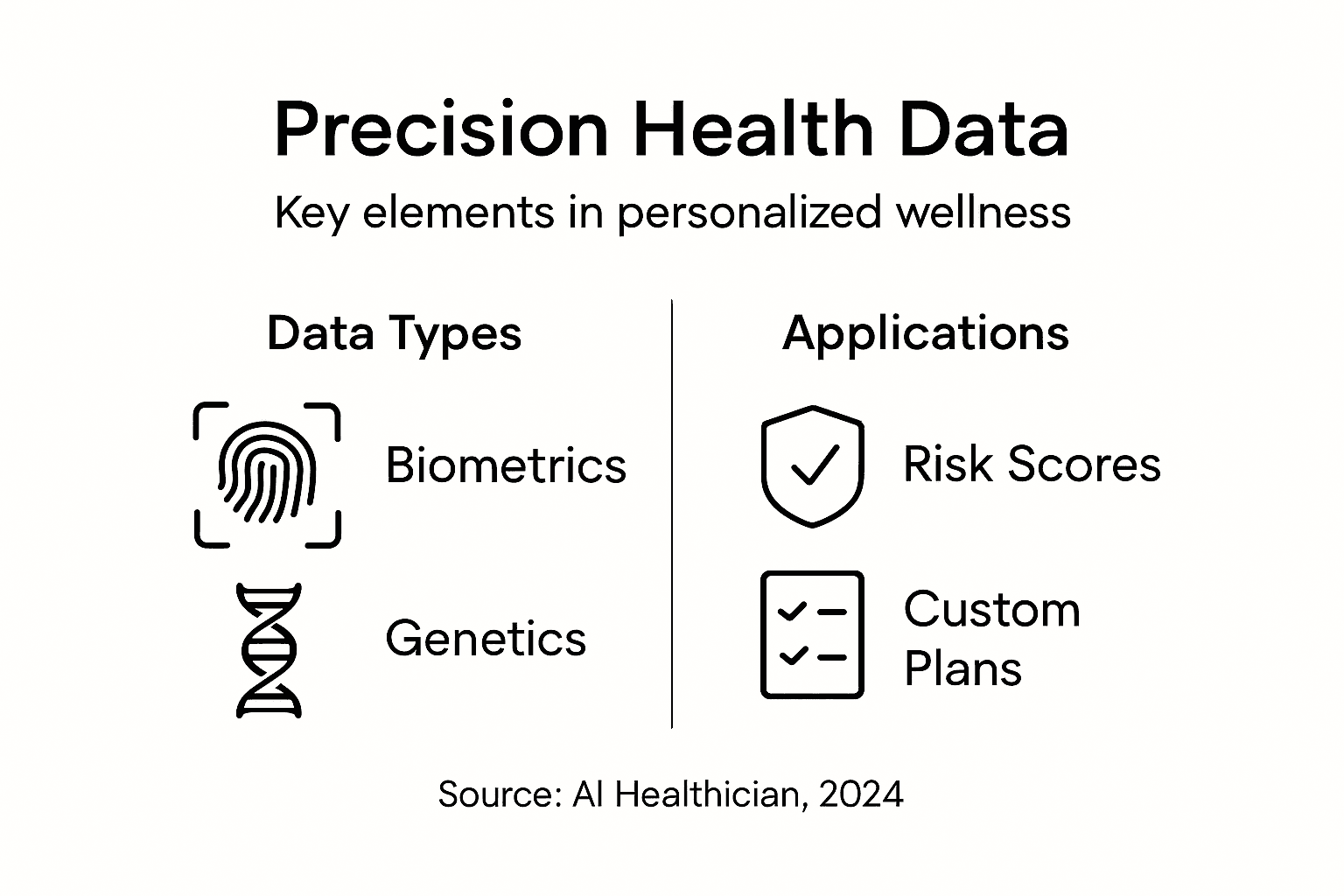
The following table summarises the main sources of data used in wellness technologies:
| Data Source | Example Metrics | Insights Delivered |
|---|---|---|
| Wearable Devices | Heart rate, steps | Activity, stress, sleep patterns |
| Mobile Applications | Dietary logs | Nutrition, mental health trends |
| Environmental Sensors | Air quality, light | Lifestyle context impacts |
| Self-Reported Data | Mood, symptoms | Subjective well-being assessment |
Use this table to identify key avenues for holistic health data capture.
Pro tip: Select wellness tracking technologies that offer comprehensive, integrated data collection across multiple physiological and psychological domains, ensuring a holistic approach to health monitoring.
How AI and technology enable personalisation
Artificial Intelligence (AI) represents a transformative breakthrough in personalised wellness, offering unprecedented capabilities to decode individual health trajectories with remarkable precision. AI technologies enhance personalised medical treatments by processing complex biological data and generating nuanced, individualised health insights.
The core technological mechanisms enabling personalisation include:
-
Machine Learning Algorithms
- Pattern recognition in physiological data
- Predictive health risk modelling
- Personalised recommendation generation
-
Advanced Sensor Technologies
- Continuous physiological monitoring
- Real-time biometric tracking
- Contextual data integration
-
Adaptive Analytics Frameworks
- Dynamic health intervention strategies
- Personalised behaviour change protocols
- Comprehensive wellness trajectory mapping
Advanced AI models interpret complex personal health data collected through mobile and wearable devices, transforming raw physiological signals into actionable wellness recommendations. These sophisticated systems can analyse intricate patterns in heart rate variability, sleep cycles, metabolic markers, and stress responses, generating insights far beyond traditional healthcare approaches.
AI transforms wellness from a generic, population-level strategy to a precisely calibrated, individual-specific intervention.
Technological personalisation operates through several sophisticated mechanisms:
- Data Aggregation: Collecting comprehensive health information
- Pattern Recognition: Identifying unique physiological signatures
- Predictive Modelling: Forecasting potential health scenarios
- Adaptive Recommendation: Generating personalised interventions
Technological Convergence enables unprecedented granularity in health understanding. By integrating advanced sensor technologies, machine learning algorithms, and comprehensive data processing frameworks, researchers can generate nuanced, individualised health protocols that adapt in real-time to an individual’s changing physiological landscape.

Pro tip: Select AI-powered wellness platforms that demonstrate transparent algorithmic processes and provide clear, understandable personalisation mechanisms.
Real-world applications for health and performance
Data-driven wellness strategies are transforming health outcomes across multiple domains, delivering unprecedented precision and personalisation. Data analytics enable advanced health interventions by generating targeted, evidence-based approaches to individual and population health management.
Key real-world applications span several critical domains:
-
Athletic Performance Optimisation
- Personalised training load management
- Injury prevention through biomechanical analysis
- Recovery strategy development
- Physiological performance tracking
-
Corporate Wellness Programmes
- Health risk assessment
- Productivity enhancement strategies
- Stress management interventions
- Healthcare cost reduction initiatives
-
Clinical Healthcare Management
- Early disease detection
- Personalised treatment protocols
- Chronic condition monitoring
- Preventative health strategy development
Employers leverage data analytics to enhance workforce wellness by implementing sophisticated health tracking and intervention programmes. These strategies go beyond traditional wellness models, offering granular insights into employee health trajectories and enabling proactive, targeted support mechanisms.
Precision health transforms reactive healthcare into a predictive, personalised wellness ecosystem.
The implementation of data-driven wellness strategies involves sophisticated technological integration:
- Comprehensive Data Collection
- Advanced Algorithmic Analysis
- Personalised Intervention Design
- Continuous Monitoring and Adaptation
Technological Convergence enables organisations and individuals to move beyond generic health recommendations. By integrating advanced sensor technologies, machine learning algorithms, and comprehensive data processing frameworks, researchers and healthcare professionals can generate nuanced, adaptive wellness protocols tailored to specific contextual requirements.
Pro tip: Prioritise wellness technologies that offer transparent data processing, clear intervention strategies, and demonstrable outcomes across multiple health domains.
Risks, privacy issues, and common pitfalls
Data-driven wellness technologies introduce complex ethical and privacy challenges that demand careful navigation. Public health experts highlight critical data privacy concerns surrounding the responsible implementation of digital health technologies, emphasising the need for robust governance frameworks.
The primary risks in data-driven wellness can be categorised into several critical domains:
-
Data Privacy Vulnerabilities
- Unauthorised personal information sharing
- Inadequate encryption protocols
- Potential commercial data exploitation
- Insufficient user consent mechanisms
-
Algorithmic Bias Risks
- Skewed health recommendations
- Demographic representation gaps
- Discriminatory intervention strategies
- Unequal health outcome predictions
-
Technological Reliability Issues
- Inconsistent data collection accuracy
- Measurement device calibration errors
- Interpretation algorithm limitations
- Potential false health signal generation
Wellness applications frequently expose users to significant data privacy risks by collecting sensitive biometric and behavioural information without comprehensive regulatory protection. These platforms often operate in grey legal areas, potentially compromising user privacy through opaque data management practices.
Ethical data use requires transparent, user-centric approaches that prioritise individual autonomy and informed consent.
Mitigation strategies for addressing these complex challenges involve:
- Implementing robust data protection protocols
- Developing transparent algorithmic frameworks
- Establishing clear user consent mechanisms
- Creating independent oversight committees
Technological Governance demands a multidisciplinary approach that balances technological innovation with stringent ethical standards. Collaboration between data scientists, healthcare professionals, legal experts, and civil society representatives becomes crucial in developing responsible wellness technologies.
Pro tip: Always review privacy policies thoroughly and choose wellness platforms that demonstrate transparent data handling practices and provide granular user control over personal information.
Comparisons with traditional wellness approaches
Data-driven wellness represents a fundamental paradigm shift from conventional health management strategies, introducing unprecedented levels of personalisation and precision. Wellness approaches diverge significantly from traditional models by leveraging advanced technological frameworks that transform generic health recommendations into highly contextualised, individual-specific interventions.
Key differentiating characteristics include:
-
Approach to Health Management
- Traditional: Population-level, generalised recommendations
- Data-Driven: Personalised, precision-targeted interventions
-
Information Processing
- Traditional: Static, retrospective health assessment
- Data-Driven: Dynamic, real-time health monitoring
-
Intervention Strategies
- Traditional: Reactive healthcare model
- Data-Driven: Proactive, predictive wellness optimization
-
Technological Integration
- Traditional: Limited digital infrastructure
- Data-Driven: Advanced algorithmic health insights
AI-driven wellness programs demonstrate superior engagement and outcomes compared to conventional wellness initiatives. These sophisticated platforms achieve higher participation rates by offering continuous, personalized feedback and more compelling, interactive health management experiences.
Traditional wellness approaches provide guidelines; data-driven wellness delivers personalised roadmaps.
The transformation involves several critical evolutionary steps:
Here’s a concise comparison of traditional wellness and data-driven wellness:
| Dimension | Traditional Wellness | Data-Driven Wellness |
|---|---|---|
| Personalisation | Generic health advice | Individual-specific interventions |
| Data Utilisation | Limited historical data | Real-time, multi-source data |
| Intervention Type | Reactive, symptom-based | Proactive, predictive strategies |
| Impact on Outcomes | Slow improvements possible | Faster, targeted results |
This table clarifies how the paradigm shift increases precision and effectiveness.
- Transitioning from generic to personalised recommendations
- Moving from sporadic to continuous health monitoring
- Shifting from reactive to predictive interventions
- Integrating multi-dimensional health data analysis
Technological Convergence enables a radical reimagining of health management. By combining advanced sensor technologies, machine learning algorithms, and comprehensive data processing frameworks, researchers can generate nuanced, adaptive wellness protocols that respond dynamically to individual physiological changes.
Pro tip: When evaluating wellness strategies, prioritise approaches that offer granular, personalized insights rather than relying solely on population-level generalisations.
Unlock the Power of Data-Driven Wellness with AI Healthician
Data-driven wellness transforms general health advice into precise personalised strategies powered by comprehensive data analysis and advanced testing. If you seek targeted, measurable interventions that uncover your unique physiological patterns and optimise your energy, resilience, and long-term health, AI Healthician offers exactly that. We understand the challenge of navigating complex health data and converting it into actionable, predictive wellness protocols.
Our approach combines functional testing, including DNA Health Testing, with sophisticated data analytics and expert-designed performance courses. These elements work together to deliver wellness solutions tuned to your body’s unique biology rather than generic population statistics. Experience how intelligent health diagnostics move beyond reactive care towards proactive optimisation.
Take control of your health journey today by exploring our Courses and tailored testing options at AI Healthician. Start transforming your data into precision health outcomes designed specifically for you.
Frequently Asked Questions
What is data-driven wellness?
Data-driven wellness is a personalised health optimisation approach that utilises advanced analytical techniques to glean actionable insights about an individual’s physiological functioning, surpassing traditional healthcare models.
How does data-driven wellness differ from traditional wellness approaches?
Unlike traditional wellness approaches, which typically provide generic health advice and rely on population-level data, data-driven wellness offers personalised, precision-targeted interventions based on real-time, multi-dimensional health data analysis.
What types of data are used in data-driven wellness?
Data-driven wellness incorporates various types of data, including physiological metrics (like blood pressure and cholesterol levels), behavioural data (such as physical activity and sleep quality), and psychological indicators (including mood and emotional resilience).
How can Artificial Intelligence improve personalisation in wellness?
Artificial Intelligence enhances personalisation in wellness by accurately analysing complex biological data, recognising unique health patterns, forecasting potential health scenarios, and generating dynamic, personalised health recommendations.


