


 matt@aihealthician.co.uk


Most people think artificial intelligence in health means cold algorithms replacing compassionate doctors. The reality is far more nuanced and empowering. AI doesn’t eliminate the human element; it amplifies your ability to make informed, personalised decisions about your wellness. By analysing vast datasets and adapting to your unique physiology, AI creates tailored strategies that traditional one size fits all approaches simply cannot match. This article explores how AI personalises health plans, improves diagnostics, navigates ethical challenges, and helps you apply these insights to optimise your own health journey.
Table of Contents
- Key takeaways
- How AI personalises health plans for optimal wellness
- AI’s role in diagnostics and chronic disease management
- Challenges and ethical considerations in AI health applications
- Applying AI insights to personalise your health journey
- Enhance your wellness with AI Healthician’s advanced AI powered tests
- What are the main benefits of AI in personal health?
- How can AI improve chronic disease management?
- What are the risks of relying solely on AI for health decisions?
Key Takeaways
| Point | Details |
|---|---|
| Personalised health plans | AI analyses vast datasets to tailor wellness plans to your unique physiology. |
| Collaborative AI agents | AI agents collaborate to propose interventions, assess feasibility, and refine plans based on evidence and user feedback. |
| Dynamic real world adaptation | The system recalibrates plans when you travel or miss workouts, maintaining practicality and sustainability. |
| Diagnostics and chronic care | Machine learning speeds up medical imaging analysis and cancer detection while integrating genomic data and treatment response to personalise care. |
How AI personalises health plans for optimal wellness
Traditional wellness advice treats everyone identically, but your body responds uniquely to diet, exercise, and lifestyle interventions. AI personalised diet and exercise frameworks solve this by deploying multi agent systems that generate, evaluate, and refine recommendations based on your specific data. These frameworks don’t just hand you a generic meal plan. They learn from your feedback, adjust macronutrient ratios when energy dips, and modify workout intensity as your fitness improves.
The process starts with data collection: wearable devices track sleep quality, heart rate variability, and activity levels whilst questionnaires capture dietary preferences and health goals. AI agents then collaborate, one proposing interventions, another evaluating feasibility, and a third refining based on evidence. This iterative loop creates plans that feel less like rigid prescriptions and more like conversations with a knowledgeable coach. Research shows users report higher engagement and satisfaction when AI adapts recommendations dynamically rather than delivering static protocols.
Consider how AI-driven personalised health plans handle real world complexity. If you skip workouts due to travel, the system doesn’t scold you. It recalibrates recovery periods and suggests bodyweight exercises for hotel rooms. When blood glucose spikes after certain meals, it flags potential insulin resistance patterns and recommends timing adjustments or food swaps. This responsiveness keeps interventions practical and sustainable.
Pro Tip: Track at least two weeks of baseline data before implementing AI generated wellness plans. This gives algorithms enough information to spot patterns rather than reacting to outliers, ensuring recommendations reflect your true physiological responses.
Key benefits of AI personalised wellness include:
- Dynamic adaptation to changing lifestyles and health markers
- Higher adherence rates compared to static programmes
- Early identification of intervention effectiveness through continuous feedback
- Reduced trial and error in finding optimal diet and exercise combinations
Challenges remain in ensuring these plans stay evidence based. AI can generate creative recommendations, but without proper guardrails, it might suggest interventions lacking clinical support. The most effective systems combine algorithmic personalisation with expert oversight, ensuring creativity doesn’t compromise safety or scientific rigour.
AI’s role in diagnostics and chronic disease management
Machine learning transforms diagnostics by processing medical imaging, genomic data, and patient histories at speeds and scales impossible for humans alone. Deep learning models analyse imaging for cancer detection with accuracy rivalling specialist radiologists, often identifying tumours earlier when treatment outcomes improve dramatically. In oncology, AI integrates genomic sequences with treatment response data to predict which therapies will work for your specific cancer subtype, moving beyond population averages to truly personalised care.

For chronic conditions like diabetes or heart disease, AI supports self-management through conversational agents and mobile apps that provide tailored decision support. These systems analyse continuous glucose monitors, blood pressure readings, and medication adherence patterns to predict risk events before symptoms appear. When your data suggests an impending hypoglycaemic episode, AI alerts you to adjust insulin or consume carbohydrates, preventing emergencies through proactive intervention.
The role of data in diagnostics extends beyond single test results. AI synthesises information from multiple sources: lab work, imaging, wearables, even voice patterns that might indicate respiratory distress. This holistic view catches subtle correlations that isolated assessments miss. For instance, combining heart rate variability trends with sleep quality and inflammatory markers might reveal early cardiovascular risk that standard cholesterol panels overlook.
| Diagnostic approach | Accuracy | Speed | Personalisation |
|---|---|---|---|
| Traditional clinical assessment | 75-85% | Days to weeks | Population based guidelines |
| AI enhanced imaging analysis | 85-95% | Minutes to hours | Pattern recognition from millions of cases |
| Multi modal AI integration | 90-98% | Real time | Individual risk profiling with continuous updates |
Continuous health monitoring with AI bridges clinical and home environments. Physiological foundation models trained on intensive care data now adapt to consumer wearables, tracking vital signs with clinical grade precision outside hospital walls. This democratises access to monitoring previously reserved for critical patients, enabling early detection of deterioration in chronic conditions.
Limitations persist despite impressive capabilities. Most AI diagnostic tools lack robust clinical effectiveness evidence from randomised controlled trials. Promising pilot studies don’t always translate to real world settings where patient populations differ from training data. Additionally, AI performs best on well defined problems with abundant high quality data. Rare conditions or atypical presentations still challenge even sophisticated algorithms, requiring human clinical judgement to fill gaps.
Key diagnostic improvements from AI include:
- Earlier cancer detection through subtle imaging pattern recognition
- Personalised treatment selection based on genomic and biomarker profiles
- Real time chronic disease risk prediction from continuous monitoring
- Reduced diagnostic delays by triaging urgent cases faster
Challenges and ethical considerations in AI health applications
AI’s promise in health collides with significant practical and ethical obstacles that users must understand to make informed decisions. Emergency triage systems undertriage critical cases whilst overtriaging non urgent ones, creating dangerous delays for patients who need immediate care. Studies reveal anchoring bias where AI recommendations influence human clinicians to overlook contradictory evidence, compounding rather than correcting errors. When algorithms misclassify chest pain as indigestion instead of cardiac emergency, the consequences can be fatal.
Dosing errors present another serious risk. AI applies general rules to edge cases without recognising when exceptions apply, leading to underdosing or overdosing that standard protocols would catch. A child with unusual metabolism or an elderly patient with multiple medications might receive recommendations technically accurate for average adults but medically inappropriate for their situation. These failures stem from semantic drift, where AI interprets language differently than clinical context demands.
Over-personalisation creates echo chambers that reinforce existing beliefs and limit exposure to diverse health information. When AI curates content based solely on your preferences and past behaviour, it might suppress evidence that challenges your assumptions or introduces alternative approaches. This bias amplification narrows rather than expands your health knowledge, potentially leading to suboptimal decisions wrapped in the illusion of personalisation.
“The ethical imperative in AI health applications is maintaining the balance between algorithmic efficiency and human oversight. Technology should augment clinical judgement, never replace the nuanced understanding that experienced practitioners bring to complex cases.”
The challenges in personalised diagnostics extend to data quality and representation. AI trained predominantly on one demographic performs poorly on others, perpetuating health disparities rather than reducing them. If training datasets lack sufficient diversity in age, ethnicity, or comorbidity profiles, the resulting algorithms inherit and amplify these gaps. A model trained mainly on middle aged European men might misdiagnose conditions in women or younger patients whose presentations differ.
Strategies to mitigate AI risks include:
- Requiring human clinical review of all AI recommendations before implementation
- Training algorithms on diverse, representative datasets that reflect real world populations
- Implementing transparency mechanisms that explain how AI reaches conclusions
- Establishing clear accountability frameworks when AI assisted decisions cause harm
- Combining AI insights with multiple information sources to avoid echo chambers
Regulatory frameworks struggle to keep pace with AI advancement. Current approval processes evaluate medical devices based on fixed algorithms, but machine learning models evolve continuously through new data exposure. This creates accountability gaps where systems performing well at approval later degrade or behave unexpectedly. Users need awareness that AI health tools exist in a regulatory grey zone with fewer safeguards than traditional medical devices.
Applying AI insights to personalise your health journey
Translating AI capabilities into practical wellness improvements requires strategic use of testing and monitoring tools that generate actionable data. DNA health testing reveals genetic predispositions affecting nutrient metabolism, injury risk, and disease susceptibility. AI analyses these genomic markers alongside lifestyle factors to recommend interventions targeting your specific vulnerabilities. If your genes indicate poor vitamin D absorption, AI prioritises supplementation and sun exposure strategies rather than generic advice.
Metabolic and 3D body scan tests provide precise measurements of how your body burns energy at rest and during activity. AI uses this data to calculate optimal calorie ranges, macronutrient splits, and exercise intensities for your goals. Instead of guessing whether you need 1,800 or 2,200 calories daily, you get numbers derived from your actual metabolic rate, eliminating the trial and error that derails most wellness attempts.
Follow this sequence to optimise metabolic health using AI powered insights:
- Establish baseline data through comprehensive metabolic testing and continuous glucose monitoring over two weeks
- Identify patterns where energy, mood, or performance dip relative to meals, sleep, or stress
- Implement targeted interventions suggested by AI analysis, changing one variable at a time for clear cause effect relationships
- Monitor response through continued tracking, allowing AI to refine recommendations based on your actual results
- Review progress with qualified practitioners who interpret AI insights within broader clinical context
Physiological foundation models enable monitoring that connects intensive care precision with home convenience. These AI systems learn from millions of patient hours in clinical settings, then adapt algorithms to consumer devices. You gain access to heart rate variability analysis, respiratory pattern tracking, and sleep architecture assessment previously requiring hospital admission. This continuous feedback loop helps you understand how daily choices affect physiological markers linked to long term health outcomes.
Pro Tip: Combine AI generated insights with quarterly consultations with functional medicine practitioners or health coaches. They provide context AI cannot, such as interpreting how recent life stressors might explain data anomalies or adjusting recommendations based on upcoming travel or seasonal changes.
| Test type | Key benefits | Typical outcomes |
|---|---|---|
| DNA health analysis | Genetic predisposition mapping | Personalised nutrient, exercise, and supplement protocols |
| Resting metabolic rate | Precise calorie and macronutrient targets | Elimination of guesswork in diet planning |
| Active metabolic test | Optimal training zones and recovery needs | Improved performance with reduced injury risk |
| Continuous glucose monitoring | Real time food response tracking | Identification of problematic meals and timing strategies |
The personalised metabolic health checklist provides a structured framework for implementing AI insights systematically. Rather than overwhelming yourself with simultaneous changes, this approach prioritises interventions by impact and feasibility. AI helps sequence improvements so each builds on previous gains, creating momentum that sustains long term behaviour change.
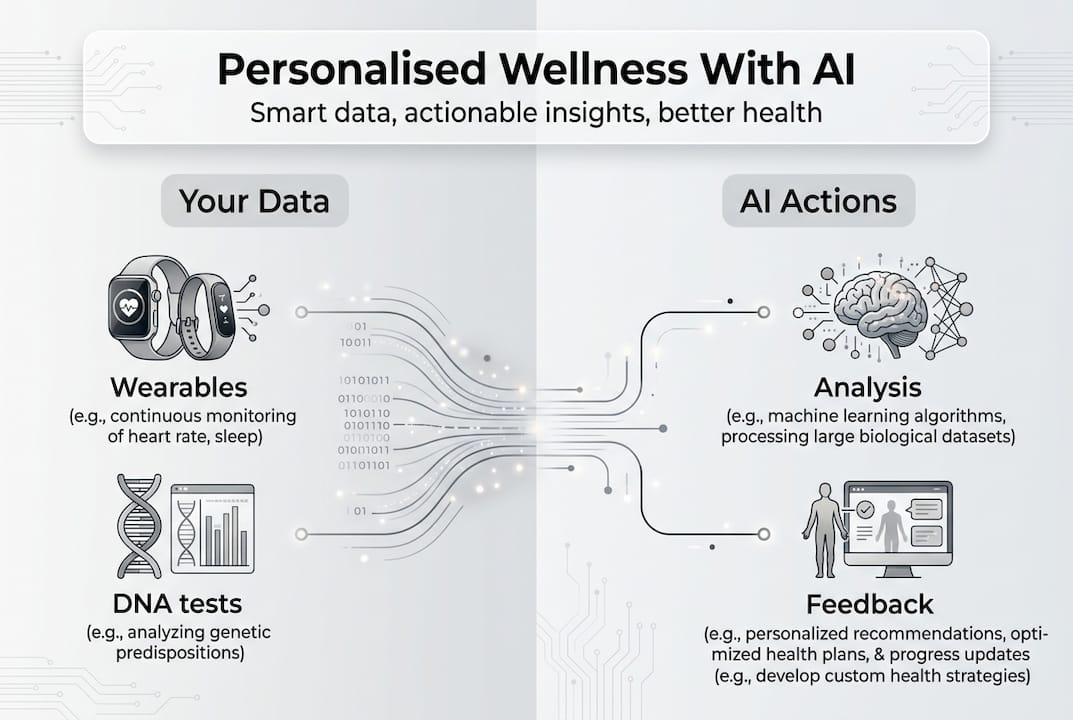
Practical application requires balancing AI recommendations with self awareness. Algorithms excel at pattern recognition but cannot account for subjective experiences like how certain foods affect your mood or which exercise types you genuinely enjoy. The most successful wellness strategies blend data driven precision with personal preference, using AI to optimise approaches you’ll actually maintain rather than forcing theoretically perfect protocols you’ll abandon.
Enhance your wellness with AI Healthician’s advanced AI powered tests
Understanding AI’s role in health matters most when you can access tools that turn theory into measurable improvements. AI Healthician combines functional testing with sophisticated analysis to uncover the physiological insights that generic wellness advice misses. Whether you’re addressing persistent fatigue, optimising athletic performance, or preventing chronic disease, data driven protocols deliver results that guesswork cannot match.
Our DNA health testing collection reveals how your genetics influence everything from nutrient needs to injury susceptibility, enabling truly personalised supplement and lifestyle strategies. The resting and active metabolic test eliminates calorie counting guesswork by measuring your actual energy expenditure, whilst 3D body composition scanning tracks changes in muscle and fat distribution with precision scales cannot achieve. For athletes and fitness enthusiasts, the active metabolic test identifies exact training zones that maximise performance gains whilst minimising overtraining risk. These aren’t generic assessments adapted to your answers on a questionnaire. They’re direct measurements of your physiology analysed through AI that spots patterns humans miss, translated into protocols you can implement immediately.
What are the main benefits of AI in personal health?
How does AI create more effective wellness plans than traditional approaches?
AI analyses thousands of data points from your wearables, tests, and feedback to identify patterns invisible to manual review. This enables dynamic adjustments as your body responds, maintaining effectiveness that static plans lose over time.
Can AI detect health problems earlier than conventional methods?
Data-driven wellness benefits include identifying subtle changes in biomarkers or vital signs that precede symptoms by weeks or months. Early detection allows intervention before conditions progress, often preventing rather than just managing disease.
Does AI replace the need for doctors and health professionals?
AI augments rather than replaces clinical expertise by processing information faster and spotting correlations humans miss. However, it lacks the contextual understanding and ethical judgement that qualified practitioners provide, making human oversight essential for safe application.
What makes AI personalisation different from customised programmes?
Customisation typically means choosing from preset options based on categories you fit. Personalisation through AI creates unique recommendations derived from your specific data, adapting continuously as your physiology and circumstances change rather than following predetermined pathways.
How can AI improve chronic disease management?
What role does AI play in diabetes care?
AI analyses continuous glucose monitoring data to predict hypoglycaemic and hyperglycaemic events before they occur. This enables proactive insulin or dietary adjustments that maintain stable blood sugar, reducing both immediate symptoms and long term complications.
Can AI help manage cardiovascular conditions?
Machine learning models integrate blood pressure, heart rate variability, activity levels, and medication adherence to predict cardiac events. Early warnings allow intervention through medication adjustment or lifestyle modification before emergencies develop.
How effective is AI for chronic disease compared to standard care?
Promising pilot studies show improved outcomes, but large scale clinical trials demonstrating superiority remain limited. AI shows particular value in continuous monitoring and personalised decision support, though gaps in high quality evidence mean it should complement rather than replace established protocols.
What chronic conditions benefit most from AI monitoring?
Diseases requiring frequent data tracking and adjustment respond best: diabetes, hypertension, heart failure, and respiratory conditions. AI excels where continuous physiological data enables real time risk prediction and intervention refinement.
What are the risks of relying solely on AI for health decisions?
Why do AI systems sometimes fail in emergency situations?
AI limitations in diagnostics include undertriaging genuine emergencies whilst overtriaging minor issues. Algorithms trained on typical presentations miss atypical symptoms, and anchoring bias causes clinicians to trust AI recommendations over contradictory clinical signs.
How can AI dosing recommendations become dangerous?
AI applies general rules without recognising when patient specific factors require exceptions. Edge cases like unusual metabolism, drug interactions, or comorbidities might receive technically accurate but medically inappropriate doses that standard clinical protocols would catch.
What are echo chamber risks with personalised AI health advice?
Over personalisation filters information to match your existing beliefs and preferences, limiting exposure to alternative approaches or contradictory evidence. This bias amplification narrows rather than expands health knowledge, potentially leading to suboptimal decisions despite feeling highly personalised.
How should I balance AI insights with professional medical advice?
Use AI for pattern recognition and continuous monitoring whilst consulting qualified practitioners for interpretation and decision making. AI identifies what’s happening in your data; professionals explain why it matters and determine appropriate responses within your broader health context.


