


 matt@aihealthician.co.uk


Many believe more data means better results, but true improvement relies on how health data is analysed and applied. Health data analysis drives real, personalised actions for well-being and athletic performance. This guide explains the why, the science, the practical impact, and the key considerations for analysing your health data. Health data analysis enables personalised training adjustments, leading to significant reductions in injury and improved performance.
Table of Contents
- What does health data analysis really mean?
- The key benefits: From personalisation to performance gains
- The risks and pitfalls: What most people miss
- Ethical considerations and privacy in health data analysis
- How you can put health data analysis to work
- Take the next step with advanced health data tools
- Frequently asked questions
Key Takeaways
| Point | Details |
|---|---|
| Integrated analysis matters | Tracking multiple metrics and analysing them together gives more reliable health insights than focusing on single numbers. |
| Performance gains are evidence-backed | Teams using health data analysis see measurable reductions in injuries and improved performance outcomes. |
| Beware pitfalls and privacy | Misinterpreting or oversharing health data creates risks, but new frameworks and governance help protect users. |
| AI adds actionable value | Artificial intelligence agents can turn raw data into personalised guidance for anyone seeking to optimise their health. |
| Everyone can benefit | You do not need to be an athlete to improve your wellness through regular health data analysis. |
What does health data analysis really mean?
Health data analysis involves interpreting information from wearables, blood tests, sleep monitors, heart rate variability devices, and metabolic assessments to create actionable insights. Raw numbers alone tell you little. Without proper interpretation, you’re left with disconnected metrics that fail to reveal patterns or guide decisions.
The difference between raw data and integrated analysis is crucial. A single glucose reading means nothing without context. But when combined with sleep quality, activity levels, and stress markers, it reveals how your body responds to specific triggers. Analysis reveals training effects longitudinally, supporting targeted interventions rather than guesswork.
Common health data types include:
- Wearable metrics: heart rate, steps, sleep stages, recovery scores
- Laboratory results: blood panels, hormone levels, inflammatory markers
- Performance data: VO2 max, lactate threshold, power output
- Subjective measures: mood, energy levels, perceived exertion
- Environmental factors: temperature, altitude, training load
Data-driven wellness requires longitudinal tracking to spot trends that single snapshots miss. Your resting heart rate might spike one morning due to poor sleep, but consistent elevation over weeks signals overtraining or illness. Data and diagnostics work together to transform numbers into meaningful health strategies.
Longitudinal tracking enables you to identify patterns that single measurements cannot reveal, supporting interventions tailored to your unique physiology rather than generic recommendations.
Pro Tip: Track at least three related metrics simultaneously. Monitoring heart rate variability alongside sleep quality and training load reveals connections that single metrics hide.
The key benefits: From personalisation to performance gains
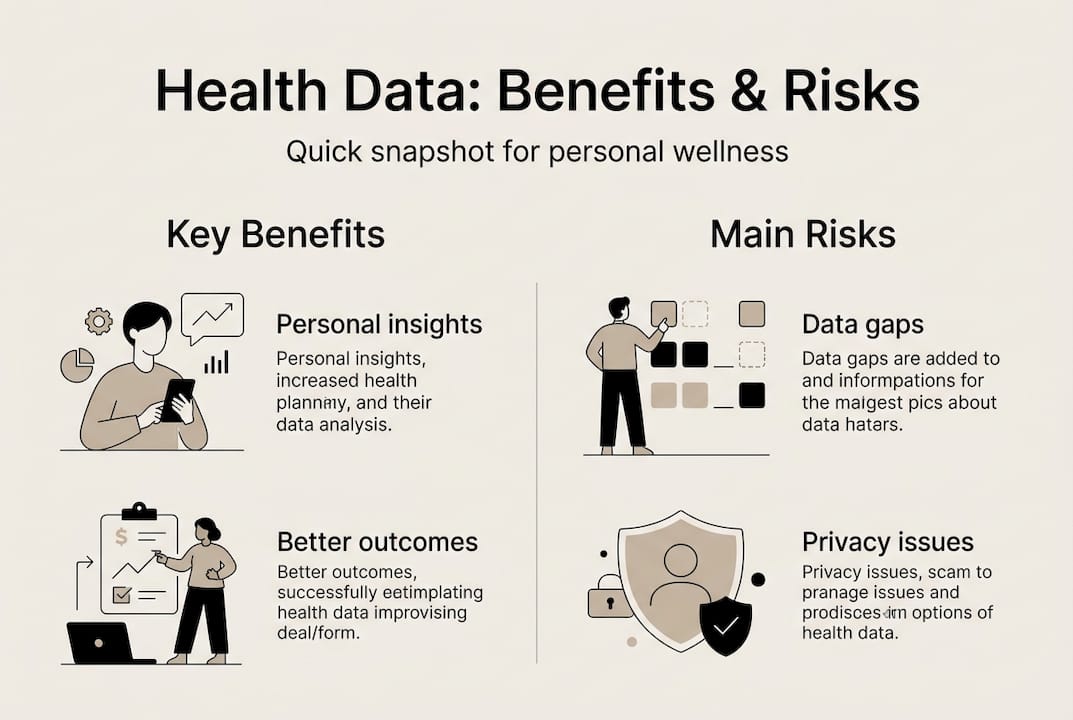
Personalised insights enable targeted interventions that generic advice cannot match. When you understand how your body responds to specific stressors, you can adjust training, nutrition, and recovery protocols with precision. Teams using integrated monitoring systems reduced non-contact injuries by 25–35%, demonstrating measurable impact.
| Approach | Injury risk reduction | Accuracy | Real-world impact |
|---|---|---|---|
| Integrated analysis | 25–35% | High | Consistent performance gains, dozens of actionable findings |
| Single metric focus | Minimal | Variable | Missed patterns, reactive rather than preventive |
| No systematic monitoring | None | Low | Increased injury rates, inconsistent results |
Integrated monitoring leads to consistent performance gains, with longitudinal tracking yielding dozens of actionable health findings. Athletes who monitor multiple wellness markers simultaneously can detect early warning signs of overtraining, illness, or metabolic dysfunction before performance declines.

Consider physical activity energy expenditure. Higher PAEE correlates with 37% lower mortality risk, but only when tracked consistently and interpreted within broader health contexts. AI-driven analysis achieves 84% accuracy for numerical health queries, far exceeding what manual interpretation typically delivers.
Data analysis for athlete health reveals how small adjustments compound over time. A 5% improvement in recovery efficiency might seem minor, but sustained over months, it translates to significantly higher training volumes without increased injury risk. Optimisation examples demonstrate how targeted interventions based on integrated data outperform generic protocols.
Pro Tip: Focus on trends over weeks rather than daily fluctuations. A single poor sleep night matters less than a declining sleep quality trend over ten days.
The risks and pitfalls: What most people miss
Data gaps and quality issues undermine even sophisticated analysis. Continuous glucose monitors lag behind actual blood glucose by 10–15 minutes. Heart rate variability measurements vary wildly based on measurement timing, stress levels, and device accuracy. Single-metric approaches can be misleading due to different recovery rates and data quality challenges.
| Pitfall | Why it occurs | How to avoid |
|---|---|---|
| Overreliance on single metrics | Metrics recover at different rates | Track multiple related markers |
| Ignoring data quality | Device limitations, user error | Verify measurements, use clinical-grade tools |
| Misinterpreting correlations | Confusing association with causation | Seek expert interpretation |
| Data overload paralysis | Too many metrics without prioritisation | Focus on 3–5 key indicators |
AI agents can mislead if not integrated properly. Too much focus on any single number creates risk. Your heart rate variability might appear optimal whilst inflammation markers remain elevated, masking underlying issues.
Steps for verifying your health data:
- Cross-reference wearable data with subjective feelings and performance outcomes
- Use clinical-grade testing for critical markers like blood panels and metabolic assessments
- Track measurement conditions: time of day, hydration status, recent activity
- Compare trends over weeks rather than reacting to daily variations
- Consult professionals when data conflicts with how you feel
Functional health tests provide validation that consumer devices cannot match. Blood panel analysis reveals metabolic dysfunction that wearables miss entirely.
Pro Tip: Correlate subjective feelings with objective metrics weekly. If your recovery score reads high but you feel exhausted, investigate further rather than trusting the number blindly.
Ethical considerations and privacy in health data analysis
Health data analysis raises significant ethical challenges that extend beyond individual use. Privacy concerns, algorithmic bias, autonomy, and third-party data sharing create complex dilemmas. Monitoring raises privacy, bias, and autonomy concerns, with power asymmetries in data ownership favouring organisations over individuals.
Key ethical challenges include:
- Privacy breaches when health data is shared without explicit consent
- Algorithmic bias that disadvantages certain populations in analysis
- Autonomy erosion when monitoring becomes mandatory rather than voluntary
- Third-party access to sensitive health information for commercial purposes
- Power imbalances where organisations control data individuals generate
Athlete sovereignty and fair governance principles apply to everyone pursuing health optimisation. You should control who accesses your data, how it’s used, and when it’s deleted. Frameworks emphasise minimal, accurate monitoring with athlete-centred governance, ensuring data serves individual interests rather than institutional agendas.
Power asymmetries in data ownership mean organisations often control information you generate about your own body, creating conflicts between individual autonomy and institutional interests.
AI in health strategies must prioritise transparency and user control. Continuous health monitoring should enhance autonomy rather than compromise it. Choose services that provide clear data ownership policies and allow you to export or delete information at will.
How you can put health data analysis to work
Starting your health data analysis routine requires systematic planning rather than random metric collection. Follow these steps:
- Identify three to five key health markers aligned with your goals: recovery, performance, metabolic health, or longevity
- Establish baseline measurements using reliable devices or clinical testing
- Track consistently at the same time daily under similar conditions
- Record subjective measures alongside objective data: energy, mood, sleep quality
- Review weekly trends rather than reacting to daily fluctuations
- Adjust one variable at a time to isolate cause and effect relationships
- Seek professional interpretation when patterns emerge you cannot explain
Best practices and tools:
- Use clinical-grade devices for critical metrics rather than relying solely on consumer wearables
- Integrate multiple data sources to reveal connections single metrics miss
- Prioritise actionable insights over data volume
- Schedule regular reviews with health professionals who understand your goals
- Document interventions and their effects systematically
AI and LLM agents transform wearable data into actionable, personalised insights when properly integrated. Longitudinal tracking supports real-world interventions that generic advice cannot match. Smart integration means selecting metrics that inform decisions rather than overwhelming yourself with numbers.
Deep health testing provides the foundation for meaningful analysis. Precision health optimisation builds on that foundation with targeted interventions based on your unique physiology.
Take the next step with advanced health data tools
Personalised tools provide accuracy and guidance beyond self-interpretation. Professional-grade assessments reveal insights consumer devices cannot detect, enabling interventions tailored to your unique biology rather than population averages.
Advanced services combine multiple testing modalities to create comprehensive health profiles. DNA health testing identifies genetic predispositions affecting metabolism, recovery, and disease risk. Resting and active metabolic testing quantifies energy expenditure with precision impossible through estimation, whilst 3D body scanning tracks composition changes that scales miss.
These assessments generate actionable data that informs nutrition timing, training intensity, recovery protocols, and supplement strategies. Rather than guessing what might work, you implement interventions backed by your biological reality. Professional interpretation ensures you understand not just what the numbers mean, but how to apply them for measurable improvement.
Frequently asked questions
How accurate is AI-driven health data analysis?
AI-driven analysis achieves 84% accuracy for numerical health queries, especially when integrating multiple data sources. Accuracy improves significantly with longitudinal tracking and professional interpretation.
Can regular health data analysis really reduce injuries?
Teams using systematic monitoring saw 25–35% reductions in non-contact injuries. Integrated analysis detects early warning signs that single metrics miss, enabling preventive interventions.
Are there privacy risks with health data analysis?
Yes, privacy and data ownership are major concerns. Frameworks now emphasise athlete sovereignty and minimal data use. Choose services with transparent policies and user-controlled data access.
Is health data analysis only for athletes?
No, personalised health data analysis benefits anyone focused on wellness, not just athletes. The principles of tracking, interpreting, and applying insights work equally well for general health optimisation and longevity.
What’s the risk of relying on single health metrics?
Individual metrics can be misleading since they recover at different rates and may not reflect overall wellness. Integrated analysis combining multiple markers provides more reliable insights than any single measurement.


