


 matt@aihealthician.co.uk


Generic athlete protocols are finished. The convergence of DNA analysis, continuous glucose monitoring, and edge AI means that personalised nutrition is no longer a luxury reserved for elite squads with seven-figure budgets. In 2026, the athletes and health-conscious individuals pulling ahead are those who understand that their biology is unique, their recovery needs are specific, and their performance data tells a story no generic programme can write. This guide cuts through the noise, presenting the evidence-based trends and practical frameworks you can apply right now to sharpen energy, accelerate recovery, and build a protocol that actually fits you.
Table of Contents
- Why personalisation drives performance in 2026
- Key technology trends: AI, wearables, and real-time feedback
- Metabolic health and nutrition: From the 4Ps to gut-focused strategies
- Recovery redefined: Protocols, technology, and the evidence
- Injury prevention and evidence-based rehab: From biomarkers to benchmarks
- How to put 2026 health tech and personalised protocols into action
- Frequently asked questions
Key Takeaways
| Point | Details |
|---|---|
| Personalisation leads trends | Bespoke nutrition and tech-driven monitoring now outperform generic plans for energy, recovery, and injury prevention. |
| Evidence matters most | 2026 data confirms AI wearables, metabolomics, and recovery stacks yield measurable gains for athletes and health enthusiasts. |
| Gut health boosts results | Plant-based, gut-focused diets paired with the 4Ps approach enhance metabolic efficiency and sustainability. |
| Recovery protocols evolve | Hybrid strategies combining sleep, tech, and active movement speed fatigue resolution and reduce reinjury risk. |
| Apply, monitor, adapt | Use new tools and benchmarks from 2026 evidence to personalise your approach and adjust for best performance outcomes. |
Why personalisation drives performance in 2026
Hyper-personalisation means building every element of your health protocol around your individual biology rather than population averages. It is the difference between following a carbohydrate periodisation plan designed for a hypothetical 80 kg male and following one calibrated to your own insulin sensitivity, microbiome composition, and training load data. That distinction matters enormously for real-world outcomes.
The old model relied on broad guidelines: eat this many grams of protein per kilogram, sleep seven to nine hours, train at 70% of your maximum heart rate. Useful starting points, perhaps, but blunt instruments. Today, DNA, microbiome, and AI approaches replace those blunt instruments with precision tools that adapt in real time. Metabolic flexibility, the ability to switch efficiently between carbohydrate and fat as fuel sources, sits at the centre of this shift.
The 4Ps nutrition model, Personalise, Periodise, Prefuel, and Prepare, has become the 2026 benchmark for performance nutrition. It structures fuelling decisions around your specific physiology, training phase, and competition calendar rather than a one-size template. Pair that with improving metabolic health through functional testing and you have a genuinely actionable framework.
| Approach | Basis | Outcome |
|---|---|---|
| Generic protocol | Population averages | Moderate, inconsistent gains |
| DNA-informed plan | Genetic variants | Targeted macronutrient ratios |
| Microbiome-guided | Gut composition data | Improved absorption and inflammation control |
| CGM-integrated | Real-time glucose data | Precise carbohydrate timing |
| Full 4Ps model | Multi-data fusion | Consistent, measurable performance gains |
“Metabolomics reveal athlete-specific metabolic profiles, enabling protocols that go far beyond what population-level research can offer.”
Understanding data-driven metabolic health is now a prerequisite for anyone serious about performance. The evidence from metabolomics research confirms that athlete-specific biomarker profiles allow for interventions that generic advice simply cannot replicate. Combine that with personalised nutrition insights and the case for individualisation becomes impossible to ignore.
Key technology trends: AI, wearables, and real-time feedback
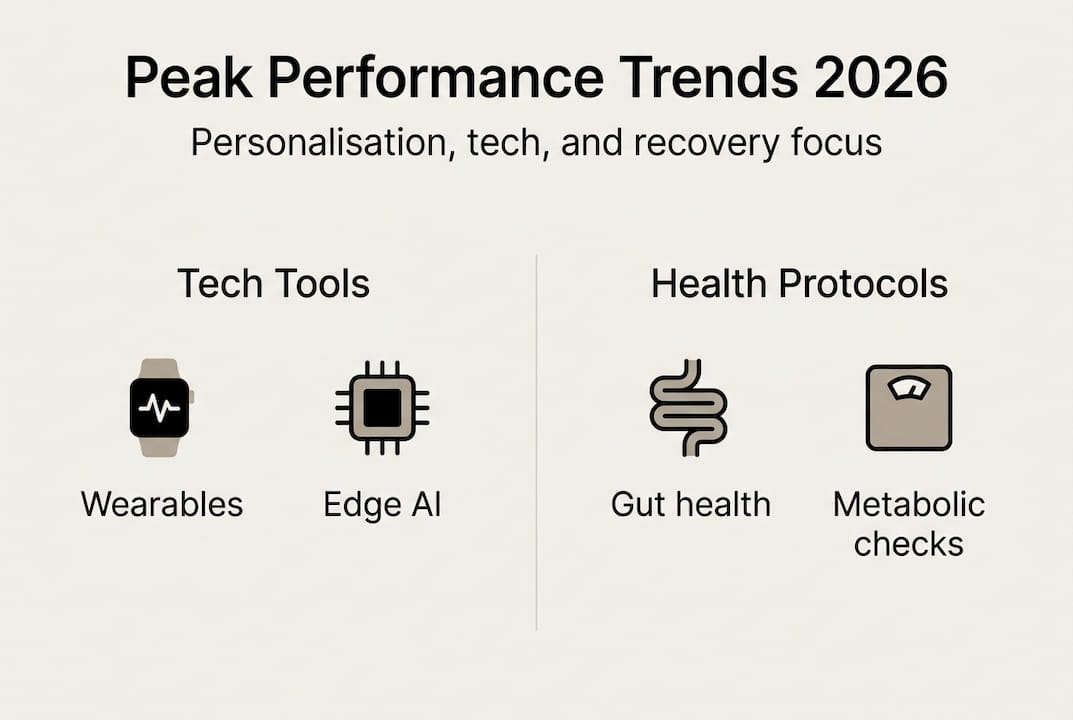
Data is the raw material of personalisation, and the technology generating it has advanced sharply. Edge AI, processing power embedded directly in wearable devices rather than sent to a remote server, now enables real-time decision-making during training sessions. That means your device is not just recording data; it is interpreting it and flagging adjustments before fatigue compounds into injury.

Wearables with edge AI now fuse multiple data streams simultaneously: heart rate variability, sleep architecture, biomechanical load, and neuromuscular readiness. The result is a dynamic picture of your physiological state that updates continuously rather than offering a static morning snapshot.
Here is how a typical athlete data flow looks in 2026:
- Sleep and HRV are captured overnight, establishing a readiness baseline.
- Biomechanical sensors track movement quality and asymmetry during warm-up.
- Load metrics accumulate across the session, flagging spikes that correlate with injury risk.
- CGM data maps glucose response to pre-session fuelling in real time.
- Post-session recovery scores integrate all streams to recommend the next 24-hour protocol.
The injury prevention data is compelling. NFL ACL injuries decreased 25% in 2025, a direct result of smarter load management informed by this kind of multi-sensor integration. Hamstring reinjury rates have also dropped as MRI-based classification and real-time load data guide return-to-play decisions more precisely.
Pro Tip: Technology outputs are only as good as the human expertise interpreting them. Build a human-in-the-loop approach where a qualified practitioner reviews your data trends weekly. Automated alerts catch acute spikes; experienced eyes catch the chronic patterns that algorithms miss.
For a deeper look at how health diagnostics for athletes feed into these technology frameworks, the evidence base is growing rapidly. Understanding data analysis in performance health helps you ask better questions of your own numbers.
Metabolic health and nutrition: From the 4Ps to gut-focused strategies
Nutrition remains the highest-leverage variable in performance health, and the 4Ps framework gives it structure. Personalise your macronutrient ratios using genetic and microbiome data. Periodise your carbohydrate intake around training phases. Prefuel with precision, not guesswork. Prepare your gut for competition stress well in advance.
Practical pre-fuelling benchmarks worth building into your protocol:
- Carbohydrate intake: 1 to 4 grams per kilogram of body weight in the three to four hours before high-intensity sessions, adjusted by CGM feedback.
- Fluid targets: 5 to 7 ml per kilogram of body weight two to four hours pre-session, with sodium included for sessions exceeding 90 minutes.
- Gut trials: Practise your race-day nutrition in training. Gastrointestinal distress is the most preventable performance limiter.
- Microbiome support: Prioritise fermented foods, diverse fibre sources, and prebiotic-rich vegetables across the week, not just around training.
Plant-forward, gut-optimised diets now show measurable improvements in metabolic efficiency and sustainability for both elite and recreational athletes. The mechanism is straightforward: a diverse, well-nourished microbiome improves nutrient absorption, reduces systemic inflammation, and supports faster recovery between sessions.
“The 4Ps framework benchmarks nutrition by anchoring every decision in individual data rather than generic guidelines, making it the most evidence-aligned approach available in 2026.”
Pro Tip: Do not rely solely on generic carbohydrate loading protocols. Use CGM feedback across several training weeks to identify your personal glucose response patterns, then build your fuelling plan around those patterns rather than textbook averages.
Exploring gut health optimisation and working through a personalised metabolic checklist are practical next steps for applying these principles. For supplement decisions, personalising supplements based on your own biomarker data prevents both deficiency and unnecessary expenditure.
Recovery redefined: Protocols, technology, and the evidence
Recovery is where performance is actually built. Training provides the stimulus; recovery determines whether adaptation occurs. In 2026, the evidence base for recovery interventions is sharper than ever, and the ranking of methods has shifted.
Leading recovery interventions ranked by current meta-analysis evidence:
- Sleep remains the single most powerful recovery tool. Seven to nine hours with consistent timing outperforms every other intervention.
- Far infrared therapy (FIR) accelerates muscle repair and reduces creatine kinase levels within 48 hours of intense sessions.
- Active movement at low intensity on recovery days maintains circulation and clears metabolic waste more effectively than complete rest.
- Pulsed electromagnetic field therapy (PEMF) and red light technology show emerging evidence for reducing soreness and accelerating tissue repair.
- Nutrition timing around the recovery window, particularly protein and carbohydrate within 30 to 60 minutes post-session, remains non-negotiable.
Key statistic: Fatigue resolves within 72 hours when sleep, nutrition timing, and active movement are combined systematically, compared to five or more days with passive rest alone.
Building your hybrid recovery stack:
- Anchor every week around consistent sleep timing, not just duration.
- Add one FIR or red light session after your highest-intensity training day.
- Use HRV trends over seven to ten days, not single readings, to guide load decisions.
- Track jump height or grip strength as objective neuromuscular readiness markers.
“Empirical data show that AI-predicted recovery outcomes and biomarker feedback allow for genuinely individualised protocols, with pro athletes and recreational athletes showing distinct recovery symmetry patterns that require different intervention strategies.”
For a structured approach to boosting recovery 30% through metabolic marker assessment, the evidence supports integrating biomarker tracking into your weekly routine rather than relying on subjective feel alone.
Injury prevention and evidence-based rehab: From biomarkers to benchmarks
Prevention is always more efficient than rehabilitation, and 2026 data gives you better tools than ever to stay ahead of injury. The shift is from reactive treatment to predictive management, using real-time data to catch risk before it becomes damage.
Key benchmarks and advances shaping injury prevention this year:
- Hamstring classification: MRI-based grading using the BAMIC and Barcelona protocols now guides eccentric loading progressions with far greater precision, reducing reinjury rates significantly compared to clinical assessment alone.
- TDEE benchmarks: AI models establish total daily energy expenditure targets for injured athletes, preventing the muscle loss and metabolic slowdown that typically extend recovery timelines.
- ACL risk reduction: Neuromuscular screening combined with load monitoring contributed to a 25% reduction in NFL ACL tears in 2025, a benchmark now being adopted across professional sport.
- Return-to-play criteria: Jump symmetry indices, HRV stability, and social load metrics now inform return decisions alongside imaging, reducing the risk of premature clearance.
Pro Tip: Always combine technology outputs with subjective feedback from the athlete. Pain perception, psychological readiness, and sleep quality are data points that no sensor captures fully. The safest return-to-play decisions integrate both streams.
Using functional testing for athletes to establish your personal baselines before injury occurs means you have a genuine reference point for rehabilitation. Understanding why measuring metabolic health matters during rehab phases ensures your energy availability supports tissue repair rather than competing with it.
How to put 2026 health tech and personalised protocols into action
The science is clear: generic protocols leave performance on the table. Your DNA influences how you respond to carbohydrates, recover from training, and manage inflammation. Your microbiome shapes nutrient absorption and immune resilience. Your real-time biomarkers tell you what your body needs today, not what a population study suggested last decade.
At AI Healthician, we translate this complexity into precise, actionable protocols built around your biology. Whether you are looking to optimise energy, accelerate recovery, or reduce long-term disease risk, our approach combines functional testing, metabolomics, and evidence-informed strategy into a plan that is genuinely yours. Explore DNA health testing to uncover your genetic performance profile, or take the next step with a Longevity Blueprint consultation designed to map your complete physiological picture and build a protocol that delivers measurable results.
Frequently asked questions
What is metabolic flexibility and why is it important in 2026?
Metabolic flexibility is your body’s ability to switch efficiently between carbohydrate and fat as fuel sources depending on demand. Athletes with high metabolic flexibility sustain energy more consistently across varying intensities and recover faster between sessions.
How do plant-based and gut-focused diets improve performance?
Plant-forward, gut-optimised protocols improve metabolic efficiency by enhancing nutrient absorption and reducing systemic inflammation, both of which directly support faster recovery and more consistent energy output.
Which recovery methods are most effective according to 2026 data?
Meta-analysis ranks sleep, far infrared therapy, and structured active movement as the leading interventions for fatigue resolution and injury recovery, with HRV and edge AI making personalisation of these methods far more precise.
What can wearables and edge AI actually track for performance health?
Wearables with edge AI track sleep architecture, HRV, biomechanical load, and neuromuscular readiness simultaneously, providing real-time adjustment recommendations that reduce injury risk and optimise training load.
How is injury and recovery tracked differently for athletes in 2026?
Rehab benchmarks now rely on MRI-based classification, AI-predicted TDEE targets, and multi-metric return-to-play criteria, making prevention and rehabilitation protocols far more precise and individualised than previous clinical standards allowed.
Recommended
- 6 Essentials for an Effective Athlete Wellness Checklist – Aihealthician
- 6 Types of Functional Health Tests for Athletes – Aihealthician
- Role of Deep Health Testing for Endurance Athletes – Aihealthician
- Metabolic Health Improvement Workflow for Peak Performance – Aihealthician
- Top fitness supplement trends to boost performance in 2026
- Holistic Wellness Trends 2026: Technology and Root Healing


