


 matt@aihealthician.co.uk


Generic health advice rarely works because it ignores your unique biology. Studies show personalized diagnostics improve success rates by approximately 30% compared to one-size-fits-all approaches. This guide walks you through the exact preparation, testing sequence, data interpretation, common pitfalls, and measurable outcomes needed to transform raw diagnostic data into targeted health strategies that actually work for your body.
Table of Contents
- Prerequisites And Preparation For Accurate Diagnostics
- Core Step-By-Step Health Diagnostic Procedures
- Data Interpretation And Translating Diagnostics Into Personalized Strategies
- Common Mistakes, Failures, And Troubleshooting
- Expected Outcomes: Timelines, Success Metrics, And Safety Guidelines
- Alternative Diagnostic Approaches: Tradeoffs And Decision Criteria
- Explore Personalized Diagnostic Solutions At Aihealthician
- Frequently Asked Questions
Key Takeaways
| Point | Details |
|---|---|
| Proper preparation cuts biomarker variability | Fasting 8-12 hours and avoiding intense exercise 24 hours before testing reduces variability by up to 30%. |
| Sequential testing builds precision | Combining functional blood panels with continuous glucose monitoring creates comprehensive metabolic insights. |
| Expert interpretation prevents costly errors | Professional guidance reduces misinterpretation risks affecting 25% of self-analyses. |
| Regular reassessment sustains progress | Testing every 3-6 months prevents plateaus and enables timely strategy adjustments. |
| Alternative diagnostics add depth | Genetic testing and wearables provide complementary insights but require careful cost-benefit evaluation. |
Prerequisites and Preparation for Accurate Diagnostics
Accurate diagnostics begin long before you enter the testing facility. Pre-test preparation determines whether your results reflect your true baseline physiology or temporary fluctuations caused by recent meals, exercise, or stress. Standardizing pre-analytical variables is crucial for reliable biomarker assessment.
Fasting for 8-12 hours before blood collection eliminates postprandial glucose and lipid spikes that can skew results by 30% or more. This window allows your metabolic markers to stabilize and reflect your genuine physiological state. Water is permitted and encouraged during the fasting period to maintain hydration and facilitate blood draw procedures.

Avoid intense physical activity for at least 24 hours before testing. Hard training sessions temporarily elevate inflammatory markers, creatine kinase, and cortisol levels, which can mimic pathological states on lab reports. Light movement like walking is acceptable, but skip the gym session immediately before your appointment.
Gather the necessary tools and resources beforehand. You’ll need access to a qualified laboratory for blood draws, continuous glucose monitors if tracking glycemic responses, and any specific testing kits required by your advanced diagnostics protocol. Budget for comprehensive testing, as multi-modal diagnostics typically range from £300 to £1,500 depending on scope.
Understand basic testing principles so you can follow protocols accurately. Know which medications or supplements might interfere with specific tests and consult your healthcare provider about temporary discontinuation if appropriate. Document your current medications, supplements, and recent health changes to provide context for result interpretation.
Pro Tip: Schedule your blood draw for early morning after an overnight fast. This timing captures your baseline state before daily activities introduce additional variables, ensuring maximum test reliability.
Core Step-by-Step Health Diagnostic Procedures
The diagnostic journey begins with comprehensive functional blood testing that examines 20-30 key biomarkers across multiple physiological systems. This foundation reveals your metabolic health, inflammatory status, hormone balance, and nutrient sufficiency in a single snapshot.
-
Baseline Blood Panel: Start with essential metabolic markers including fasting glucose, HbA1c, lipid profile, inflammatory markers like hsCRP, thyroid function, and vitamin D status. This panel establishes your physiological baseline and identifies immediate red flags requiring medical attention.
-
Continuous Glucose Monitoring: Apply a CGM sensor to track dynamic glucose responses over 7-14 days. This reveals how your body handles different foods, exercise timing, sleep quality, and stress, providing insights static blood tests cannot capture.
-
Advanced Metabolic Markers: Add specialized tests for insulin resistance (fasting insulin, HOMA-IR), oxidative stress markers, omega-3 index, and homocysteine if your baseline results suggest metabolic dysfunction or cardiovascular risk.
-
Functional Assessments: Incorporate body composition analysis, resting metabolic rate testing, or VO2 max assessment to contextualize blood work with physical performance metrics.
-
Sequential Integration: Allow 2-4 weeks between initial blood work and CGM deployment to avoid overwhelming yourself with simultaneous data streams. This staged approach lets you focus on one dataset at a time while building your complete health picture.
The testing sequence matters because each layer adds precision. Blood panels show what your body has done over weeks to months. CGM reveals what it does moment to moment. Together, they expose patterns invisible to either test alone.
| Test Type | Timeframe | Key Insights | Typical Cost |
|---|---|---|---|
| Functional Blood Panel | Single point | Metabolic baseline, inflammation, nutrient status | £150-400 |
| Continuous Glucose Monitor | 7-14 days | Real-time glucose responses, metabolic flexibility | £80-150 |
| Advanced Metabolic Markers | Single point | Insulin resistance, oxidative stress, cardiovascular risk | £100-300 |
| Body Composition Analysis | Single point | Muscle mass, body fat percentage, metabolic health | £50-150 |
Pro Tip: Keep a detailed log during CGM wear, noting meals, exercise, sleep, and stress levels. This context transforms raw glucose data into actionable insights about which specific behaviours affect your metabolic responses.
Data Interpretation and Translating Diagnostics into Personalized Strategies
Raw numbers mean nothing without proper interpretation. A fasting glucose of 5.6 mmol/L might look fine in isolation but becomes concerning when paired with elevated fasting insulin and poor glucose variability on CGM. Context is everything.
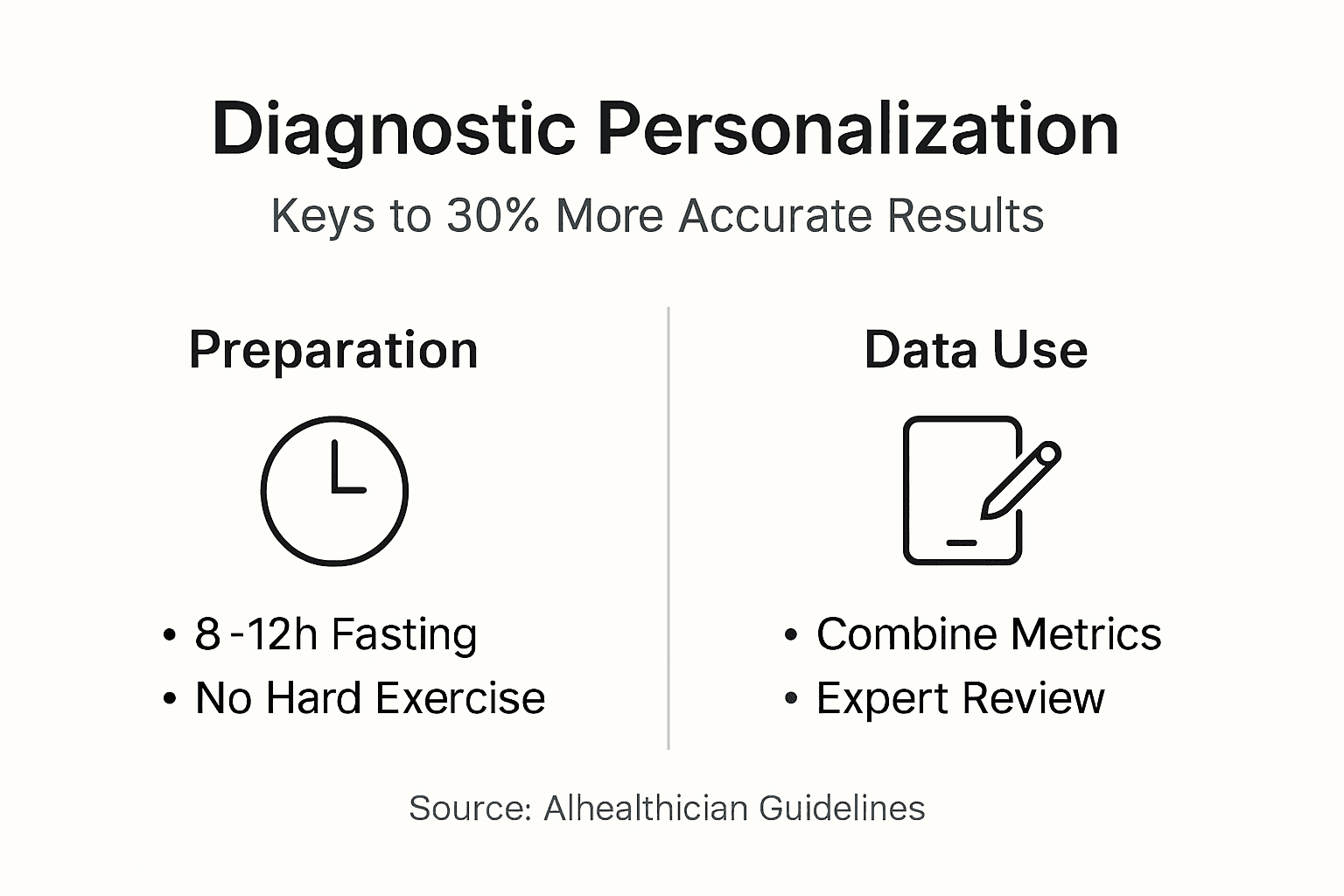
Integrate all data sources to build your complete metabolic picture. Cross-reference blood biomarkers with CGM patterns, lifestyle habits, genetic predispositions, and subjective symptoms. For example, if your CGM shows glucose spikes after oats despite normal HbA1c, you have carbohydrate sensitivity that standard blood work misses.
Avoid the single-biomarker trap. One elevated marker rarely tells the full story and may reflect temporary stress rather than chronic dysfunction. Look for patterns across multiple related markers. Elevated hsCRP alongside high triglycerides and low HDL suggests metabolic inflammation, while isolated hsCRP elevation might indicate recent infection or injury.
Consult qualified health professionals for expert data interpretation to reduce misinterpretation risks. Research shows approximately 25% of self-analyses contain significant errors that lead to inappropriate interventions. A functional medicine practitioner or metabolic health specialist can spot nuanced patterns and recommend evidence-based strategies.
Translate findings into specific, measurable interventions. If your CGM reveals glucose spikes above 8 mmol/L after high-carb meals, implement protein-first eating and post-meal walks. If blood work shows vitamin D deficiency at 40 nmol/L, supplement with 4,000 IU daily and retest in 12 weeks. Make one change at a time so you can attribute improvements to specific interventions.
Pro Tip: Create a simple dashboard tracking your top 5-7 biomarkers and CGM metrics. Update it after each testing cycle to visualize trends and maintain motivation as you watch markers improve over time.
Common Mistakes, Failures, and Troubleshooting
Skipping proper fasting protocols is the most common error undermining diagnostic accuracy. Even a splash of milk in morning coffee or an early morning workout can alter test results by 30% or more, leading to false diagnoses and misguided interventions. Strict protocol adherence is non-negotiable for reliable data.
Misinterpreting results without professional support affects roughly 25% of individuals who analyze their own data. You might panic over a slightly elevated marker within normal range or miss subtle patterns indicating early metabolic dysfunction. What looks like a problem might be lab variation, and what looks fine might be the start of insulin resistance.
Neglecting follow-up testing causes progress plateaus that could have been prevented. Your body adapts to interventions, and what worked initially may need adjustment after 3-6 months. Without reassessment, you cannot know whether improvements are sustained or if new issues have emerged requiring strategy pivots.
Overtesting generates unnecessary anxiety and false positives. Testing too frequently or ordering every available biomarker creates noise that obscures meaningful signals. More data does not always mean better insights, especially when minor fluctuations trigger unwarranted concern and intervention.
“The greatest obstacle to accurate health diagnostics is not lack of available tests, but improper preparation, interpretation errors, and failure to retest at appropriate intervals. These process failures undermine even the most advanced testing technologies.”
Practical troubleshooting solutions include setting calendar reminders for fasting protocols, engaging professional interpretation services before making major health changes, scheduling reassessments every 3-6 months regardless of how good you feel, and resisting the urge to test more frequently than quarterly unless medically indicated.
Expected Outcomes: Timelines, Success Metrics, and Safety Guidelines
Realistic improvement timelines span 3-6 months for measurable biomarker changes and noticeable performance gains. Some markers like fasting glucose and inflammatory markers respond within 4-8 weeks of targeted intervention, while others like HbA1c and cholesterol require 8-12 weeks to reflect physiological shifts.
Success metrics extend beyond biomarkers to include subjective improvements. Track energy stability throughout the day, recovery between training sessions, sleep quality metrics, and cognitive function alongside objective measures. Aim for fasting glucose under 5.3 mmol/L, HbA1c below 5.4%, hsCRP under 1.0 mg/L, and healthy lipid ratios.
Monitor for overtesting risks by limiting comprehensive panels to every 3-6 months unless specific medical concerns require more frequent assessment. False positives increase with testing frequency because normal biological variation can produce out-of-range results purely by chance, especially when testing dozens of markers simultaneously.
Safety guidelines emphasize professional supervision throughout the diagnostic and intervention process. Never ignore significantly abnormal results or attempt to self-treat serious metabolic dysfunction without medical guidance. Some biomarker abnormalities indicate conditions requiring immediate medical attention rather than lifestyle modification.
“Sustainable health optimization requires patience, appropriate testing intervals, and willingness to adjust strategies based on data rather than assumptions. Quick fixes rarely address root causes, while systematic, data-driven approaches produce lasting results.”
Regular monitoring ensures you sustain initial gains and catch early signs of backsliding before they become significant setbacks. Schedule your next test before leaving each appointment to maintain accountability and consistency in your health optimization journey.
Alternative Diagnostic Approaches: Tradeoffs and Decision Criteria
Functional blood testing remains the gold standard for affordable, validated baseline assessment. It provides actionable data on current metabolic status, costs £150-400 for comprehensive panels, and enjoys decades of clinical validation. Results are easily interpreted by most healthcare providers and insurance sometimes covers portions of testing.
CGM technology offers unparalleled insight into dynamic glucose regulation but requires 1-2 weeks of sensor wear, costs £80-150 per session, and demands user engagement to contextualize data meaningfully. The investment pays off for anyone with blood sugar concerns, performance optimization goals, or metabolic syndrome risk factors.
Genetic testing reveals inherited predispositions to certain metabolic conditions, medication responses, and nutrient metabolism variations. However, tests cost £200-500, interpretation requires specialized expertise, and results show possibilities rather than certainties. Genetic risk does not guarantee disease development and environmental factors often matter more than genes alone.
Wearable devices track heart rate variability, sleep stages, activity levels, and sometimes blood oxygen saturation in real time. Quality varies dramatically between devices, and consumer-grade wearables lack the medical-grade accuracy of clinical tools. They excel at trend identification over weeks to months but should not replace diagnostic testing for medical decisions.
| Diagnostic Type | Key Advantage | Main Limitation | Best For |
|---|---|---|---|
| Functional Blood Testing | Clinical validation, comprehensive baseline | Single timepoint, delayed results | Initial assessment, quarterly monitoring |
| Continuous Glucose Monitoring | Real-time metabolic responses | Requires commitment, temporary wear | Metabolic optimization, diabetes risk |
| Genetic Testing | Lifelong insights, hereditary risk | High cost, complex interpretation | Family history concerns, personalized medicine |
| Wearable Devices | Continuous tracking, trend data | Variable accuracy, user dependent | Daily habit tracking, long-term patterns |
Your choice depends on immediate goals, available budget, data literacy, and timeline for needing actionable information. Most people achieve the best results combining functional blood testing as the foundation with CGM for metabolic insight and wearables for daily habit tracking, while reserving genetic testing for specific clinical questions or strong family histories of metabolic disease.
Explore Personalized Diagnostic Solutions at Aihealthician
Ready to transform diagnostic data into measurable health improvements? Aihealthician provides the testing, interpretation, and personalized strategy development needed to optimize your metabolic health and performance.
Our DNA health testing kits reveal genetic factors influencing your metabolism, nutrient needs, and disease risk, creating the foundation for truly personalized interventions. Advanced diagnostic services combine functional blood testing, CGM guidance, and expert interpretation to identify your unique optimization opportunities.
The Longevity Blueprint consultation takes you from raw data to actionable protocols tailored for your physiology, goals, and lifestyle. We handle the complex interpretation and strategy development, so you can focus on implementation and results. Access cutting-edge diagnostics and expert guidance in one integrated platform designed for individuals who demand precision and measurable outcomes.
Frequently Asked Questions
What is the first step in personalized health diagnostics?
Begin with proper preparation including 8-12 hour fasting and avoiding intense exercise for 24 hours before testing. Then complete a comprehensive functional blood panel covering metabolic, inflammatory, and nutrient markers to establish your physiological baseline before adding specialized tests.
How often should I repeat diagnostic testing?
Retest comprehensive biomarker panels every 3-6 months to track progress and adjust strategies based on results. More frequent testing rarely provides additional value and increases false positive risks, while less frequent testing prevents timely intervention adjustments.
Can I perform diagnostics without expert help?
You can order and complete tests independently, but professional interpretation significantly reduces the 25% misinterpretation rate seen in self-analysis. Expert guidance helps identify subtle patterns, avoid overreaction to normal variation, and develop evidence-based intervention strategies.
Are wearables reliable for metabolic health monitoring?
Consumer wearables provide useful trend data for activity, sleep, and heart rate patterns but lack medical-grade accuracy for diagnostic decisions. Use them to complement clinical testing rather than replace functional blood work or continuous glucose monitoring.
What risks are associated with overtesting?
Testing too frequently increases false positive results from normal biological variation, creates unnecessary anxiety, and wastes resources without improving health outcomes. Quarterly testing intervals balance timely feedback with statistical reliability and cost-effectiveness.
How long until I see measurable health improvements?
Expect initial biomarker improvements within 4-8 weeks for responsive markers like glucose and inflammation, with more stable markers like HbA1c requiring 8-12 weeks. Subjective improvements in energy and recovery often appear within 2-4 weeks of targeted interventions.
Recommended
- Advanced Diagnostics: Powering Personalised Health Protocols – Aihealthician
- Role of Data in Diagnostics: Unlocking Personalised Performance – Aihealthician
- 6 Essential Types of Health Diagnostics for Peak Performance – Aihealthician
- Role of Deep Health Testing for Endurance Athletes – Aihealthician


