


 matt@aihealthician.co.uk


Most athletes assume performance comes down to training harder, sleeping well, and eating right. That logic is not wrong, but it is incomplete. The real edge in modern sport science lies in the data your body generates every session, and knowing how to read it. Data analysis is central to monitoring athlete health and optimising performance, yet most people still treat their wearable as a glorified step counter. This guide covers how data is gathered, interpreted, and put to work so you can train smarter, recover faster, and stay injury-free for longer.
Table of Contents
- Why data matters in modern athlete health
- How data is collected: tools and methodologies
- From numbers to action: the benefits of athlete data analysis
- Caveats, challenges, and ethical insights
- Taking charge: practical steps for athletes
- How AI Healthician helps you turn data into results
- Frequently asked questions
Key Takeaways
| Point | Details |
|---|---|
| Personalisation with data | Integrating different data sources tailors health and performance plans for each athlete. |
| Evidence-backed benefits | Data analysis can boost performance, improve recovery, and reduce injuries based on real results. |
| Mind the pitfalls | Beware of poor data quality, privacy issues, and over-reliance on numbers alone. |
| Start simple | Begin with basic metrics and add complexity only as needed, using expert support where possible. |
Why data matters in modern athlete health
In sport science, “data” is not just your heart rate after a run. It spans a wide ecosystem of sources: wearables tracking movement and biometrics, GPS systems logging speed and distance, physiological markers from blood panels, biomechanical sensors measuring force and symmetry, and self-reported wellness scores. Together, these inputs paint a picture of your health that no single metric could reveal alone.
The shift from gut instinct to evidence-driven decisions has been one of the most significant changes in elite sport over the past decade. Coaches and practitioners who once relied on experience and observation now have access to personalised insights with integrated data streams that flag fatigue, asymmetry, and overtraining before symptoms appear. For endurance athletes especially, deep health testing can reveal physiological bottlenecks that training alone would never expose.
Here is what a well-integrated data system monitors:
- Acute and chronic training load to detect overreaching
- Heart rate variability (HRV) as a proxy for nervous system recovery
- Sleep architecture and its effect on tissue repair
- Movement asymmetries that predict injury risk
- Subjective wellness scores to contextualise objective data
Machine learning models applied to these combined inputs now reach 85 to 98% accuracy in injury prediction, a figure that would have seemed implausible a decade ago. As one leading researcher put it:
“Real-time, integrated data streams are no longer a luxury for elite squads. They are the foundation of any serious athlete health programme.”
The practical takeaway is this: data does not replace coaching or clinical judgement, but it does make both far more precise. Explore the range of functional health tests for athletes to understand which assessments are most relevant to your sport and goals.
How data is collected: tools and methodologies
The devices behind athlete monitoring have become remarkably sophisticated. Inertial measurement units (IMUs) capture acceleration and rotation in three dimensions. GPS units track positional data and sprint velocity. Surface electromyography (sEMG) records muscle activation patterns in real time. Wearable heart rate monitors and continuous glucose monitors add metabolic context. Self-reporting apps round out the picture with mood, soreness, and sleep quality scores.
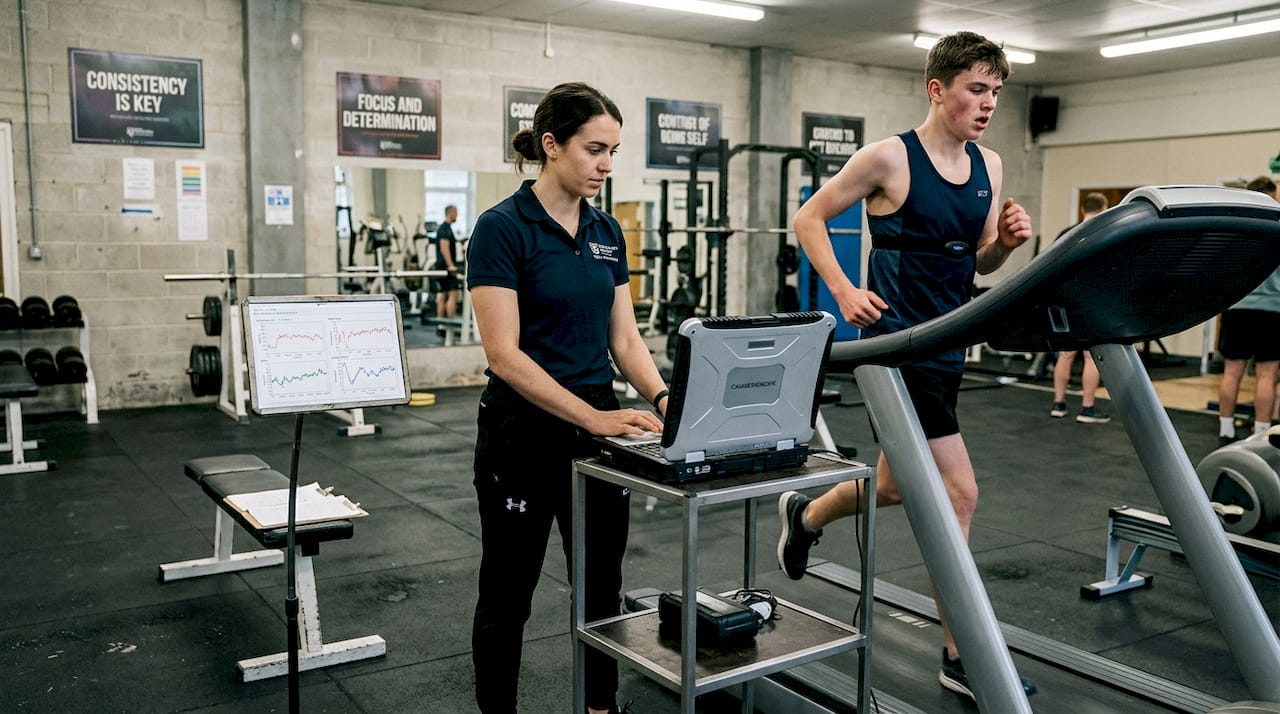
Common methodologies include exploratory data analysis, machine learning approaches such as Random Forest, and multi-sensor fusion, which combines inputs from several devices simultaneously for richer insight. Exploratory data analysis is used by up to 90% of football clubs as a first step in understanding training load trends.
| Methodology | Usage rate | Key strength | Main purpose |
|---|---|---|---|
| Exploratory data analysis | ~90% in football | Identifies trends quickly | Load monitoring and pattern detection |
| Random Forest (ML) | Growing rapidly | High predictive accuracy | Injury risk and performance forecasting |
| Multi-sensor fusion | Elite sport standard | Combines multiple inputs | Biomechanical and physiological profiling |
| Self-report integration | Widely used | Captures subjective state | Contextualises objective data |
Calibration matters enormously here. A poorly calibrated IMU or an inconsistently worn heart rate monitor introduces noise that corrupts your entire dataset. Predictive accuracy in athlete monitoring depends on clean, consistent data collection above all else.
The following tools are most commonly used in practice:
- GPS vests for team sport load tracking
- Chest-strap HRV monitors for daily readiness scores
- Force plates for strength asymmetry testing
- sEMG sensors for muscle recruitment analysis
- Wellness apps for subjective self-reporting
Pro Tip: Resist the urge to track everything at once. Start with three to five metrics that directly relate to your primary performance goal. More data does not automatically mean better decisions. Use the athlete wellness checklist to identify which metrics are most meaningful for your training stage.
For a broader view of how biological data translates into performance insights, the biological data analysis examples resource is worth reviewing before you invest in new monitoring tools.
From numbers to action: the benefits of athlete data analysis
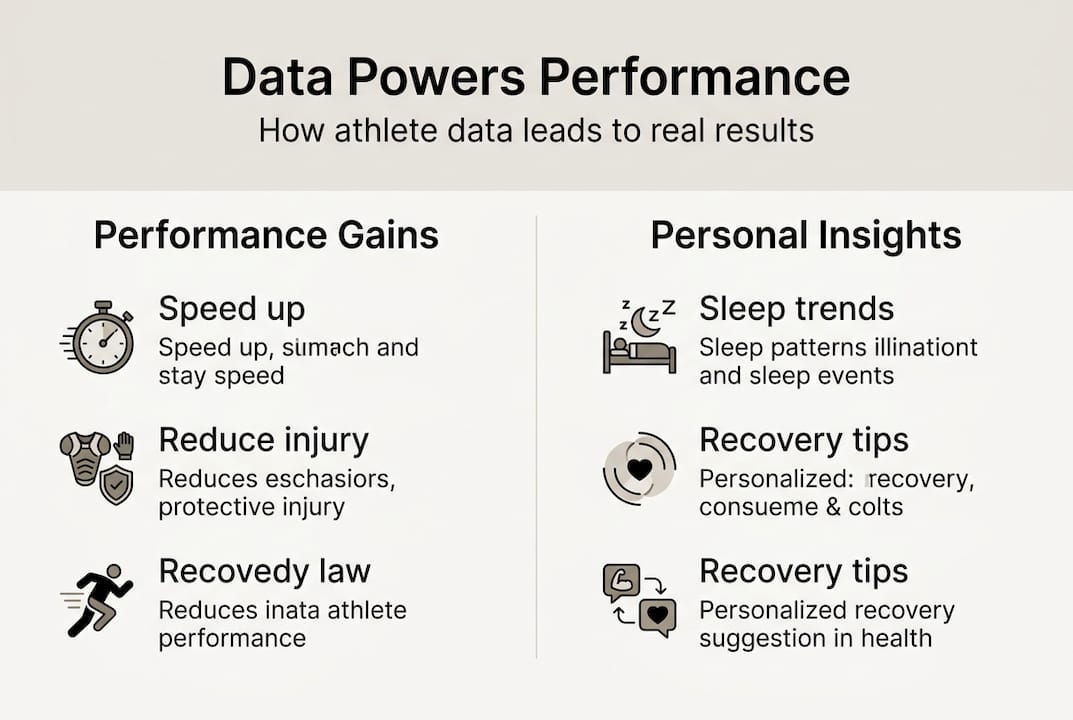
Data collection is only valuable when it changes what you do. The evidence for data-driven athlete health is now substantial. Wearable systems show a 6.2% performance improvement, a 40% reduction in non-contact injuries, and a 73% risk reduction following targeted interventions. These are not marginal gains.
| Benefit area | Measurable outcome | Supporting evidence |
|---|---|---|
| Performance improvement | +6.2% across key metrics | Wearable system trials |
| Non-contact injury reduction | 40% fewer incidents | Load monitoring programmes |
| Risk reduction post-intervention | 73% lower injury risk | Targeted data-driven protocols |
| Strength asymmetry detection | 3.2x higher injury risk above 15% asymmetry | Force plate and sEMG analysis |
A 3.2-fold higher injury risk is associated with strength asymmetry greater than 15%, a threshold that is almost impossible to detect without objective measurement. This single data point can reshape an entire training block.
Here is how raw data becomes an action plan:
- Gather consistent data across training load, recovery, and physiological markers
- Detect patterns using trend analysis or machine learning tools
- Generate feedback through practitioner review or automated alerts
- Adjust training volume, intensity, or recovery protocols accordingly
- Reassess after the intervention to confirm the response
Personalisation is where data analysis truly separates itself from generic advice. Your lactate threshold, sleep requirements, and injury risk profile are not the same as your training partner’s. Data-driven wellness outcomes are consistently superior when protocols are built around individual biological responses rather than population averages.
The role of data in diagnostics extends beyond performance too. Early detection of hormonal imbalances, nutritional deficiencies, and cardiovascular stress markers can prevent the kind of systemic breakdown that sidelines athletes for months. Continuous health monitoring makes this level of vigilance practical and sustainable.
Caveats, challenges, and ethical insights
Data-driven athlete health is not without its problems. The first and most common pitfall is data overload. When athletes and coaches track too many variables simultaneously, signal gets buried in noise and decision-making actually deteriorates. More dashboards do not equal more clarity.
Data quality is a persistent issue. Proprietary metrics like PlayerLoad are calculated differently across platforms, making cross-comparison unreliable. Validity and reliability issues are well-documented, and there is currently limited evidence that monitoring alone produces superior outcomes without skilled interpretation.
The ethical landscape is equally complex. Ethical biases and lack of standardisation raise serious concerns about how athlete data is used, stored, and shared. Key challenges include:
- Privacy and data ownership: who controls your biometric data?
- Autonomy: are athletes pressured to share data they would rather keep private?
- Algorithmic bias: models trained on elite male athletes may not generalise to women or recreational sport
- Lack of standardisation: no universal protocols for data collection or interpretation
- Over-reliance on metrics: short-term markers can obscure long-term adaptation
Monitoring is a guide, not gospel. A low HRV score on a given morning does not automatically mean you should skip training. Context, history, and individual thresholds all matter. Your athlete DNA report can help establish genuinely personalised baselines rather than relying on population norms that may not apply to you.
Pro Tip: Adopt an athlete-centred governance approach. You should always understand what is being measured, why it is being measured, and how the data will be used. If a practitioner cannot explain the rationale clearly, that is a red flag.
Taking charge: practical steps for athletes
Starting a data-driven approach does not require elite-level infrastructure. The most effective frameworks are often the simplest. Here is a practical progression:
- Begin with self-monitoring: log training load (duration and perceived effort), sleep quality, and morning resting heart rate daily
- Add objective recovery metrics: invest in a reliable HRV monitor and track trends over two to four weeks before drawing conclusions
- Introduce movement screening: use force plate testing or functional movement assessments to identify asymmetries above the 15% risk threshold
- Layer in physiological testing: a blood panel analysis provides insight into iron status, hormonal health, inflammation markers, and nutritional gaps
- Consult a specialist: when patterns emerge that you cannot explain, or when performance plateaus despite consistent effort, seek expert interpretation
Expert elicitation complements sparse data, and explainable AI tools are increasingly available to help athletes understand what their data actually means. The goal is not to become a data scientist but to ask better questions of your own biology.
Key questions to ask of any metric: Is this measurement reliable and consistent? Does it reflect my individual baseline or a population average? What action does a change in this number actually require? The essential types of health diagnostics resource outlines which assessments are worth prioritising at each stage of your performance journey.
How AI Healthician helps you turn data into results
Understanding data is one thing. Having the tools and expertise to act on it is another. AI Healthician combines functional testing, advanced biological data analysis, and evidence-informed strategy to build protocols that are specific to your physiology, not a template.
Whether you are looking to optimise metabolic efficiency through active metabolic analysis, understand your genetic predispositions with DNA testing for athletes, or build a long-term performance and longevity strategy through the Longevity Blueprint consultation, the approach is always grounded in your actual data. No generic advice. No guesswork. Just precise, measurable interventions built around what your biology is telling us.
Frequently asked questions
Which wearables and sensors are most effective for monitoring athlete health?
Sensors that combine movement, cardiovascular, and muscle data offer the richest picture. Multi-sensor fusion from IMUs, GPS, and sEMG provides real-time biomechanical and physiological profiling that single-device monitoring cannot match.
How accurate are AI models for predicting injuries in athletes?
Well-trained machine learning models can achieve up to 98% accuracy with an AUC of 0.97 for injury prediction, though performance depends heavily on data quality and individual calibration.
What are the main risks or drawbacks of relying on data analysis?
The primary risks are poor data quality, privacy concerns, and ethical biases in athlete health monitoring, alongside the danger of over-emphasising short-term metrics at the expense of long-term physiological adaptation.
How can I start using data analysis for my own performance and health?
Begin by consistently tracking sleep, training load, and recovery scores, then build upwards. Minimal monitoring frameworks combined with specialist interpretation give you the clearest path from raw numbers to meaningful action.
Recommended
- Biological data analysis examples for health optimisation – Aihealthician
- Why blood panel analysis is vital for performance – Aihealthician
- Role of Deep Health Testing for Endurance Athletes – Aihealthician
- 6 Essentials for an Effective Athlete Wellness Checklist – Aihealthician
- Arccos Game Tracking Sensors: AI Caddie & Strokes Gained Analytics – Aiming Fluid Golf


