


 matt@aihealthician.co.uk


Your age on paper tells only part of your health story. Two people born the same year can have vastly different biological realities, with one experiencing cellular ageing decades ahead of the other. This gap between chronological age and true physiological condition explains why some individuals develop age-related diseases early whilst others maintain vitality well into later years. Biomarker analysis bridges this knowledge gap, offering precise measurements of your body’s internal state and revealing opportunities for targeted interventions. Understanding your biological age through comprehensive biomarker testing transforms vague wellness goals into data-driven strategies for optimising metabolic health, performance, and longevity.
Table of Contents
- Understanding Biological Age And Its Importance
- Types Of Biomarkers And How They Reveal Your Health Status
- Advanced Analysis Techniques Transforming Biomarker Insights
- Practical Applications: Using Biomarker Analysis To Optimise Your Health And Longevity
- Explore Professional Biomarker Testing And Metabolic Assessments
- Frequently Asked Questions About Biomarker Analysis
Key takeaways
| Point | Details |
|---|---|
| Biological age accuracy | Biological age reflects physiological state more accurately than chronological age for predicting health outcomes |
| Personalised monitoring | Biomarker testing enables tailored health interventions based on your unique metabolic and molecular profile |
| AI-enhanced analysis | Machine learning transforms complex biomarker datasets into actionable insights for disease risk prediction |
| Multiple biomarker types | Molecular, physiological, and digital biomarkers each provide distinct perspectives on ageing and health status |
| Clinical validation importance | Consistent data collection using standardised biomarker panels ensures reliable health monitoring over time |
Understanding biological age and its importance
Chronological age simply counts years lived. Biological age measures how well your body functions at the cellular and molecular level. These two numbers rarely align perfectly, and the difference matters enormously for your health trajectory.
Biological age captures changes occurring across multiple biological systems. At the molecular level, DNA methylation patterns shift over time, altering gene expression. Cellular structures accumulate damage, mitochondria lose efficiency, and stem cell populations decline. Tissue-level changes include arterial stiffening, muscle loss, and reduced organ reserve capacity. These processes collectively determine how resilient you are to stress, disease, and physical demands.
The 12 hallmarks of ageing provide a framework for understanding biological ageing drivers:
- Genomic instability from accumulated DNA damage
- Telomere shortening limiting cellular replication
- Epigenetic alterations changing gene activity patterns
- Loss of proteostasis disrupting protein quality control
- Disabled macroautophagy reducing cellular cleanup
- Deregulated nutrient sensing affecting metabolic efficiency
- Mitochondrial dysfunction impairing energy production
- Cellular senescence creating inflammatory zombie cells
- Stem cell exhaustion reducing regenerative capacity
- Altered intercellular communication disrupting tissue coordination
- Chronic inflammation accelerating tissue damage
- Dysbiosis destabilising microbial balance
Why does biological age predict health better than chronological age? Because it directly measures the physiological deterioration that causes disease. A 45-year-old with advanced biological ageing faces higher cardiovascular risk than a 65-year-old whose biomarkers indicate robust cellular function. Research demonstrates that individuals with accelerated biological ageing show increased mortality risk independent of chronological age.
Biological age serves as a compass for health interventions, revealing which systems need attention before symptoms emerge.
When you assess metabolic markers, you gain visibility into one critical dimension of biological ageing. Metabolic dysfunction often precedes clinical disease by years, making early detection through biomarker analysis invaluable for prevention.
Types of biomarkers and how they reveal your health status
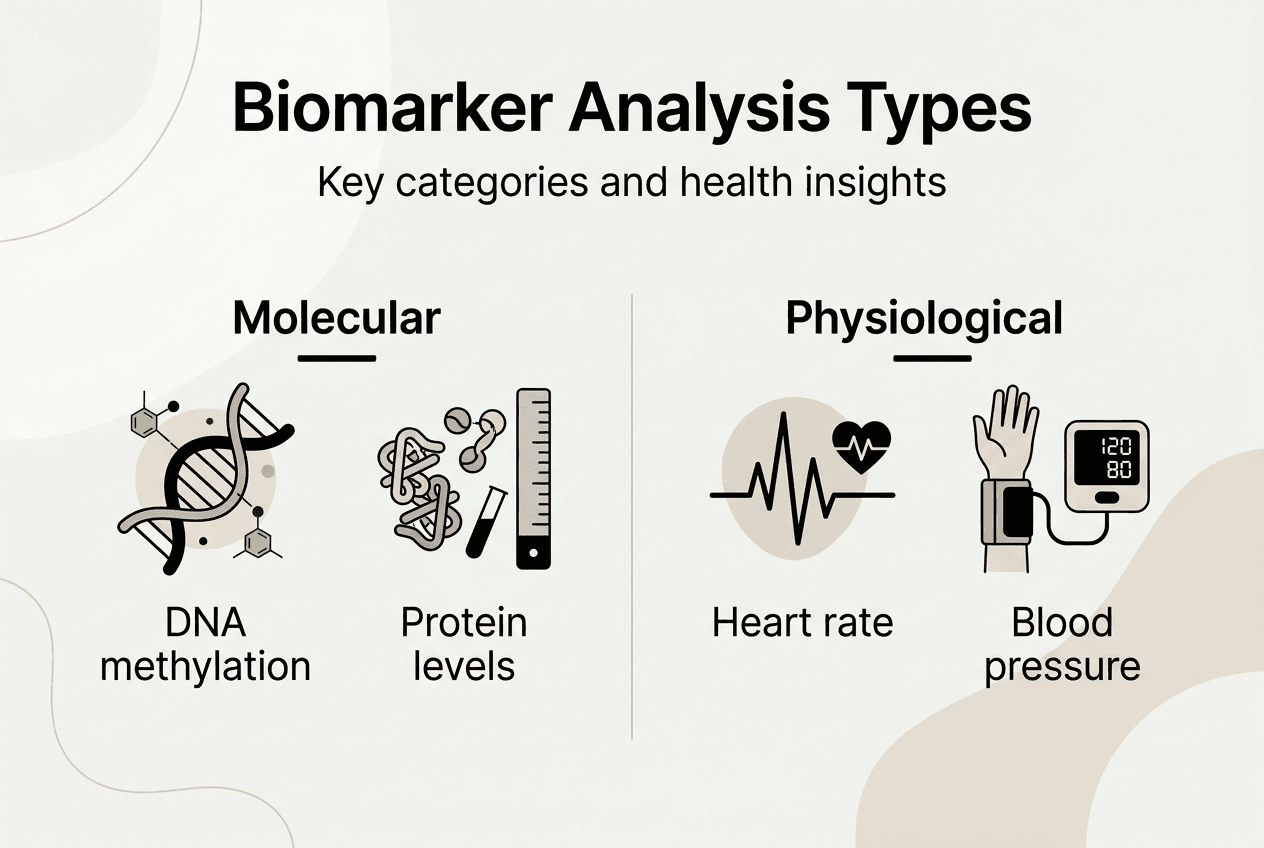
Biomarkers classify as molecular, physiological, or digital, each offering distinct windows into your health status. Understanding these categories helps you select the right tests for your goals.
Molecular biomarkers examine biological processes at the smallest scales. DNA methylation clocks analyse chemical modifications to your genome that accumulate predictably with age, providing biological age estimates accurate within a few years. Proteomic biomarkers measure protein levels in blood, revealing inflammation, organ stress, and metabolic dysfunction. Transcriptomic markers assess gene expression patterns, showing which cellular programmes are active. Metabolomic profiles capture small molecules produced by metabolism, indicating nutrient processing efficiency and mitochondrial health.

Physiological biomarkers track organ system function and physical capacity. Cardiovascular markers include resting heart rate, blood pressure, arterial stiffness, and heart rate variability. Metabolic indicators encompass fasting glucose, insulin sensitivity, lipid profiles, and inflammatory markers like high-sensitivity C-reactive protein. Body composition metrics such as visceral fat percentage and lean muscle mass reflect metabolic health. Functional capacity measures like VO2 max and grip strength predict longevity independently of other factors.
Digital biomarkers emerge from continuous monitoring technologies. Wearable devices track sleep architecture, activity patterns, heart rate variability, and recovery metrics. Smartphone apps can assess cognitive function, gait patterns, and voice characteristics that change with ageing. AI algorithms analyse these streams to detect subtle deviations from your baseline, flagging potential issues before they become symptomatic.
Exploring types of health diagnostics reveals how these biomarker categories integrate into comprehensive health assessments. The metabolic health data guide explains how metabolic biomarkers specifically inform performance and longevity strategies.
| Biomarker Type | Primary Data Source | Typical Applications |
|---|---|---|
| DNA methylation | Blood sample | Biological age estimation, disease risk prediction |
| Proteomics | Blood plasma | Inflammation status, organ function, metabolic state |
| Cardiovascular | Clinical measurement | Heart health, arterial ageing, autonomic function |
| Metabolic panel | Blood sample | Glucose regulation, lipid metabolism, liver function |
| Body composition | DEXA or 3D scan | Muscle mass, fat distribution, bone density |
| Digital wearable | Continuous monitoring | Sleep quality, activity patterns, recovery capacity |
Combining multiple biomarker types creates a multidimensional health profile far more informative than any single test.
Advanced analysis techniques transforming biomarker insights
Raw biomarker data means little without proper interpretation. Traditional approaches struggle with the complexity and volume of modern health datasets, but artificial intelligence excels at finding meaningful patterns in high-dimensional information.
Machine learning models identify subtle relationships between biomarkers that human analysis might miss. These algorithms can integrate hundreds of variables simultaneously, weighing their relative importance for predicting outcomes. For biological age estimation, AI-driven methods facilitate interpretation of complex datasets and support accessible health monitoring tools. Models trained on large populations learn which biomarker combinations best predict disease risk, functional decline, and mortality.
Deep learning algorithms enhance efficiency when analysing heterogeneous medical data. Neural networks can process diverse inputs including blood biomarkers, imaging data, genetic information, and lifestyle factors, synthesising them into unified risk assessments. These systems improve continuously as they encounter more data, becoming increasingly accurate at personalised predictions.
Generative AI represents the latest frontier in health analytics. Large language models can explain biomarker results in plain language, answer questions about interventions, and generate personalised protocols based on your unique profile. Computer vision algorithms analyse medical images to detect subtle changes invisible to human observers. These technologies make sophisticated health insights accessible without requiring medical expertise.
Practical applications include:
- Predicting cardiovascular events years before symptoms appear
- Identifying optimal dietary interventions based on metabolic biomarkers
- Detecting early signs of cognitive decline through digital biomarkers
- Personalising exercise protocols to maximise metabolic adaptations
- Monitoring intervention effectiveness through biomarker trajectories
Pro Tip: Utilise comprehensive biomarker panels analysed with AI algorithms rather than isolated tests. Single biomarkers provide limited information, but integrated analysis of multiple markers reveals systemic patterns that guide more effective interventions.
Understanding metabolism tests for better performance demonstrates how advanced analysis transforms metabolic biomarker data into actionable strategies for optimising energy utilisation and body composition.
Practical applications: using biomarker analysis to optimise your health and longevity
Biomarker knowledge becomes valuable only when applied to real health decisions. Here’s how to translate test results into measurable improvements.
-
Select biomarker tests aligned with your specific health goals. If metabolic health concerns you, prioritise glucose regulation markers, insulin sensitivity, lipid profiles, and inflammatory indicators. For performance optimisation, focus on hormonal panels, nutrient status, and recovery biomarkers. Longevity-focused testing should include biological age clocks, cardiovascular markers, and cellular senescence indicators.
-
Interpret results with qualified support. Biomarker values exist within complex physiological contexts that require expertise to decode properly. Work with healthcare providers or health coaches trained in functional medicine approaches who understand optimal ranges beyond standard reference intervals. They can identify subclinical dysfunction before it progresses to disease.
-
Implement targeted interventions based on biomarker findings. Elevated inflammatory markers might prompt dietary changes emphasising anti-inflammatory foods and omega-3 supplementation. Poor glucose control could indicate need for time-restricted eating or specific macronutrient ratios. Suboptimal hormone levels might require lifestyle modifications or replacement therapy.
-
Measure intervention effectiveness through biomarker retesting. Biomarkers stratify participants and monitor responses to interventions in clinical trials, demonstrating clinical utility. Apply this principle personally by retesting key markers after implementing changes. Improvements validate your approach whilst lack of progress signals need for strategy adjustment.
-
Establish consistent monitoring schedules for long-term tracking. Quarterly testing captures trends in rapidly changing markers like inflammation and metabolic function. Annual comprehensive panels including biological age clocks reveal longer-term trajectory. This longitudinal data becomes increasingly valuable over time, showing whether you’re ageing slower or faster than your chronological years suggest.
Pro Tip: Prioritise providers offering standardised biomarker panels validated for clinical relevance rather than trendy tests lacking scientific backing. Validation ensures measurements accurately reflect what they claim to measure and predict meaningful health outcomes.
Ageing clocks predict disease risks and enable personalised prevention strategies, transforming biomarker analysis from passive observation to active health optimisation. Accessing advanced personalised diagnostics and understanding health longevity insights equips you with knowledge to make informed testing decisions.
Explore professional biomarker testing and metabolic assessments
Transforming biomarker knowledge into personalised health improvements requires access to comprehensive testing and expert interpretation. Professional services bridge the gap between understanding biomarker principles and applying them to your unique physiology.
AI Healthician offers validated testing protocols that measure the biomarkers most relevant for metabolic optimisation and longevity. DNA health testing reveals genetic predispositions influencing nutrient metabolism, detoxification capacity, and disease risk, allowing you to tailor interventions to your genetic blueprint. The resting active metabolic test with 3D body scan quantifies your exact caloric needs and body composition, providing baseline data for tracking metabolic improvements. For focused metabolic assessment, the resting metabolic analysis test measures energy expenditure with precision, informing nutrition strategies that align with your actual metabolic rate rather than population estimates. These tools generate actionable data that transforms vague health goals into measurable outcomes, supporting the personalised, evidence-informed approach that characterises effective health optimisation.
Frequently asked questions about biomarker analysis
What is the difference between biological and chronological age?
Chronological age counts years since birth, whilst biological age measures your body’s physiological condition and functional capacity. Two people with identical chronological ages can have biological ages differing by decades based on lifestyle, genetics, and environmental exposures. Biological age better predicts disease risk, mortality, and physical performance because it directly reflects the cellular and molecular processes driving ageing.
How often should I test biomarkers for accurate monitoring?
Testing frequency depends on which biomarkers you’re tracking and your health goals. Rapidly changing markers like inflammatory indicators and glucose regulation benefit from quarterly assessment, especially when implementing new interventions. Comprehensive panels including biological age clocks provide meaningful data annually, revealing longer-term trends. Stable markers like genetic tests require testing only once, though epigenetic clocks measuring DNA methylation warrant periodic retesting to track biological ageing trajectory.
Can biomarker analysis predict specific diseases?
Biomarker panels identify increased risk for disease categories rather than diagnosing specific conditions. Elevated cardiovascular biomarkers indicate higher heart disease and stroke risk without specifying which will occur. Advanced proteomic panels can detect early signs of organ dysfunction years before clinical symptoms emerge, enabling preventive interventions. Biological age clocks correlate with increased risk across multiple age-related diseases including cardiovascular disease, cancer, and neurodegeneration. This broad risk assessment proves more valuable than disease-specific predictions because interventions improving overall biological age typically reduce risk across multiple conditions simultaneously.
Are biomarker tests reliable and clinically validated?
Reliability varies dramatically between biomarker tests. Established markers like lipid panels and glucose measurements have decades of validation demonstrating clinical utility. Newer biological age clocks show strong correlations with health outcomes in research settings but require standardised protocols for consistent results. Digital biomarkers from wearables lack the rigorous validation of laboratory tests but provide useful trend data when interpreted cautiously. Always verify that testing providers use clinically validated methods with published evidence supporting their accuracy and reproducibility.
How does AI improve the accuracy of biomarker interpretations?
Artificial intelligence identifies complex patterns across multiple biomarkers that simple reference ranges miss. Machine learning models trained on thousands of individuals learn which biomarker combinations best predict outcomes, providing more nuanced risk assessments than evaluating markers in isolation. AI algorithms can integrate diverse data types including blood biomarkers, genetic information, lifestyle factors, and wearable device data, synthesising them into unified health profiles. Deep learning approaches detect subtle changes in biomarker trajectories that signal emerging problems before they become clinically apparent, enabling earlier interventions when they’re most effective.


