


 matt@aihealthician.co.uk


Your latest blood test came back ‘normal’, yet you still wake up exhausted, struggle through workouts, and feel your edge slipping away. Standard blood panels often miss the subtle imbalances that separate optimal performance from merely functional health. For athletes and busy professionals, routine blood testing reveals internal nutrient deficiencies and hormonal shifts that standard ranges overlook, making personalised blood panel analysis essential for unlocking true performance potential.
Table of Contents
- Why Blood Panel Analysis Matters For Performance Optimisation
- Key Biomarkers Impacting Energy And Recovery
- Common Misconceptions About Standard Blood Panels
- Applying Blood Panel Data To Personalised Health And Performance Protocols
- Bridging Understanding To Practical Application
- Enhance Your Performance With AI Healthician Testing Services
- Frequently Asked Questions About Blood Panel Analysis For Performance
Key takeaways
| Point | Details | |-------|---------|| | Hidden imbalances | Blood panels reveal physiological deficits invisible in standard tests, directly impacting energy and recovery. | | Critical biomarkers | Iron, vitamin D, thyroid hormones, and inflammation markers govern performance capacity and metabolic health. | | Athlete-specific needs | Standard ‘normal’ ranges often fail to capture optimal levels required for athletic performance and demanding lifestyles. | | Personalised protocols | Targeted blood data enables precise nutrition, supplementation, and training adjustments tailored to individual biology. | | Longitudinal tracking | Regular testing identifies meaningful trends, guides effective interventions, and prevents chronic health conditions. |
Why blood panel analysis matters for performance optimisation
Your body operates like a finely tuned engine. When key nutrients or hormones fall even slightly below optimal levels, performance suffers long before conventional medicine flags a problem. Standard blood tests use reference ranges designed for general populations, not for individuals pushing physical and mental limits daily.
Iron and ferritin levels directly influence oxygen delivery to working muscles. Low ferritin, even within ‘normal’ laboratory ranges, can reduce endurance capacity by up to 15%. Vitamin D affects muscle contraction efficiency, immune resilience, and recovery speed. Athletes with suboptimal vitamin D often experience more frequent illness and slower healing from training stress.
Hormonal balance regulates everything from metabolism to stress recovery. Thyroid hormones control your metabolic rate, whilst cortisol patterns reveal how well your body manages daily demands. Elevated inflammatory markers like C-Reactive Protein signal overtraining, injury risk, or underlying immune activation that hampers recovery. Vitamin B12 deficiency can mimic burnout symptoms such as fatigue, dizziness, and brain fog, conditions busy professionals frequently attribute to work stress alone.
Blood panel insights transform vague symptoms into measurable data points, enabling targeted interventions rather than guesswork.
Understanding which biomarkers matter most allows you to prioritise testing and interpretation. Functional health tests for athletes extend beyond basic panels to capture performance-relevant physiology. Key markers include:
- Complete blood count for oxygen transport capacity
- Iron panel assessing ferritin and serum iron
- Vitamin D for muscle and immune function
- Thyroid hormones governing metabolism
- Cortisol patterns revealing stress recovery
- Inflammatory markers indicating tissue stress
These biomarkers provide a comprehensive view of your internal environment, revealing how your biology responds to training, nutrition, and lifestyle demands. Without this data, you’re essentially navigating performance optimisation blindfolded.
Key biomarkers impacting energy and recovery
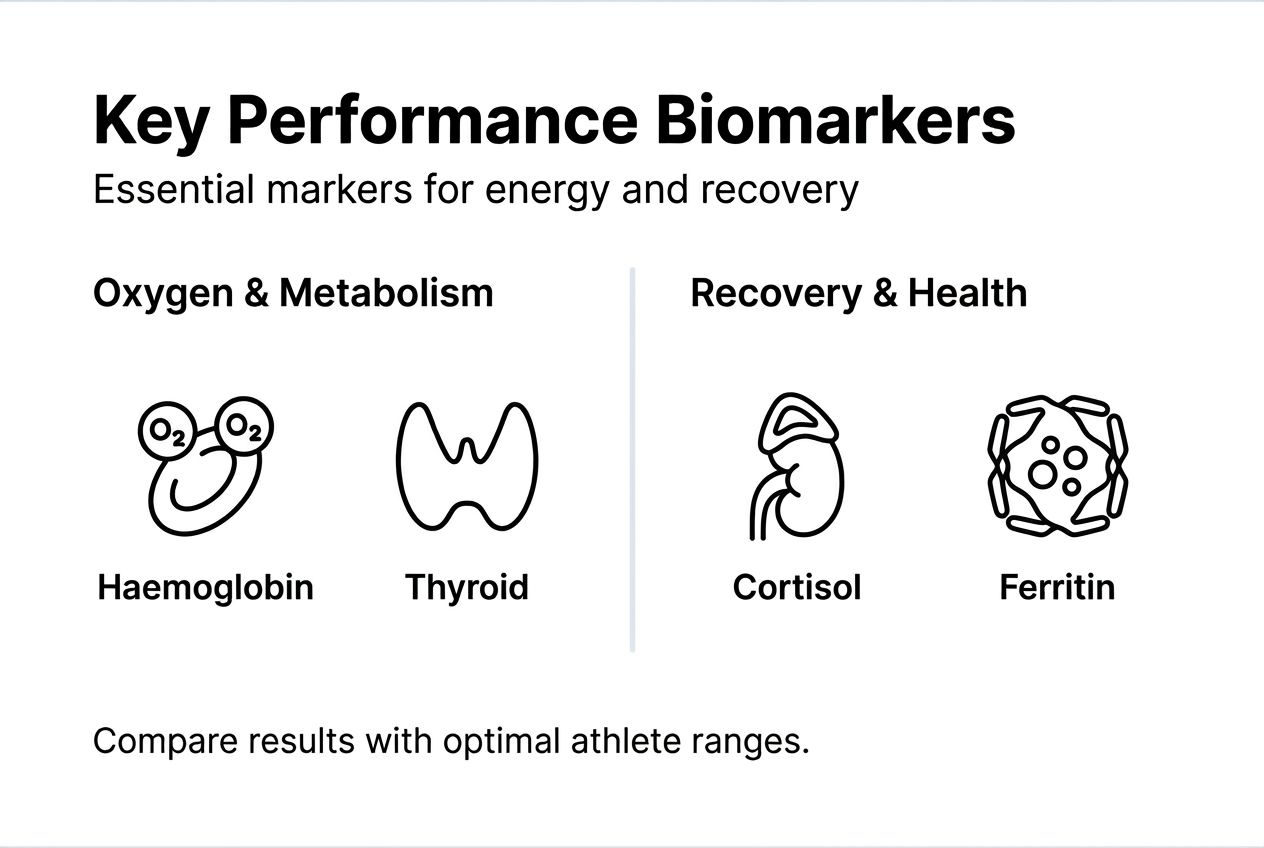
Each blood marker tells a specific story about your physiology. Cortisol and thyroid markers provide insights into metabolic rate and stress response, directly influencing how efficiently your body produces energy and recovers from exertion. Understanding these markers empowers you to make informed decisions about training intensity, nutrition timing, and recovery protocols.
| Biomarker | Function | Performance Impact |
|---|---|---|
| Haemoglobin | Oxygen transport protein in red blood cells | Low levels reduce aerobic capacity and endurance |
| Ferritin | Iron storage protein | Suboptimal levels impair oxygen delivery even with normal haemoglobin |
| Vitamin D | Regulates calcium, immune function, muscle contraction | Deficiency increases injury risk and immune suppression |
| TSH, T3, T4 | Thyroid hormones controlling metabolism | Imbalance causes fatigue, weight changes, temperature sensitivity |
| Cortisol | Primary stress hormone | Chronic elevation disrupts sleep, recovery, and immune function |
| CRP | Inflammatory marker | Elevated levels signal overtraining or underlying inflammation |
Complete blood count panels reveal haemoglobin and haematocrit levels, determining your blood’s oxygen-carrying capacity. Athletes require higher levels than sedentary individuals to support increased tissue oxygen demands. White cell counts indicate immune system activation, helping identify overtraining before it manifests as illness or injury.

Iron panels assess both serum iron and ferritin storage. Ferritin below 30 ng/mL often impairs performance even when other iron markers appear normal. Women athletes particularly need regular monitoring due to menstrual losses. Examples of metabolic biomarkers extend to glucose regulation and lipid profiles, revealing how efficiently your body manages fuel during rest and exercise.
Thyroid function tests measure TSH, free T3, and free T4. These hormones regulate your metabolic rate, determining how many calories you burn at rest and how efficiently you convert food into usable energy. Subclinical thyroid dysfunction can mimic training fatigue, making it essential to rule out hormonal issues before adjusting training loads.
Pro Tip: Request a full thyroid panel including free T3 and reverse T3, not just TSH. TSH alone misses many functional thyroid issues affecting energy and metabolism.
Vitamin B12 and folate support red blood cell production and nervous system function. Deficiency presents as fatigue, poor concentration, and reduced exercise capacity. Assessing metabolic markers for recovery helps identify these subtle deficiencies before they become clinical problems. Understanding your personal biomarker patterns allows you to track changes over time and adjust interventions based on measurable progress rather than subjective feelings.
Common misconceptions about standard blood panels
Many people assume that ‘normal’ test results mean optimal health. This misunderstanding stems from how laboratory reference ranges are established. Standard ranges reflect the middle 95% of test results from the general population, which includes sedentary individuals, people with undiagnosed conditions, and those with suboptimal health habits.
For athletes and busy professionals, ‘normal’ often means mediocre. Your ferritin might sit at 25 ng/mL, technically within range, but optimal performance typically requires levels above 50 ng/mL. Your vitamin D might register at 30 ng/mL, avoiding deficiency classification, yet research suggests athletes benefit from levels between 40-60 ng/mL for immune and muscle function.
Standard blood panels typically omit many performance-critical markers:
- Magnesium levels despite its role in energy production and muscle function
- Omega-3 fatty acid status affecting inflammation and recovery
- Homocysteine indicating methylation efficiency and cardiovascular risk
- Advanced lipid particles revealing true cardiovascular health
- Sex hormones beyond basic testosterone and oestrogen
Another common misconception suggests that one test provides complete information. Your biology changes constantly in response to training stress, dietary patterns, sleep quality, and life demands. A single snapshot cannot capture these dynamic shifts. Advanced blood testing benefits include longitudinal tracking that reveals trends invisible in isolated results.
Some individuals believe blood panels replace medical care. This misses the point entirely. Blood testing complements professional medical evaluation, providing data that informs clinical decisions. Your results should always be interpreted by qualified professionals who understand both general medicine and performance-specific considerations.
Pro Tip: Always compare your results to optimal ranges for active individuals, not just laboratory reference ranges. Optimal thyroid function for athletes typically requires TSH below 2.5 mIU/L, not just within the standard 0.5-4.5 range.
Recognising these misconceptions helps you approach blood panel analysis with appropriate expectations. The goal isn’t merely avoiding disease but optimising physiological function for enhanced performance, energy, and longevity.
Applying blood panel data to personalised health and performance protocols
Raw data means nothing without intelligent application. Longitudinal tracking of blood biomarkers enables personalised protocols by identifying meaningful changes beyond individual biological variability. This systematic approach transforms numbers into actionable strategies that directly improve your daily performance and long-term health trajectory.
-
Establish your personal baseline through comprehensive initial testing. This creates reference points for future comparison, accounting for your unique biology rather than population averages.
-
Interpret results using athlete-specific thresholds with expert support. General practitioners often lack training in performance optimisation, making specialised interpretation crucial for meaningful insights.
-
Develop targeted supplementation plans based on identified deficiencies. If ferritin sits at 20 ng/mL, strategic iron supplementation with vitamin C for absorption can restore levels within 8-12 weeks.
-
Adjust training loads according to inflammatory and recovery markers. Elevated CRP or cortisol patterns signal the need for reduced intensity or additional recovery days before overtraining syndrome develops.
-
Monitor hormonal balance to optimise metabolic health. Suboptimal thyroid function might require dietary adjustments, stress management, or medical intervention depending on severity.
-
Use ongoing testing to refine protocols and prevent overtreatment. Retest ferritin after 12 weeks of supplementation to avoid iron overload whilst confirming your intervention worked.
Effective blood panel use requires patience and consistency. Biomarkers shift slowly, typically requiring 8-12 weeks to reflect dietary or supplementation changes.
Essential health diagnostics extend beyond blood panels to include metabolic testing, body composition analysis, and functional movement assessments. Combining these data sources provides comprehensive insight into your physiological state. Your blood reveals internal chemistry, metabolic testing shows how efficiently you burn fuel, and body composition tracks how your tissues respond to interventions.
Precision blood testing enables you to move from reactive symptom management to proactive optimisation. Rather than waiting until you feel terrible to investigate, regular monitoring catches subtle shifts early when interventions are most effective and least invasive.
Pro Tip: Create a testing schedule aligned with training cycles. Test during base training periods to establish baselines, then retest after competition phases to assess recovery needs and prevent cumulative deficits.
Following a structured metabolic health workflow ensures systematic progress. Document your protocols, track subjective changes alongside objective markers, and refine your approach based on what the data reveals about your unique physiology.
Bridging understanding to practical application
Knowledge without action remains merely interesting information. Your next steps determine whether blood panel insights translate into measurable performance gains and sustained health improvements. Athletes and busy professionals benefit most from systematic approaches that integrate testing into broader health and performance strategies.
Test regularly to capture meaningful trends. Quarterly testing during training phases provides sufficient frequency to track changes without excessive cost or inconvenience. Annual testing suffices for general health monitoring when no specific concerns exist. Regular blood panel monitoring helps detect early metabolic syndrome markers like HbA1c and triglycerides, enabling timely modifications to prevent chronic conditions.
Choose panels tailored to your specific needs:
- Endurance athletes prioritise iron, vitamin D, magnesium, and inflammatory markers
- Strength athletes focus on testosterone, cortisol, vitamin D, and recovery indicators
- Busy professionals emphasise thyroid function, cortisol patterns, vitamin B12, and metabolic markers
- Individuals over 35 add cardiovascular risk markers and hormonal panels
Work with health professionals experienced in performance optimisation, not just disease management. Sports medicine practitioners, functional medicine doctors, and qualified nutritionists understand how to interpret results through a performance lens rather than solely a pathology perspective.
Combine blood data with functional assessments for comprehensive insight. Your ferritin might be optimal, but if metabolic testing reveals poor fat oxidation, dietary composition might need adjustment despite adequate nutrient status. This integrated approach prevents tunnel vision on single markers whilst missing broader patterns.
Early detection prevents long-term problems. Identifying prediabetic glucose patterns at 30 allows decades of intervention before diabetes develops. Catching suboptimal thyroid function early prevents years of unexplained fatigue and metabolic dysfunction. Blood panels serve as early warning systems, highlighting issues whilst they remain easily correctable.
Your biology provides continuous feedback if you know how to listen. Blood panel analysis offers the clearest signal, cutting through subjective perceptions to reveal objective physiological status. This clarity empowers you to make informed decisions about training, nutrition, recovery, and long-term health strategies based on your unique biological reality.
Enhance your performance with AI Healthician testing services
Understanding your biomarkers is the first step. Translating that knowledge into measurable improvements requires comprehensive testing and expert interpretation tailored to your performance goals.

AI Healthician offers advanced blood and metabolic testing designed specifically for athletes and busy professionals seeking evidence-based optimisation. Our DNA health testing reveals genetic predispositions affecting nutrient metabolism, injury risk, and recovery capacity. The resting and active metabolic test combines blood panel insights with real-time metabolic data and 3D body composition scanning, providing complete physiological profiles that guide precise interventions. For focused metabolic assessment, our active metabolic test measures exactly how your body utilises fuel during exercise, informing optimal nutrition timing and training intensity.
Personalised results empower you to optimise energy, sharpen recovery, and build sustainable long-term health protocols. Access expert support to interpret your unique biomarker patterns and develop custom strategies that align with your specific performance and lifestyle demands.
Frequently asked questions about blood panel analysis for performance
What is the difference between standard and athlete-specific blood panels?
Standard panels use reference ranges derived from general populations, often missing optimal levels required for athletic performance. Athlete-specific panels include additional markers like ferritin, vitamin D, magnesium, and inflammatory indicators whilst applying tighter optimal ranges that support high-level physical output rather than merely avoiding disease.
How often should I get my blood tested for performance tracking?
Quarterly testing during active training phases captures meaningful changes and allows timely protocol adjustments. Annual testing suffices for general health monitoring when no specific deficiencies or concerns exist. Increase frequency if addressing known imbalances or during major training cycle transitions.
Can blood panel analysis replace regular medical check-ups?
No. Blood panels complement but never replace comprehensive medical care. They provide valuable data that informs clinical decisions, but qualified healthcare professionals must interpret results within your complete health context, considering symptoms, medical history, and physical examination findings.
What key biomarkers should busy professionals focus on?
Prioritise thyroid function (TSH, free T3, free T4), cortisol patterns, vitamin B12, vitamin D, inflammatory markers (CRP), and metabolic indicators (glucose, HbA1c, lipid panels). These markers reveal how well your body manages stress, maintains energy production, and regulates metabolism under demanding work and lifestyle conditions.
How can I use blood panel results to improve my training recovery?
Elevated inflammatory markers signal the need for reduced training intensity or additional recovery days. Low ferritin requires iron supplementation and possibly reduced training volume until stores replenish. Suboptimal vitamin D warrants supplementation to support immune function and reduce injury risk. Hormonal imbalances might necessitate stress management strategies, sleep optimisation, or training periodisation adjustments.


