


 matt@aihealthician.co.uk


Most health advice treats everyone the same, but your body operates on its own unique blueprint. Precision health tailors prevention, treatment, and monitoring to individual genetic, molecular, physiologic, behavioural, and exposure profiles to optimise health trajectories, performance, and longevity. Unlike traditional medicine’s broad strokes, this approach combines genetics, lifestyle data, and cutting-edge technology to create strategies as individual as your fingerprint. This guide explains how precision health works, what benefits and challenges it presents, and practical ways you can apply it to enhance your own wellbeing and lifespan.
Table of Contents
- Key takeaways
- Understanding precision health: what it means for you
- Real-world benefits and limitations of precision health
- The expanding role of AI and multi-omics in personalised health optimisation
- Applying precision health: practical steps to enhance your wellbeing
- Discover personalised health tests and assessments
- Frequently asked questions
Key Takeaways
| Point | Details |
|---|---|
| Personalised health profiling | Precision health tailors prevention and monitoring to your unique genetic, molecular and lifestyle profile to optimise health trajectories. |
| Enabling technologies | Wearables, pharmacogenomics and AI enable proactive, personalised interventions rather than generic guidance. |
| Cost and outcomes | Real world data show substantial cost savings and improved disease control in obesity, diabetes and cardiovascular care. |
| Data gaps ageing | Underrepresentation in data and ageing can limit accuracy and inclusivity of precision health. |
| Integration with traditional medicine | Integrating precision health with traditional medicine supports holistic wellbeing across the body. |
Understanding precision health: what it means for you
Precision health represents an evolution from precision medicine, expanding focus beyond treating disease to optimising whole-body health across your lifespan. Where traditional healthcare applies standardised protocols, this approach recognises that your response to diet, exercise, stress, and medication differs fundamentally from the person beside you. The foundation lies in comprehensive data collection spanning multiple dimensions of your biology and environment.
Your precision health profile draws from diverse data sources. Genetic information reveals predispositions and metabolic tendencies. Molecular markers track inflammation, hormone balance, and cellular function. Physiologic measurements capture cardiovascular fitness, metabolic rate, and recovery capacity. Behavioural patterns document sleep quality, activity levels, and stress responses. Environmental exposures account for pollutants, toxins, and lifestyle factors shaping your health trajectory.
Key methodologies powering precision health include:
- Pharmacogenomics, which determines how your genes affect medication response and optimal dosing
- Multi-omics analysis combining genomics, metabolomics, and microbiomics to map your biological landscape
- Wearable devices providing continuous physiologic monitoring and real-time feedback
- AI-driven in silico twins creating digital models of your health for predictive analysis
- Polygenic risk scores calculating disease susceptibility from multiple genetic variants
These technologies enable advanced diagnostics that move beyond reactive treatment to proactive optimisation. Rather than waiting for symptoms, you identify vulnerabilities early and implement targeted interventions. Instead of generic nutrition advice, you receive meal plans matched to your metabolic type and genetic variants affecting nutrient processing. Exercise prescriptions account for your recovery capacity and injury risk factors. Continuous health monitoring tracks how interventions affect your unique physiology, allowing real-time adjustments.
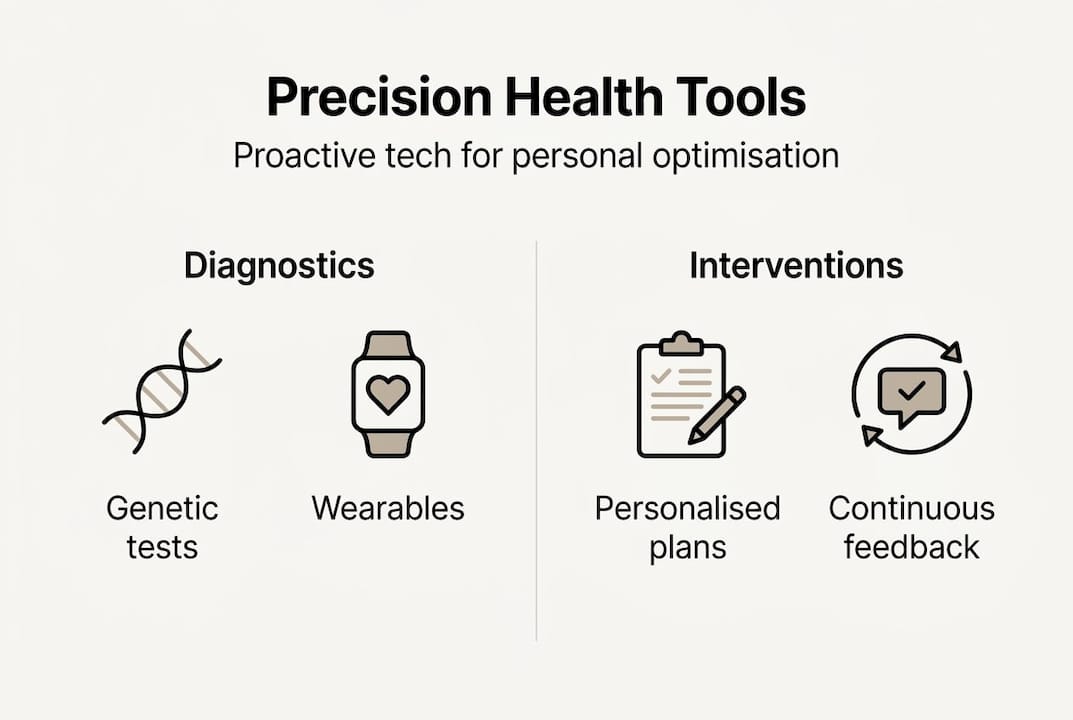
The distinction from traditional approaches becomes clear in practice. Standard care might recommend 150 minutes of weekly exercise for everyone. Precision health determines whether you respond better to high-intensity intervals or steady endurance work based on your genetic profile, current fitness markers, and recovery data. It identifies whether your fatigue stems from iron deficiency, thyroid dysfunction, or sleep disruption rather than prescribing generic energy supplements. This granular understanding transforms vague wellness goals into measurable, achievable targets supported by your biological data.
Real-world benefits and limitations of precision health
Empirical evidence demonstrates substantial impact when precision health strategies meet real-world implementation. Precision nutrition reduces medical costs by £3,012 per member per year in obesity and digestive issues, whilst 71% of type 2 diabetes patients achieve HbA1c below 6.5% without costly medications. Cardiovascular care shows similar promise, with precision strategies cutting unnecessary catheterisations by 65% through better risk stratification. These outcomes reflect targeted interventions addressing root causes rather than managing symptoms.

| Health condition | Precision health outcome | Traditional approach comparison |
|---|---|---|
| Obesity and digestive issues | £3,012 annual cost reduction per member | Standard dietary advice shows minimal cost impact |
| Type 2 diabetes | 71% achieve HbA1c <6.5% without expensive medications | Conventional treatment relies heavily on pharmaceutical management |
| Cardiovascular disease | 65% reduction in unnecessary catheterisations | Broad screening leads to overtreatment |
| Metabolic syndrome | Individualised protocols improve multiple markers simultaneously | Generic lifestyle advice addresses symptoms in isolation |
The benefits extend beyond cost savings to improved quality of life and performance. Tailored metabolic health interventions enhance energy stability, cognitive function, and physical resilience. Personalised recovery protocols reduce injury risk and accelerate adaptation to training. Targeted supplementation addresses specific deficiencies rather than shotgun approaches hoping something works. Sleep optimisation strategies account for your chronotype and circadian genetics.
Key advantages include:
- Earlier disease detection through risk scoring and biomarker tracking
- Reduced trial-and-error in treatment selection
- Prevention strategies addressing your specific vulnerabilities
- Optimised medication dosing minimising side effects
- Enhanced performance through individualised training and nutrition
Yet precision health faces significant limitations requiring honest acknowledgement. Underrepresentation of diverse populations causes disparities, as most genetic databases reflect European ancestry. If your background differs, predictive accuracy drops substantially. Ageing reduces genetic influence on health outcomes, meaning precision interventions show stronger effects in younger individuals. The predictive power of polygenic scores remains modest for most conditions, explaining only small portions of disease risk. AI models struggle with longitudinal ambiguity and bias, sometimes generating confident predictions from incomplete or skewed data.
“Implementation barriers including data quality issues, algorithmic bias, and limited real-world decision support constrain precision health’s current reach, demanding careful validation before widespread clinical adoption.”
Pro tip: View precision health as one powerful tool in your wellness toolkit, not a crystal ball. Combine genetic insights with lifestyle modifications, professional guidance, and regular monitoring. The data reveals tendencies and opportunities, but your choices and environment still shape outcomes significantly. Measuring metabolic health provides actionable starting points regardless of genetic testing access.
The expanding role of AI and multi-omics in personalised health optimisation
Artificial intelligence and multi-omics technologies push precision health’s boundaries by integrating complexity humans cannot process manually. Multi-omics encompasses genomics, revealing your genetic blueprint; metabolomics, tracking the small molecules your metabolism produces; and microbiomics, mapping the trillions of microorganisms influencing digestion, immunity, and even mood. Each layer adds depth to your health profile, but combining them creates exponentially richer insights. AI excels at finding patterns across these massive datasets, identifying connections between genetic variants, metabolic pathways, and health outcomes that would remain invisible otherwise.
AI assists precision health through several mechanisms:
- Creating digital health twins that simulate how interventions might affect your unique physiology before implementation
- Calculating polygenic risk scores weighing hundreds of genetic variants to estimate disease susceptibility
- Predicting medication responses based on pharmacogenomic profiles and historical treatment data
- Identifying optimal nutrition strategies by analysing metabolic responses to different macronutrient ratios
- Forecasting injury risk from movement patterns, recovery metrics, and biomechanical data
- Detecting early disease signals by recognising subtle biomarker shifts over time
AI and multi-omics face implementation barriers despite transformative potential. Data quality issues plague many datasets, with missing values, measurement errors, and inconsistent collection methods undermining model accuracy. Algorithmic bias creeps in when training data overrepresents certain populations or health conditions. Longitudinal ambiguity arises because health changes over years, but most datasets capture only snapshots. Models trained on short-term data struggle predicting long-term outcomes. Real-world clinical decision support remains limited, as few AI tools integrate seamlessly into practitioner workflows.
Precision health demands high-quality data and clinician oversight to avoid overpromising AI predictions. Algorithms cannot replace professional judgement, especially when individual circumstances deviate from training data patterns. A genetic variant flagged as high risk might interact with protective lifestyle factors in your specific case. Metabolic testing showing suboptimal results could reflect temporary stress rather than chronic dysfunction. Context matters enormously, and AI lacks the nuanced understanding practitioners bring.
Practical applications for health-conscious individuals include:
- Personalised nutrition plans matching your metabolic type, genetic variants affecting nutrient processing, and microbiome composition
- Exercise programming adjusted for recovery capacity, injury risk factors, and performance goals based on physiologic monitoring
- Sleep optimisation strategies accounting for chronotype genetics and circadian rhythm data from wearables
- Supplement protocols targeting specific deficiencies identified through metabolic testing rather than generic formulations
- Stress management techniques tailored to your autonomic nervous system balance and cortisol patterns
Pro tip: Approach AI-driven health recommendations with informed scepticism. Verify significant findings with qualified practitioners who understand both the technology’s capabilities and your complete health picture. Data-driven wellness works best when combining algorithmic insights with human expertise and your own experiential knowledge. Technology provides the map, but you navigate the terrain with professional guidance. Preventative health strategies benefit most from this integrated approach.
Applying precision health: practical steps to enhance your wellbeing
Translating precision health concepts into personal action requires systematic assessment, interpretation, and ongoing adaptation. You need not access every cutting-edge technology immediately; starting with foundational testing and building from there creates sustainable progress. The key lies in gathering meaningful data, understanding what it reveals about your unique physiology, then implementing targeted interventions whilst monitoring responses.
Begin your precision health journey through these phases:
- Initial assessment: Select baseline testing appropriate for your goals and current health status, such as DNA analysis for genetic insights, metabolic testing to understand energy utilisation, or comprehensive blood panels revealing biomarker status
- Data interpretation: Work with qualified practitioners to translate results into actionable insights, identifying priority areas where targeted interventions offer greatest impact
- Intervention design: Develop personalised protocols addressing specific findings, whether optimising nutrition for your metabolic type, adjusting training for recovery capacity, or supplementing targeted deficiencies
- Implementation tracking: Use wearables and periodic retesting to monitor how interventions affect your physiology, capturing both subjective experience and objective measurements
- Protocol refinement: Adjust strategies based on response data, amplifying what works and modifying approaches showing limited benefit
- Ongoing optimisation: Establish regular assessment cycles maintaining progress and catching emerging issues early
| Precision health tool | Primary purpose | Key benefits | Important limitations |
|---|---|---|---|
| DNA testing | Genetic predisposition and trait analysis | One-time investment revealing lifelong insights | Cannot predict environment and lifestyle interactions precisely |
| Wearable devices | Continuous physiologic monitoring | Real-time feedback enabling immediate adjustments | Data accuracy varies; requires consistent use |
| Metabolic analysis | Energy utilisation and substrate oxidation | Directly actionable for nutrition and training | Requires periodic retesting as metabolism adapts |
| Blood biomarkers | Current physiologic status and disease markers | Comprehensive health snapshot | Single measurements miss dynamic patterns |
| Microbiome testing | Gut health and microbial balance | Reveals digestion and immunity factors | Interpretation standards still evolving |
Precision health integrates with conventional medicine as complementary approaches promoting whole-body health. Your GP manages acute conditions and chronic disease treatment, whilst precision health optimises performance, resilience, and long-term risk reduction. Share relevant findings with your healthcare team, ensuring interventions align rather than conflict. Some genetic variants affect medication metabolism, information your doctor needs for safe prescribing. Metabolic data might explain persistent symptoms conventional testing missed.
Practical starting points include:
- Establishing baseline metrics through comprehensive health assessment before implementing changes
- Prioritising interventions addressing the biggest gaps between current status and optimal function
- Changing one variable at a time when possible, making cause and effect relationships clearer
- Documenting subjective experience alongside objective data, as you notice patterns technology might miss
- Scheduling regular reviews with practitioners who understand both precision health tools and clinical medicine
Pro tip: Select testing services emphasising data privacy, transparent methodologies, and evidence-based interpretation. Cheaper options often provide raw data without actionable guidance, whilst premium services include expert analysis and ongoing support. Verify that genetic testing companies follow appropriate security protocols and give you control over data sharing. Metabolic health improvement benefits from accurate diagnostics and professional interpretation. Preventative health strategies built on quality data deliver superior outcomes compared to guesswork approaches.
Discover personalised health tests and assessments
Ready to move beyond generic wellness advice and discover what your unique biology reveals? Precision health begins with quality testing providing the insights needed for truly personalised optimisation. DNA health testing unlocks genetic factors influencing everything from nutrient metabolism to injury risk, giving you a blueprint for lifelong wellness decisions. Metabolic assessments like our resting and active metabolic test with 3D body scan reveal exactly how your body uses energy, enabling nutrition and training strategies matched to your physiology.
Continuous monitoring through our active metabolic test shows how interventions affect your real-world performance and recovery. These advanced diagnostics transform vague health goals into measurable targets supported by your biological data. Explore our curated range of precision health assessments designed to empower your individualised wellness journey.
Frequently asked questions
What is the role of precision health in improving longevity?
Precision health identifies individual risk factors and customises interventions to delay ageing and prevent disease. This targeted approach helps maximise lifespan whilst maintaining quality of life by addressing your specific vulnerabilities before they manifest as illness. Rather than generic anti-ageing advice, you implement strategies proven effective for your genetic profile and current biomarker status.
How do wearables contribute to precision health?
Wearables track vital signs and activity levels continuously, providing essential data to refine health plans based on dynamic changes. They reveal patterns in sleep quality, recovery capacity, and stress responses that periodic testing misses. This real-time feedback enables immediate adjustments to nutrition, training, and lifestyle factors, accelerating progress towards your health goals. Continuous monitoring transforms static plans into adaptive strategies responding to your body’s signals.
What are the limitations of AI in precision health?
AI predictions depend on high-quality, unbiased data sets, which remain incomplete for many populations and conditions. Models can misinterpret complex health data over time without clinician oversight, especially when individual circumstances deviate from training patterns. Algorithmic bias and longitudinal ambiguity limit predictive accuracy, making professional interpretation essential for safe application.
How can I start applying precision health strategies today?
Begin with DNA or metabolic testing to understand your unique profile and identify priority areas for intervention. Use results to tailor nutrition, exercise, and monitoring with professional guidance, ensuring changes align with your specific physiology rather than generic recommendations. This systematic approach builds sustainable progress through targeted interventions supported by ongoing data collection and refinement.
Recommended
- Advanced Diagnostics: Powering Personalised Health Protocols – Aihealthician
- Metabolic Health Improvement Workflow for Peak Performance – Aihealthician
- Top 5 optimalhealth.co Alternatives 2026 – Aihealthician
- Role of Preventative Health – Personalised Strategies For Longevity – Aihealthician
- What is wellness in 2026? 35% better health adherence – EQUA - Sustainable Water Bottles


