


 matt@aihealthician.co.uk


Ageing is not simply about accumulating years. It is a complex biological process driven by cellular and molecular changes that determine how well your body functions over time. Health longevity focuses on maintaining resilience, metabolic efficiency, and physical capability rather than merely extending lifespan. This article explores advanced, personalised strategies grounded in cutting edge diagnostics and evidence informed interventions to optimise your healthspan and performance in 2026.
Table of Contents
- Understanding The Science Of Ageing And Health Longevity
- Epigenetic Clocks And Biomarkers: Measuring Ageing More Precisely
- Strategies To Extend Health Longevity Through Metabolic And Cellular Optimisation
- Integrating Diagnostics And Personalised Plans For Maximising Health Longevity
- Explore Personalised Health Testing And Longevity Solutions
- Frequently Asked Questions
Key takeaways
| Point | Details |
|---|---|
| Biological age matters more | Your cellular condition predicts health outcomes far better than chronological years. |
| Epigenetic clocks quantify ageing | DNA methylation patterns reveal your true biological age and disease risk trajectory. |
| Targeted interventions slow decline | Caloric restriction, senotherapeutics, and metabolic optimisation activate longevity pathways. |
| Advanced diagnostics enable precision | Functional biomarkers and metabolic tests guide personalised longevity protocols. |
| Regular monitoring drives adaptation | Dynamic assessment ensures interventions remain effective as your biology evolves. |
Understanding the science of ageing and health longevity
Ageing involves interconnected mechanisms that scientists call the hallmarks of ageing. These include genomic instability, telomere attrition, epigenetic alterations, loss of proteostasis, deregulated nutrient sensing, mitochondrial dysfunction, cellular senescence, stem cell exhaustion, and altered intercellular communication. Each hallmark contributes to declining function and increased vulnerability to disease. Understanding these processes is essential because they represent specific targets for intervention rather than vague notions of “getting old.”
Biological age reflects the actual condition of your tissues and cells, providing a far more accurate predictor of functional health than the number of candles on your birthday cake. Research demonstrates that biological age predicts mortality and morbidity with remarkable precision, outperforming chronological age across multiple health outcomes. Two individuals born in the same year can have vastly different biological ages based on genetics, lifestyle, environmental exposures, and metabolic efficiency.
Epigenetic clocks measure patterns of DNA methylation at specific sites throughout your genome to estimate biological age. These clocks analyse chemical modifications that accumulate on your DNA over time, reflecting how your cells have responded to internal and external stressors. The precision of these measurements allows clinicians and researchers to track ageing trajectories and evaluate whether interventions are genuinely slowing biological decline.
Understanding biomarkers helps you move beyond guesswork into measurable, data driven optimisation. When you assess metabolic markers systematically, you gain insight into how efficiently your body produces energy, manages inflammation, repairs damage, and maintains cellular function. This knowledge forms the foundation for personalised longevity strategies that address your unique physiological profile.
“The pace at which we age biologically varies dramatically between individuals, and this variation explains why some people remain vibrant and resilient into their eighties whilst others experience significant decline decades earlier.”
Key biomarkers for tracking ageing include:
- Inflammatory markers such as C reactive protein and interleukin 6
- Metabolic indicators including fasting glucose, insulin sensitivity, and lipid profiles
- Oxidative stress markers that reveal cellular damage accumulation
- Hormonal balance indicators affecting tissue repair and energy regulation
- Mitochondrial function measures that determine cellular energy production capacity
Epigenetic clocks and biomarkers: measuring ageing more precisely
Epigenetic clocks function by analysing DNA methylation patterns at cytosine phosphate guanine (CpG) sites across your genome. Methylation is a chemical modification that influences gene expression without altering the underlying DNA sequence. As you age, methylation patterns change in predictable ways, creating a biological signature that correlates strongly with chronological age and, more importantly, with health outcomes and mortality risk.
The DunedinPACE biomarker outperforms other measures in predicting mortality, demonstrating superior accuracy compared to traditional epigenetic clocks and standard clinical biomarkers. DunedinPACE quantifies the pace of biological ageing by measuring how quickly physiological systems are declining over time. This forward looking metric captures dynamic changes rather than simply estimating current biological age, making it particularly valuable for evaluating intervention effectiveness.
Research reveals that a minimal set of carefully selected biomarkers can predict mortality nearly as accurately as comprehensive panels containing dozens of measurements. This finding has practical implications for personalised health optimisation, suggesting that targeted testing focused on the most informative markers provides actionable insights without requiring exhaustive laboratory work. The key is selecting biomarkers that capture fundamental ageing processes across multiple physiological systems.
Pro Tip: When evaluating your biological age through advanced diagnostics, focus on longitudinal tracking rather than single measurements. Changes in biomarker patterns over six to twelve months reveal whether your interventions are genuinely slowing biological ageing or merely producing temporary improvements.
Challenges remain in applying epigenetic clocks clinically. Variability between different clock algorithms can produce inconsistent results, and the timeframe required to detect meaningful changes limits their utility for rapid intervention feedback. Additionally, epigenetic age acceleration does not always translate directly to specific disease risk, requiring integration with functional biomarkers and clinical assessments for comprehensive evaluation.
| Biomarker Type | What It Measures | Clinical Utility |
|---|---|---|
| Epigenetic clocks | DNA methylation patterns | Estimates biological age and ageing pace |
| DunedinPACE | Rate of physiological decline | Predicts mortality risk with high accuracy |
| Inflammatory markers | Systemic inflammation levels | Indicates chronic disease risk and tissue damage |
| Metabolic biomarkers | Energy regulation efficiency | Reveals metabolic health and dysfunction |
| Functional capacity tests | Physical performance metrics | Assesses real world health and independence |
When you assess metabolic health alongside epigenetic data, you create a comprehensive picture of your biological state. This integrated approach identifies specific intervention targets whilst providing objective feedback on whether your longevity strategies are producing measurable improvements in cellular function and systemic resilience.
Strategies to extend health longevity through metabolic and cellular optimisation
Caloric restriction (CR) and intermittent fasting (IF) activate fundamental longevity pathways including AMPK, sirtuins, and autophagy. These interventions trigger cellular stress responses that enhance mitochondrial efficiency, improve DNA repair mechanisms, and promote the clearance of damaged proteins and organelles. Research demonstrates that CR and IF improve metabolic health markers including insulin sensitivity, lipid profiles, and inflammatory status whilst potentially extending healthspan.

CR mimetics such as metformin, resveratrol, and rapamycin partially reproduce the benefits of caloric restriction without requiring sustained energy deficit. Metformin improves insulin sensitivity and activates AMPK, mimicking metabolic effects of fasting. Resveratrol activates sirtuins, proteins that regulate cellular stress resistance and DNA repair. Rapamycin inhibits mTOR signalling, promoting autophagy and potentially extending lifespan across multiple species, though human longevity data remains limited.
Senotherapeutics represent a revolutionary approach targeting senescent cells, which are dysfunctional cells that accumulate with age and secrete inflammatory factors damaging surrounding tissues. These “zombie cells” contribute to metabolic dysfunction, tissue degeneration, and age related diseases. Studies show senotherapeutics reduce metabolic disease risk by eliminating senescent cells through senolytics or suppressing their harmful secretions through senomorphics.
Personalised metabolic optimisation involves systematic monitoring and targeted interventions based on your unique physiological data. This approach moves beyond generic wellness advice to address specific metabolic inefficiencies revealed through comprehensive testing. By following a structured metabolic health improvement checklist, you can identify leverage points where targeted interventions produce disproportionate benefits.
Practical longevity strategies include:
- Implementing time restricted eating windows of 8 to 10 hours daily
- Optimising protein intake to preserve muscle mass whilst activating longevity pathways
- Incorporating regular high intensity interval training to enhance mitochondrial biogenesis
- Managing chronic stress through evidence based techniques that reduce cortisol dysregulation
- Prioritising sleep quality and duration to support cellular repair processes
A systematic metabolic health improvement workflow ensures interventions are implemented strategically:
- Establish baseline measurements through comprehensive metabolic and functional testing
- Identify primary bottlenecks limiting metabolic efficiency and cellular function
- Implement targeted interventions addressing the most significant dysfunction
- Monitor biomarker changes every three to six months to evaluate effectiveness
- Adjust protocols based on objective data rather than subjective impressions
- Integrate successful interventions into sustainable lifestyle patterns
Pro Tip: When exploring examples of metabolism tests, prioritise those measuring resting metabolic rate, substrate utilisation, and mitochondrial capacity. These metrics reveal how efficiently your cells generate energy and whether metabolic flexibility exists between carbohydrate and fat oxidation.
Integrating diagnostics and personalised plans for maximising health longevity
Advanced health diagnostics provide the empirical foundation for effective longevity programmes. DNA methylation tests quantify epigenetic age and reveal specific patterns associated with disease risk. Metabolic rate measurements determine energy expenditure at rest and during activity, identifying whether metabolic dysfunction limits performance. Physical function tests including VO2max, grip strength, and gait speed predict mortality risk independently of traditional biomarkers.
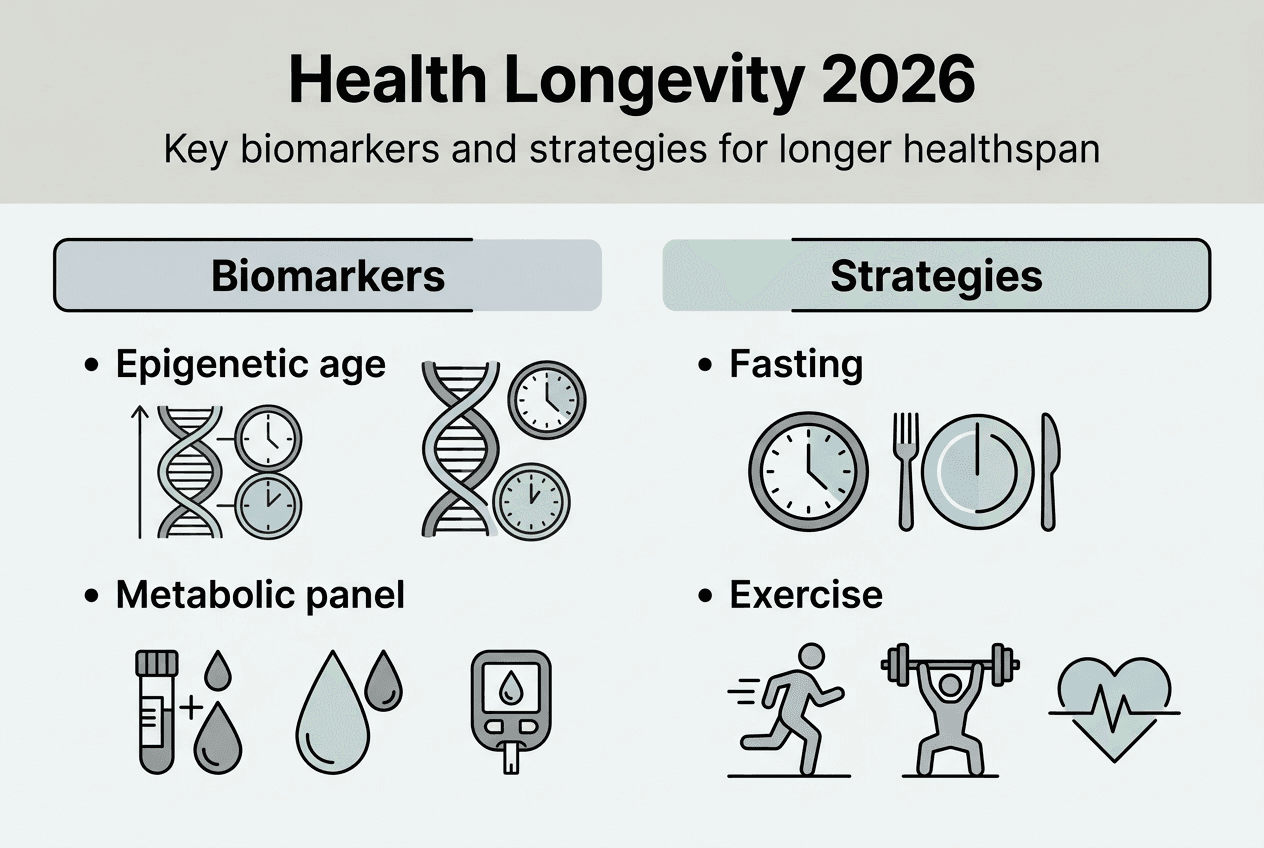
Functional biomarkers like VO2max measure your cardiovascular system’s capacity to deliver oxygen to working muscles, serving as a powerful predictor of all cause mortality. Grip strength correlates with overall muscle function and systemic health, whilst gait speed reflects neurological function, musculoskeletal integrity, and energy availability. Research confirms these biomarkers predict ageing outcomes with clinical significance, often outperforming laboratory tests in forecasting functional decline and mortality.
Comparing diagnostic options helps you select tests aligned with your optimisation goals:
| Test Type | Information Provided | Best For |
|---|---|---|
| DNA methylation analysis | Epigenetic age and disease risk patterns | Understanding biological ageing trajectory |
| Resting metabolic rate | Baseline energy expenditure and efficiency | Identifying metabolic dysfunction |
| VO2max assessment | Cardiovascular fitness and oxygen utilisation | Evaluating aerobic capacity and mortality risk |
| Body composition scan | Muscle mass, fat distribution, bone density | Tracking sarcopenia and metabolic health |
| Comprehensive blood panel | Metabolic, inflammatory, and hormonal status | Detecting systemic imbalances |
Regular assessment supports dynamic adaptation of longevity strategies as your biology responds to interventions. What works initially may become less effective as your body adapts, requiring protocol adjustments based on objective biomarker feedback. This iterative approach ensures you continuously optimise rather than following static recommendations that ignore individual variation and physiological changes.
When you explore DNA health testing options, consider panels that analyse methylation patterns, genetic variants affecting nutrient metabolism, and polymorphisms influencing detoxification capacity. These insights reveal whether you possess genetic predispositions requiring targeted nutritional or lifestyle modifications to optimise cellular function and reduce disease risk.
A resting and active metabolic test combined with 3D body composition analysis provides precise data on energy expenditure, substrate utilisation, and tissue distribution. This information guides caloric intake recommendations, macronutrient ratios, and training protocols tailored to your metabolic profile rather than population averages.
Key reasons to measure metabolic health include:
- Identifying insulin resistance before it progresses to diabetes
- Detecting mitochondrial dysfunction limiting energy production
- Revealing inflammatory patterns accelerating tissue damage
- Quantifying metabolic flexibility between fuel sources
- Establishing objective baselines for tracking intervention effectiveness
Understanding essential health diagnostics empowers you to build a comprehensive testing strategy that captures multiple dimensions of physiological function. No single test provides complete insight, but a carefully selected panel reveals patterns across metabolic, cardiovascular, hormonal, and inflammatory systems that collectively determine your healthspan trajectory.
Explore personalised health testing and longevity solutions
Transforming knowledge into measurable health improvements requires access to advanced diagnostics and expert guidance. AI Healthician specialises in comprehensive DNA health testing that analyses methylation patterns, genetic variants, and biological age markers to reveal your unique ageing trajectory. These insights identify specific intervention targets rather than generic recommendations.

Our resting and active metabolic test provides detailed analysis of energy expenditure, substrate utilisation, and body composition through state of the art 3D scanning technology. This data enables precise optimisation of nutrition, training, and recovery protocols based on your actual metabolic capacity rather than population estimates.
The longevity blueprint consultation integrates comprehensive diagnostic data into a personalised action plan addressing your specific physiological bottlenecks. Our evidence informed approach combines functional testing, biomarker analysis, and performance metrics to create targeted interventions that produce measurable improvements in metabolic health, resilience, and long term disease risk markers. By combining advanced diagnostics with expert interpretation, you accelerate progress toward optimal healthspan through strategies tailored to your unique biology.
Frequently asked questions
What exactly defines health longevity beyond lifespan?
Health longevity emphasises maintaining physical function, cognitive capacity, metabolic efficiency, and resilience throughout your lifespan rather than simply extending years lived. It focuses on compressing morbidity into the final years whilst maximising healthspan, the period during which you remain functionally independent and free from chronic disease.
How do epigenetic clocks differ from chronological age?
Epigenetic clocks measure biological age through DNA methylation patterns that reflect cellular condition and physiological decline rates. Unlike chronological age, which simply counts years since birth, biological age predicts mortality risk and functional capacity based on actual tissue health. Two individuals of identical chronological age can differ by a decade or more in biological age.
What lifestyle choices most impact biological ageing?
Caloric restriction or time restricted eating, regular high intensity exercise, stress management, quality sleep, and maintaining lean muscle mass produce the most significant effects on biological ageing trajectories. These interventions activate longevity pathways, enhance mitochondrial function, and reduce chronic inflammation. Following a structured metabolic health checklist ensures systematic implementation.
Are senotherapeutics safe and available today?
Senolytic compounds like dasatinib combined with quercetin show promise in clinical trials for eliminating senescent cells, though widespread clinical use remains limited in 2026. Some natural compounds including fisetin and certain polyphenols demonstrate senolytic properties with favourable safety profiles. Consult qualified healthcare practitioners before implementing senotherapeutic protocols, as research continues evolving rapidly.
How can individuals begin personalised longevity optimisation?
Start with comprehensive baseline testing including metabolic markers, functional capacity assessments, and ideally epigenetic age analysis. A thorough metabolic health assessment identifies specific dysfunction requiring intervention. Implement evidence based strategies targeting your primary bottlenecks, then reassess biomarkers every three to six months to evaluate effectiveness and adjust protocols based on objective data rather than assumptions.
Recommended
- The Longevity Blueprint - Personalised Health Consultation | Aihealthician
- Advanced Diagnostics: Powering Personalised Health Protocols – Aihealthician
- Top 4 Anewhealth.co.uk Alternatives in 2026 for Health-conscious Indiv – Aihealthician
- A.I. Healthician | Liverpool | Enhance Your Well-Being – Aihealthician


