


 matt@aihealthician.co.uk


Many assume metabolic health equals a healthy weight, yet 30% of normal-weight adults are metabolically unhealthy. This guide explains what metabolic health truly means, how mitochondria and hormones drive it, which biomarkers reveal your status, common myths to avoid, and personalised frameworks using continuous monitoring to optimise your energy, resilience, and long-term disease risk through precise biological data.
Table of Contents
- Understanding Metabolic Health: Definition And Core Components
- Mechanisms Behind Metabolic Health: Mitochondria And Hormones
- Measuring Metabolic Health: Key Biomarkers And Personal Data Insights
- Common Misconceptions About Metabolic Health
- Frameworks And Practical Applications For Optimising Metabolic Health
- Explore Advanced Metabolic Health Tests And Personalised DNA Reports
- Frequently Asked Questions
Key takeaways
| Point | Details | |-------|---------|| | Metabolic health depends on five core physiological indicators | Blood sugar regulation, lipid profiles, blood pressure, waist circumference, and insulin sensitivity collectively govern systemic energy metabolism. | | Mitochondrial and hormonal function are central mechanisms | Cellular energy production efficiency and endocrine balance directly influence metabolic syndrome risk and overall resilience. | | Personalised biomarker data enables precise assessment and interventions | Multi-omics approaches and continuous glucose monitoring provide dynamic insights far beyond standard static tests. | | Common myths often misattribute metabolic health to weight alone | Up to 20% of obese individuals maintain excellent metabolic health, whilst many normal-weight people show metabolic dysfunction. | | Data-driven frameworks can improve metabolic markers by 10–20% | Evidence-based personalised protocols reduce HbA1c, triglycerides, and long-term chronic disease risk substantially within months. |
Understanding metabolic health: definition and core components
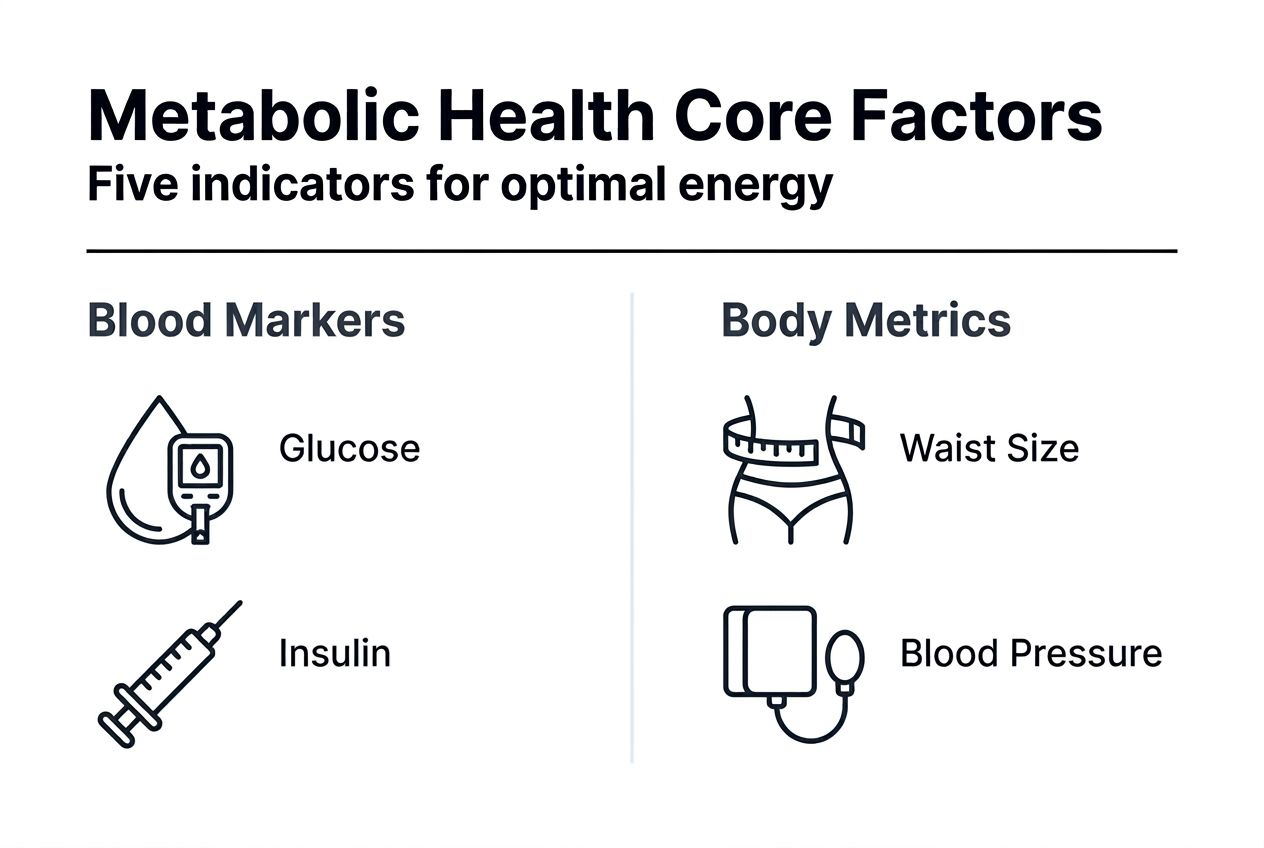
Metabolic health is best defined by the balance of five key indicators: blood sugar regulation, lipid profiles, blood pressure, waist circumference, and insulin sensitivity. These markers reflect how efficiently your body manages energy at the systemic level. When all five indicators sit within optimal thresholds, your risk of chronic diseases including type 2 diabetes, cardiovascular conditions, and metabolic syndrome drops dramatically.
Each component serves a distinct purpose in energy metabolism and resilience:
- Blood sugar regulation governs how effectively cells extract glucose for fuel, preventing damaging glucose spikes
- Lipid profiles reveal cholesterol and triglyceride balance, critical for vascular health and hormone synthesis
- Blood pressure indicates circulatory strain and endothelial function, directly affecting organ perfusion
- Waist circumference measures visceral fat accumulation, a powerful predictor of insulin resistance
- Insulin sensitivity determines cellular responsiveness to insulin, the master hormone controlling glucose uptake
Systemic energy management forms the core purpose of metabolic health. Your body constantly balances energy intake, storage, and expenditure across organs and tissues. Achieving optimal thresholds in all five indicators substantially reduces chronic disease risk, often by 30–50% over time. Understanding why measure metabolic health becomes essential for anyone seeking evidence-based performance and longevity gains.
Mechanisms behind metabolic health: mitochondria and hormones
Mitochondrial efficiency drives cellular energy production through oxidative phosphorylation, converting nutrients into ATP. When mitochondria function optimally, cells generate energy cleanly with minimal oxidative stress. Dysfunction triggers fatigue, impaired recovery, and metabolic syndrome progression. Mitochondrial decline impacts energy levels through:
- Reduced ATP output per glucose molecule, forcing cells to demand more fuel
- Increased reactive oxygen species production, damaging cellular structures
- Impaired calcium handling, disrupting muscle contraction and neurotransmitter release
- Altered mitochondrial biogenesis, reducing total mitochondrial mass over time
Key hormones govern metabolism by regulating energy storage, mobilisation, and utilisation:
- Cortisol modulates glucose release during stress but chronically elevated levels promote insulin resistance and visceral fat accumulation
- Thyroid hormones set basal metabolic rate, influencing how rapidly cells burn fuel at rest
- Sex steroids including testosterone and oestrogen affect muscle mass, fat distribution, and insulin sensitivity
- Insulin itself controls cellular glucose uptake, fat storage, and protein synthesis
Hormonal and mitochondrial dysfunction synergise to increase metabolic syndrome risk. Chronic cortisol elevation impairs mitochondrial function, whilst mitochondrial decline reduces hormone receptor sensitivity. Functional health tests for athletes can reveal these interconnected dysfunctions early.

Pro Tip: Most metabolic assessments neglect mitochondrial health entirely, focusing only on blood markers. Request mitochondrial function testing via indirect calorimetry or cellular respiration assays to uncover hidden energy production deficits driving fatigue and poor recovery.
Measuring metabolic health: key biomarkers and personal data insights
Insulin sensitivity varies dramatically due to genetics and environmental factors including diet, exercise, sleep, and stress exposure. Standard testing provides static snapshots, missing dynamic fluctuations that reveal true metabolic capacity. Personalised continuous monitoring captures real-time glucose responses, hormone patterns, and metabolic variability across different contexts.
Multi-omics integration combines genomic, proteomic, and metabolomic data for comprehensive metabolic health insights. Genomic analysis identifies genetic predispositions to insulin resistance or lipid metabolism disorders. Proteomic profiling reveals inflammatory markers and enzyme activity. Metabolomic assessment maps hundreds of metabolites showing nutrient processing efficiency and metabolic pathway bottlenecks.
| Approach | Standard metabolic tests | Personalised multi-omics |
|---|---|---|
| Data frequency | Single point-in-time | Continuous or repeated sampling |
| Markers assessed | 5–10 blood biomarkers | 50–500+ biological signals |
| Context captured | Fasting state only | Multiple physiological states |
| Personalisation | Population norms | Individual baseline and response patterns |
| Actionability | General guidelines | Precise targeted interventions |
Critical biomarkers for metabolic health assessment include:
- Fasting glucose and HbA1c for long-term blood sugar control
- Fasting insulin and HOMA-IR for insulin resistance quantification
- Triglycerides, HDL, LDL, and ApoB for lipid metabolism precision
- High-sensitivity CRP and IL-6 for inflammatory status
- Cortisol awakening response and diurnal patterns for stress axis function
- Free T3, reverse T3, and TSH for thyroid metabolic regulation
Continuous glucose monitoring enables dynamic metabolic status tracking, revealing how specific foods, exercise timing, sleep quality, and stress events affect glucose regulation. This data allows iterative protocol refinement impossible with quarterly blood tests. Exploring how to assess metabolic markers and reviewing examples of metabolism tests clarifies which assessments deliver maximum insight.
Common misconceptions about metabolic health
The belief that metabolic health equals healthy weight or BMI persists despite overwhelming evidence. Up to 30% of normal-weight adults show metabolic dysfunction, whilst 20% of obese individuals maintain excellent metabolic markers. Weight provides crude information about energy balance but reveals little about cellular insulin sensitivity, mitochondrial efficiency, or inflammatory status.
The metabolically healthy obese phenotype demonstrates that body composition alone does not determine metabolic risk. These individuals carry excess adiposity yet maintain normal blood pressure, insulin sensitivity, lipid profiles, and inflammatory markers. Conversely, metabolically unhealthy normal-weight individuals exhibit insulin resistance, dyslipidaemia, and elevated inflammation despite appearing outwardly healthy.
Main myths and corrections:
- Myth: Thin people are automatically metabolically healthy. Correction: Visceral fat, genetics, and lifestyle factors matter more than total body weight.
- Myth: Metabolic health is static once established. Correction: It fluctuates daily based on sleep, stress, activity, and nutrition, requiring ongoing monitoring.
- Myth: A single fasting blood test fully assesses metabolic status. Correction: Dynamic testing reveals hidden insulin resistance and glucose variability missed by static measurements.
- Myth: Metabolic health only matters for older adults. Correction: Metabolic dysfunction begins decades before disease diagnosis, making early optimisation critical.
Metabolic health benefits from continuous monitoring beyond visible metrics. A person maintaining stable weight may experience declining insulin sensitivity, rising inflammatory markers, or deteriorating mitochondrial function. Regular reassessment using comprehensive biomarkers prevents silent metabolic decline. Understanding why measure metabolic health becomes essential for proactive optimisation.
Pro Tip: Request continuous glucose monitoring even if your fasting glucose sits within normal ranges. Many people with “normal” lab values show severe postprandial glucose spikes exceeding 10 mmol/L, indicating hidden insulin resistance years before diabetes diagnosis.
Frameworks and practical applications for optimising metabolic health
Personalised metabolic health improvement follows a clear evidence-based workflow:
- Establish comprehensive baseline assessment using multi-omics biomarkers, continuous glucose monitoring, and mitochondrial function testing.
- Identify specific metabolic bottlenecks through data analysis, revealing whether insulin resistance, lipid dysregulation, inflammation, or mitochondrial dysfunction drives poor markers.
- Design targeted interventions addressing identified bottlenecks, including nutrient timing, exercise protocols, sleep optimisation, and stress management strategies.
- Implement continuous monitoring to track real-time responses, adjusting protocols based on glucose patterns, hormone fluctuations, and subjective energy levels.
- Reassess comprehensive biomarkers quarterly, measuring objective improvements in HbA1c, lipids, inflammatory markers, and insulin sensitivity.
- Refine protocols iteratively using accumulated personal data, identifying which interventions produce maximum individual benefit.
- Maintain long-term metabolic health through periodic reassessment and protocol updates as physiology evolves.
Personalised metabolic interventions improve markers such as HbA1c and triglycerides by 10–20% within months. Long-term chronic disease risk reduces by 30–50% when metabolic health improves through personalised protocols. These gains far exceed population-level general recommendations because interventions target individual biological vulnerabilities.
| Metabolic marker | Baseline (typical dysfunction) | Post-intervention (3–6 months) | Improvement |
|---|---|---|---|
| HbA1c (%) | 5.9 | 5.3 | 10% reduction |
| Fasting insulin (μIU/mL) | 18 | 10 | 44% reduction |
| Triglycerides (mmol/L) | 2.4 | 1.5 | 38% reduction |
| HDL cholesterol (mmol/L) | 1.1 | 1.4 | 27% increase |
| HOMA-IR | 4.2 | 2.1 | 50% reduction |
Continuous glucose and hormone monitoring integration enables precise intervention timing. You discover whether morning or evening exercise produces superior glucose control, which foods trigger inflammatory spikes, and how sleep quality affects next-day insulin sensitivity. This granular data transforms vague dietary advice into exact personalised protocols.
Exploring a structured metabolic health improvement workflow and implementing a 7 step metabolic health checklist accelerates progress by providing clear action frameworks.
Pro Tip: Adjust protocols every 2–4 weeks based on continuous monitoring data rather than waiting for quarterly blood tests. Real-time feedback allows rapid iteration, identifying optimal nutrition timing, exercise intensity, and recovery strategies that maximise your individual metabolic response.
Explore advanced metabolic health tests and personalised DNA reports
Transforming metabolic health requires precise biological data revealing your unique physiological patterns. AI Healthician offers specialised testing uncovering deep metabolic insights beyond standard blood panels. DNA health testing identifies genetic predispositions affecting insulin sensitivity, lipid metabolism, and mitochondrial function, enabling targeted preventive strategies before dysfunction emerges.

Comprehensive metabolic assessment combines resting and active energy expenditure measurement with body composition analysis. The resting and active metabolic test quantifies exactly how many calories you burn at rest and during activity, whilst 3D body scanning tracks visceral fat changes invisible to standard weighing scales. For focused basal metabolic rate assessment, resting metabolic analysis provides precise energy expenditure data guiding nutrition protocols. These advanced tools transform vague metabolic health goals into measurable, optimisable targets.
Frequently asked questions
What is metabolic health?
Metabolic health reflects how efficiently your body manages energy across five core indicators: blood sugar regulation, lipid profiles, blood pressure, waist circumference, and insulin sensitivity. Optimal metabolic health means all five markers sit within healthy ranges, substantially reducing chronic disease risk. It governs cellular energy production, systemic resilience, and long-term vitality independent of body weight.
How does mitochondrial efficiency affect metabolic health?
Mitochondria produce ATP, the cellular energy currency driving all physiological processes. Reduced mitochondrial efficiency decreases ATP output whilst increasing oxidative stress, leading to fatigue and impaired recovery. Mitochondrial dysfunction promotes insulin resistance, accelerates metabolic syndrome development, and reduces exercise capacity. Optimising mitochondrial health through targeted nutrition, exercise, and stress management improves overall metabolic markers.
What biomarkers best indicate metabolic health?
Primary markers include fasting glucose, HbA1c, fasting insulin, HOMA-IR, triglycerides, HDL, LDL, blood pressure, and waist circumference. Advanced assessment incorporates inflammatory markers like high-sensitivity CRP, hormone panels including cortisol and thyroid function, and continuous glucose monitoring data. Multi-omics approaches integrating genomic, proteomic, and metabolomic data provide the most comprehensive metabolic health picture, revealing hidden dysfunctions missed by standard testing.
Can metabolic health be good despite obesity?
Yes, approximately 20% of obese individuals maintain metabolically healthy profiles with normal insulin sensitivity, lipid levels, blood pressure, and inflammatory markers. This metabolically healthy obese phenotype demonstrates that body composition alone does not determine metabolic risk. Conversely, many normal-weight individuals exhibit metabolic dysfunction. Focusing exclusively on weight obscures true metabolic status, making comprehensive biomarker assessment essential.
How can continuous glucose monitoring aid metabolic health?
Continuous glucose monitoring tracks real-time glucose fluctuations throughout the day, revealing how specific foods, exercise timing, sleep quality, and stress affect blood sugar regulation. This dynamic data identifies hidden insulin resistance missed by single fasting measurements. Personalised interventions based on continuous monitoring improve metabolic markers by 10–20% within months, enabling precise protocol refinement impossible with quarterly blood tests alone.


