


 matt@aihealthician.co.uk


TL;DR:
- A multidisciplinary, sequential assessment provides accurate health baselines and early risk detection.
- Continuous monitoring with HRV and wellness scores enables timely, personalized adjustments.
- Combining functional, physiological, and psychological data boosts performance and safety outcomes.
Most athletes and health-conscious individuals underestimate how much a poorly structured assessment can cost them. Not just in performance terms, but in safety, longevity, and the accuracy of every intervention that follows. A fragmented approach, where you test one marker in isolation or skip screening altogether, creates blind spots that no amount of training or supplementation can fix. A sequential, multidisciplinary workflow closes those gaps. This guide walks you through every stage, from pre-assessment screening to ongoing dynamic monitoring, with evidence-backed protocols that move you from guesswork to precision.
Table of Contents
- Understanding the comprehensive health assessment workflow
- Pre-assessment essentials: safety, screening, and preparation
- Executing physiological assessments: key protocols and measurement tools
- Troubleshooting, common mistakes, and edge cases
- Verifying progress and implementing ongoing monitoring
- Why smart, dynamic monitoring beats one-off testing
- Optimise your health assessment journey with AI Healthician
- Frequently asked questions
Key Takeaways
| Point | Details |
|---|---|
| Holistic, stepwise process | A true health assessment workflow integrates medical, physiological, and lifestyle factors sequentially for optimal results. |
| Personalisation drives progress | Tailoring assessments and interventions to your profile ensures safer, more effective performance enhancement. |
| Ongoing monitoring matters | Dynamic tools like heart rate variability and wellness scales provide real-time insights that static annual check-ups miss. |
| Avoid single-metric traps | No one test tells the whole story—use diverse measures and team insights to inform decisions. |
| Preparation is critical | Safety screening, readiness checklists, and informed preparation underpin every quality assessment cycle. |
Understanding the comprehensive health assessment workflow
A comprehensive health assessment workflow is not a single appointment or a panel of blood tests. It is a sequential, multidisciplinary evaluation designed to establish your biological baseline, detect risk factors, and generate the data needed for genuinely personalised intervention. For athletes and performance-focused individuals, this distinction matters enormously.
The core goals are threefold: identify risk before it becomes injury or illness, establish an accurate starting point for all interventions, and create the framework for ongoing adjustment. Static annual checks simply cannot deliver this. Research confirms that a multidisciplinary team approach using dynamic monitoring tools such as heart rate variability (HRV) and validated wellness scales consistently outperforms the traditional once-a-year model.
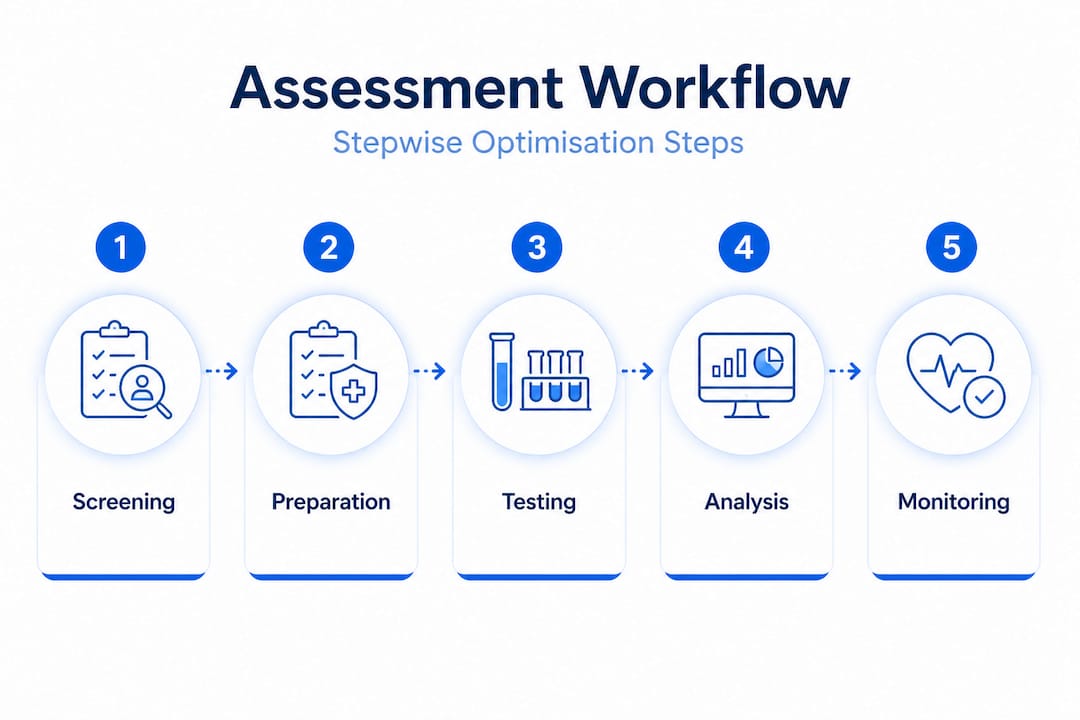
The professionals involved vary by context, but a well-constructed workflow typically draws on physicians, physiotherapists, sports scientists, and registered nutritionists. Each contributes a lens that the others cannot fully replace. A nutritionist may flag energy availability issues that a physician would not routinely screen for. A physiotherapist identifies movement asymmetries that a blood panel cannot detect.
Structured health assessment checklists help standardise what each professional collects, ensuring no critical data point falls through the cracks. Good data-driven health optimisation starts here, at the design stage of the workflow itself.
Key components of a robust workflow:
- Sequential evaluation across physiological, psychological, and nutritional domains
- Baseline biomarkers: resting HRV, blood biochemistry, body composition, cardiorespiratory fitness
- Functional screening: movement quality, joint range of motion, injury history review
- Psychological readiness and wellbeing questionnaires
- Dynamic re-assessment triggers: not just calendar-based, but response-based
“A workflow that integrates multidisciplinary perspectives and real-time monitoring tools produces more actionable and safer outcomes than any single-discipline assessment.” — Sports Medicine Research, 2026
The distinction between functional health testing and standard medical check-ups is also worth clarifying. Functional testing asks how well your body performs under specific demands. Standard medical check-ups ask whether a pathology is present. Both serve different purposes, and a complete workflow incorporates both.
| Workflow element | Purpose | Frequency |
|---|---|---|
| Medical screening | Rule out contraindications | Before starting; after illness/injury |
| Physiological testing | Establish performance benchmarks | Every 3 to 6 months |
| Psychological assessment | Wellbeing and readiness | Monthly or after major life changes |
| Dynamic HRV monitoring | Real-time adaptation signals | Daily or weekly |
| Nutritional evaluation | Energy availability and timing | Quarterly or with body composition changes |
Pre-assessment essentials: safety, screening, and preparation
Before any physiological test is administered, safety screening is non-negotiable. The ACSM preparticipation screening algorithm is the gold standard here. It classifies individuals by cardiovascular risk, current physical activity level, and the presence of known disease or symptoms. Critically, it reduces unnecessary medical referrals by stratifying who genuinely needs clearance and who can proceed directly to testing.
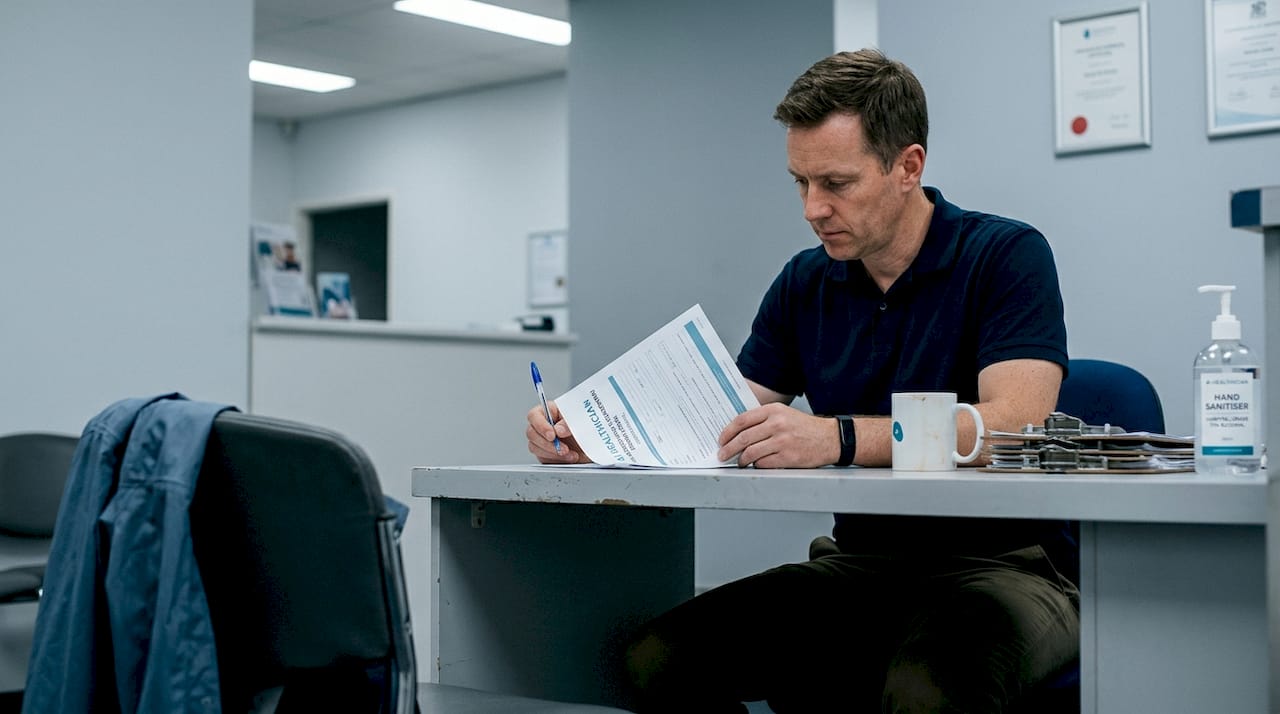
The IOC Periodic Health Evaluation adds another layer, particularly relevant for competitive athletes. It recommends sport-specific and gender-specific evaluations at minimum every two to three years for youth athletes, and annually with interim updates for senior competitors. These are not arbitrary timelines. They reflect the rate at which physiological and health status can shift meaningfully in an active population.
Pre-assessment readiness checklist:
- Complete all medical history and consent forms at least 48 hours before testing
- Confirm fasting status if blood-based or metabolic tests are scheduled (typically 8 to 12 hours)
- Avoid intense training for 24 to 48 hours prior to physiological assessments
- Ensure adequate sleep (minimum 7 hours) for the two nights preceding testing
- Compile a full medication list, including supplements and over-the-counter products
- Bring relevant records: previous test results, injury history, imaging reports
- Wear appropriate clothing and footwear specified by your testing facility
- Arrive hydrated but avoid caffeine on the morning of testing unless instructed otherwise
Comparison of screening approaches:
| Screening type | Best suited for | Medical clearance required? |
|---|---|---|
| ACSM self-guided | Recreational exercisers, low-risk adults | Sometimes |
| Physician-led evaluation | High-risk individuals, new exercisers over 45 | Yes |
| IOC Periodic Health Evaluation | Competitive and elite athletes | Varies by finding |
| Sport-specific pre-season | Team athletes, contact sport participants | Depends on findings |
“Risk stratification before testing is not a bureaucratic step. It is the clinical foundation that makes every subsequent data point interpretable and actionable.”
Pro Tip: Do not underestimate the medication and supplement list. Many compounds, including common anti-inflammatories and caffeine, directly alter HRV, heart rate response, and blood glucose readings. An incomplete list means unreliable data. Review functional tests for athletes to understand what each protocol demands in advance.
Executing physiological assessments: key protocols and measurement tools
With safety cleared and logistics confirmed, the assessment itself begins. The most informative battery for most athletes and performance-focused individuals covers four primary domains: maximal aerobic capacity, lactate threshold, movement economy, and field performance.
Step-by-step assessment sequence:
- Resting measurements first. Record resting heart rate, HRV, blood pressure, and body composition before any active testing. These establish your true baseline and are easily distorted if collected post-exercise.
- VO2max incremental protocol. Conducted on a treadmill or cycle ergometer, workload increases every one to three minutes until volitional exhaustion. Expired gas is analysed continuously. This gives you your VO2max explained in millilitres per kilogram per minute, the most validated single marker of cardiorespiratory fitness.
- Lactate threshold testing. Staged submaximal efforts with capillary blood samples taken at each stage. Identifies the exercise intensity at which lactate begins accumulating faster than it clears. This is arguably more actionable for training prescription than VO2max alone.
- Running or movement economy. Measures the energetic cost of sustained effort at a fixed intensity. Two athletes with identical VO2max values can differ enormously in economy, which directly predicts race performance.
- Field tests. Complementary to lab data, field tests such as the 1,500m time trial or countermovement jump provide ecological validity. They reflect real performance conditions that laboratory ergometers cannot fully replicate.
Research confirms that physiological assessments covering VO2max, lactate threshold, running economy, and heart rate monitoring together provide a multi-dimensional performance profile that no single metric can match. Elite benchmarks show that top-tier athletes consistently demonstrate higher VO2max, superior lactate clearance, and markedly better field test differentiation compared to recreational counterparts.
Assessment comparison table:
| Test | What it measures | Best applied when |
|---|---|---|
| VO2max | Maximal aerobic power | Initial baseline; post-training block |
| Lactate threshold | Sustainable high-intensity capacity | Training zone prescription |
| Running economy | Efficiency at sub-maximal effort | Fine-tuning race pace strategy |
| Countermovement jump | Neuromuscular power and fatigue | Monitoring training load impact |
| Field time trial | Real-world performance output | Competition preparation phase |
Understanding stress testing protocols and the range of metabolic tests available ensures you select the right combination for your specific goals. Active metabolic assessments provide the real-time substrate utilisation data that transforms generic training advice into precise fuel and intensity targets.
Pro Tip: Resist the urge to anchor your entire programme to one number. A VO2max of 58 ml/kg/min means very little without knowing your lactate profile, economy, and recovery capacity. The biological data insights come from pattern recognition across metrics, not a single headline figure.
Troubleshooting, common mistakes, and edge cases
Even well-designed assessments produce ambiguous or problematic data. Knowing how to interpret and respond to these situations separates a thorough workflow from a superficial one.
Most common errors in assessment:
- Testing on days of significant cumulative fatigue without flagging it in the data record
- Collecting resting HRV after caffeine or poor sleep, producing a false-low reading
- Inadequate warm-up before maximal tests, artificially suppressing peak output
- Comparing results across different protocols or equipment without accounting for methodological differences
- Over-indexing on a single abnormal result without considering the broader clinical picture
On the interpretation side, outlier data points deserve scrutiny rather than immediate action. A single unusually high lactate reading at a given intensity may reflect poor pacing, dehydration, or recent illness rather than a genuine decline in fitness. Context is always part of the result.
“Inconsistent or unexpected findings during assessment are often the most clinically important ones. They warrant investigation, not dismissal.”
Edge cases demand heightened care. Post-injury return-to-sport requires demonstrating at least 90% limb symmetry, confirmed psychological readiness, and specific screening for Relative Energy Deficiency in Sport (RED-S) in female athletes, before a full return is sanctioned. Comorbidities such as cardiovascular conditions or endocrine disorders can significantly delay or alter what constitutes a safe return to structured testing.
The Functional Movement Screen is a useful screening tool, but its predictive value for injury risk is mixed in the literature. Using it as one input among many is appropriate. Using it as the primary gatekeeper for clearance decisions is not.
Female athlete health deserves specific mention. RED-S, previously framed narrowly as the Female Athlete Triad, affects hormonal function, bone density, immune competence, and psychological wellbeing. Any assessment workflow for female athletes must include energy availability screening, menstrual history, and bone health markers. The athlete recovery checklist provides a practical structure for monitoring these domains between formal assessment points.
Pro Tip: Build a rule of three into your interpretation process. If a result is flagged as concerning, check whether at least two other data points support that interpretation before acting on it. This reduces both false positives and premature interventions.
Verifying progress and implementing ongoing monitoring
A workflow that ends at test completion is an incomplete workflow. Results only generate value when they are translated into specific, measurable targets and tracked with appropriate frequency.
Action-oriented result interpretation:
- Map each test result to a specific training, nutrition, or recovery variable. VO2max informs aerobic training volume. Lactate threshold sets intensity zones. Body composition data guides energy intake targets.
- Set a re-assessment trigger point, not just a date. Retesting after a 12-week training block is logical. But retesting after an illness, major life stressor, or significant injury should not wait for the calendar.
- Implement daily or weekly HRV tracking alongside validated wellness questionnaires. These provide the signal between formal assessments.
- Schedule a multidisciplinary review every six to eight weeks. Brief, focused check-ins between full assessments catch drift before it becomes a problem.
- Use the re-assessment data to refine, not restart. Each subsequent assessment cycle should build on the previous one, with progressively greater precision in your interventions.
Research shows that ongoing HRV and wellness monitoring consistently outperforms relying on annual assessments alone. The data resolution is simply incomparable. Targeted exercise regimens, including interval training combined with blood flow restriction, have demonstrated meaningful improvements in both VO2max and muscle strength in trained athletes when prescribed from a precise assessment base.
Deep health testing protocols that integrate endurance physiology, metabolic markers, and recovery data give you the longitudinal view needed to make confident, progressive decisions rather than reactive ones.
Pro Tip: Trends beat snapshots. A single HRV reading tells you little. Fourteen days of readings tell you whether your nervous system is recovering, stagnating, or declining. Adjust your training and recovery strategy based on directional trends, not individual data points.
Monitoring and action framework:
| Metric | Tool | Action threshold |
|---|---|---|
| HRV | Wearable device + app | 10% drop below 7-day average |
| Perceived wellbeing | Daily wellness scale (1 to 10) | Score below 6 for two consecutive days |
| Training load | Session RPE x duration | 15% weekly spike vs. rolling average |
| Body composition | DEXA or skinfold | Greater than 3% change in 4 weeks |
| Performance markers | Field test or time trial | Greater than 3% decline from recent peak |
Why smart, dynamic monitoring beats one-off testing
Here is an uncomfortable truth about how most people approach health assessment: they treat it like an MOT for a car. A once-a-year event designed to confirm everything is still running, rather than a continuous intelligence system that guides daily decision-making. The problem with annual-only assessment is not just frequency. It is that the human body changes on a scale of days and weeks, not years.
Burnout, overtraining syndrome, and RED-S do not appear suddenly in an annual blood panel. They build gradually through weeks of mismatched load and recovery, often masked by motivation or competitive drive until they become clinical problems. Real-time monitoring of HRV, wellness scores, and performance outputs catches these trajectories early. Deep testing strategies that layer longitudinal data onto formal assessment cycles create a far more honest picture.
The psychological dimension is also routinely underweighted. An athlete who scores well on every physiological marker but reports persistent low motivation, disrupted sleep, and reduced enjoyment of training is not a success story. They are a warning sign that the programme is heading toward breakdown. Self-awareness and advocacy around these dimensions are not soft skills. They are performance-critical data.
The fixation on a single headline number, most often VO2max, is another pattern worth naming directly. VO2max is not destiny. It is one variable in a complex system. Athletes with modest VO2max values regularly outperform those with superior scores because their lactate profile, economy, tactical intelligence, and psychological resilience are stronger. A workflow built around multiple integrated metrics produces far better decisions than one chasing a single benchmark.
Optimise your health assessment journey with AI Healthician
You now have the framework. The next step is applying it with precision tools and expert support designed specifically for individuals who want biological data, not generic guidance.
AI Healthician provides a fully integrated assessment and optimisation service, combining functional physiology testing, metabolic profiling, and DNA health testing to generate a detailed picture of your unique biological landscape. Whether you are mapping your baseline, resolving persistent performance plateaus, or building a long-term longevity strategy, the longevity blueprint health consultation brings expert analysis and personalised protocol design into a single, structured programme. This is not a wellness check. It is a precision-guided workflow built around your data.
Frequently asked questions
What is included in a comprehensive health assessment workflow?
A comprehensive workflow covers multidisciplinary screening, tailored physiological tests such as VO2max and lactate threshold, risk stratification, and dynamic monitoring for continuous optimisation. It integrates medical, functional, nutritional, and psychological domains into a single sequential process.
How often should athletes undergo full health assessments?
Elite guidelines recommend annual updates with sport-specific evaluation; youth athletes every 2 to 3 years or after major health changes. Between formal assessments, dynamic monitoring fills the gap with actionable, real-time data.
What are red flags during health assessments?
Red flags include acute cardiovascular symptoms, greater than 10% limb asymmetry post-injury, psychological unreadiness, female athlete energy deficiency markers, or unexpected drops in HRV or performance benchmarks across consecutive testing points.
Which tests are most important for athletic performance?
The most informative battery covers VO2max, lactate threshold, running economy, and field performance trials. Integrated physiological assessment consistently outperforms any single test for performance prediction and training prescription.
How does dynamic monitoring improve results?
Tracking HRV and validated wellness scores continuously allows timely, evidence-based adjustments to training and recovery. Dynamic monitoring consistently outperforms annual-only checks because it captures the directional trends that a snapshot assessment cannot detect.
Recommended
- Health Diagnostics: 30% More Accurate Personalization – Aihealthician
- Checklist for workplace wellness: enhance employee health – Aihealthician
- Step-by-step health optimisation for peak performance – Aihealthician
- Top health optimisation protocols for longevity in 2026 – Aihealthician
- How to create a safe herbal remedies workflow for menopause – Caribella
- Master Organic Gardening Workflow for Healthy Harvests – AMAZING GARDEN


