


 matt@aihealthician.co.uk


TL;DR:
- Lifestyle data tracks sleep, activity, nutrition, and stress to provide personalized health insights.
- AI analyzes trends to suggest targeted lifestyle adjustments and predict health risks early.
- Long-term lifestyle improvements can significantly delay disease onset and enhance overall resilience.
Most people assume their health trajectory is largely predetermined by genetics or circumstance, but the science tells a very different story. Lifestyle data shifts health management from reactive to proactive, providing real-time, personalised insights that genuinely enhance performance and resilience. When you can measure what is actually happening inside your body, day by day, you stop guessing and start knowing. This article breaks down what lifestyle data is, how it is turned into actionable intelligence, the concrete benefits you can expect, the limitations you need to understand, and how to use it all wisely.
Table of Contents
- What is lifestyle data and how does it impact your health?
- How personalised insights are generated from your lifestyle data
- Real-world benefits: From daily performance to long-term resilience
- Key challenges and important considerations with lifestyle data
- Our perspective: What most articles miss about lifestyle data’s power
- Take the next step with advanced, personalised health analytics
- Frequently asked questions
Key Takeaways
| Point | Details |
|---|---|
| Lifestyle data is actionable | Tracking and understanding daily habits creates a pathway for personal health improvement. |
| Personalised AI insights | Technology can now turn raw data into tailored recommendations, making change easier and more targeted. |
| Balance benefits and limits | Effective use means recognising both powerful gains and real-world challenges or gaps in measurement. |
| Holistic is best | The biggest impact comes from combining behavioural, biological, and environmental data, not just focusing on one area. |
What is lifestyle data and how does it impact your health?
Lifestyle data is the collection of measurable signals generated by your daily habits and behaviours. It is not a single number or a single device. It spans multiple domains, each of which contributes a different layer to the picture of your health.
The main components include:
- Sleep patterns: duration, timing, stages, and overnight heart rate variability
- Physical activity: step counts, exercise intensity, training load, and sedentary time
- Nutrition: macronutrient intake, meal timing, calorie balance, and dietary quality scores
- Metabolic responses: continuous glucose monitoring (CGM) data showing real-time blood sugar fluctuations
- Psychological load: perceived stress levels, mood logs, and heart rate variability as a proxy for nervous system state
- Device and screen use: mindful tech habits for wellness increasingly recognised as a factor in recovery quality and cortisol regulation
This data is captured through wearable sensors, CGM patches, smartphone applications, and manual self-reporting. Each method has its own resolution and accuracy profile, which matters when you are trying to interpret trends rather than react to individual data points.
The potential impact on your health is substantial. Lifestyle data from wearables enables high-resolution profiling directly linked to metabolic subphenotypes, meaning the data can reveal which metabolic category you fall into and what risks that carries. This is fundamentally different from a standard annual health check.
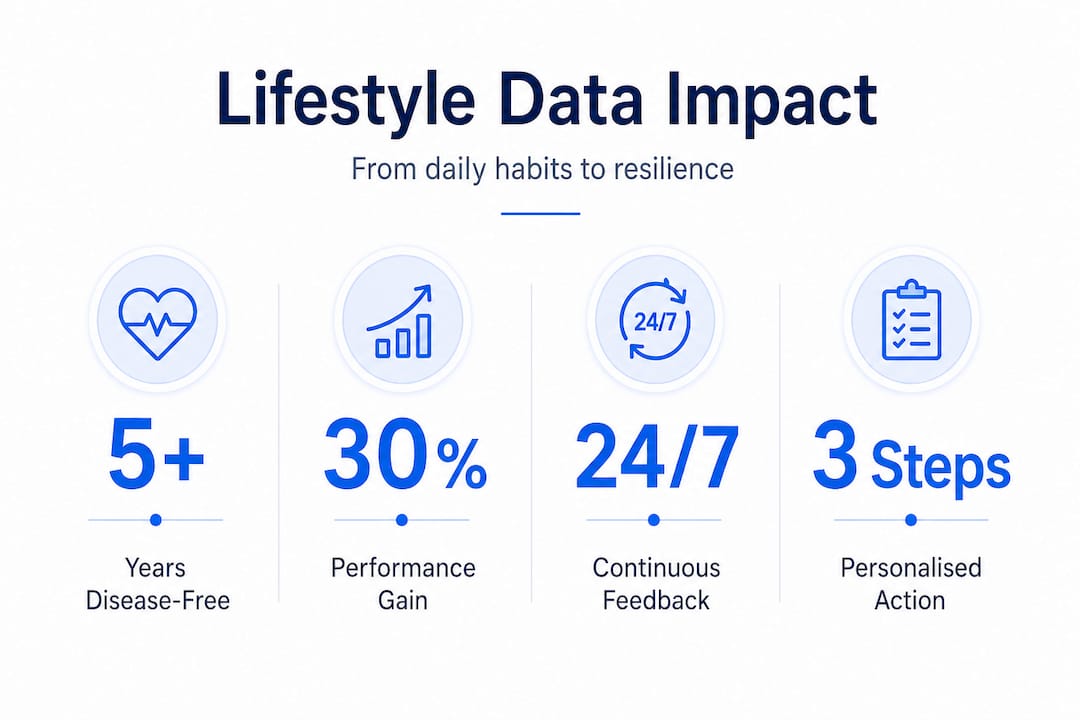
One of the most striking findings in recent population research is how even modest lifestyle improvements compound over time. Healthy lifestyle scores predict longer disease-free life expectancy, with each additional point on a validated lifestyle score associated with 0.83 to 0.86 extra years of disease-free living at age 65. That is nearly a full year of healthy life added per incremental habit improvement. Multiply that across several simultaneous changes and you are looking at a meaningfully different health trajectory.
Understanding the health data tracking benefits available to you goes beyond curiosity. It connects everyday choices, your training schedule, your sleep window, your meal composition, directly to how you feel and function across weeks and months.
How personalised insights are generated from your lifestyle data
Raw numbers mean very little on their own. A resting heart rate of 58 beats per minute, a fasting glucose of 5.1 mmol/L, or seven hours of sleep each night only become useful when they are contextualised relative to your own baseline, your training load, and the patterns emerging over time.
This is where modern AI and machine learning systems become genuinely powerful. LLM-based agents like PHIA use code generation to analyse raw wearable time-series data and produce personalised health insights, moving well beyond simple threshold alerts. These systems can identify correlations that no human reviewer would catch manually, such as a consistent drop in sleep efficiency on days following high glycaemic meals, or a pattern of elevated resting heart rate preceding illness by 48 hours.
The process works in three clear stages:
- Data collection: Wearables, CGMs, apps, and manual logs capture continuous or near-continuous streams of biometric and behavioural data across all relevant lifestyle domains.
- Automated analysis: AI models process this data to identify anomalies, trends, and cross-domain correlations. Foundation models trained on large, diverse wearable datasets can already predict insulin resistance and biological age, enabling early metabolic risk detection before symptoms appear.
- Personalised recommendation: Insights are translated into specific, actionable adjustments, such as shifting your largest meal to midday based on your personal glucose response curve, modifying training intensity on days when heart rate variability is suppressed, or extending your sleep window during high-stress periods at work.
The table below shows how different data inputs map to health insights and practical actions:
| Data type | Health insight generated | Practical action |
|---|---|---|
| Continuous glucose monitoring | Post-meal glycaemic spikes and patterns | Adjust meal composition and timing |
| Sleep staging data | Reduced deep sleep linked to high training load | Implement a deload week or sleep extension protocol |
| Heart rate variability (HRV) | Suppressed HRV indicating incomplete recovery | Shift planned high-intensity session to lower intensity |
| Step count and sedentary time | Extended inactivity windows increasing metabolic risk | Schedule movement breaks every 60 to 90 minutes |
| Dietary quality score | Nutrient gaps affecting energy and cognition | Targeted food or supplement adjustments |
Exploring data-driven health examples makes it easier to see how this translates into real performance gains. The key principle underlying health analytics for peak performance is not simply collecting more data but ensuring the analytical layer is sophisticated enough to make that data meaningful.
Pro Tip: The value of personalised feedback drops sharply if insights arrive too late or are too generic to act on. Configure your device and app notifications to surface insights at the moments most relevant to your behaviour, such as a recovery summary each morning before training decisions, or a glucose trend alert before your next meal.
Real-world benefits: From daily performance to long-term resilience
Acting on lifestyle data generates benefits across two distinct time horizons: immediate improvements in energy, focus, and recovery, and longer-term reductions in chronic disease risk and biological ageing.
“Each point gained in a healthy lifestyle score may mean nearly a year’s extra disease-free living.”
This is not a trivial finding. It means that consistent, measurable lifestyle improvements translate to concrete health-span gains, not just abstract risk reductions.
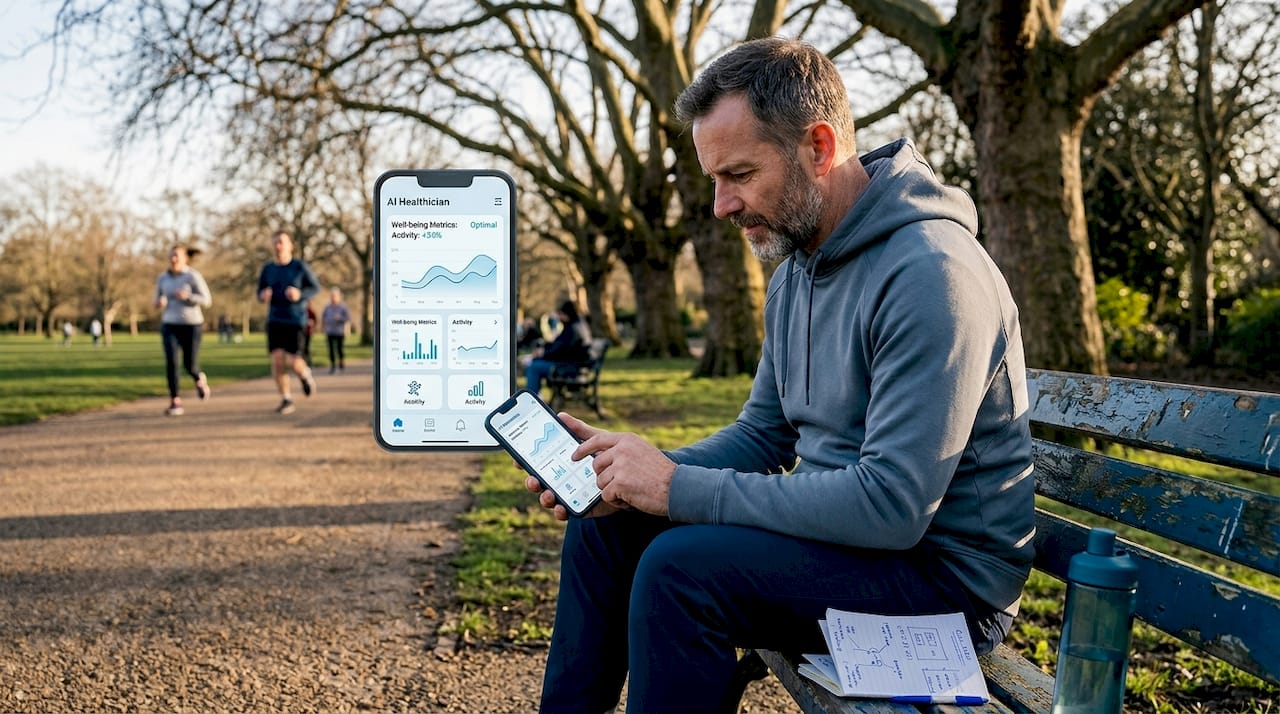
The comparison below illustrates what optimised lifestyle management can look like relative to a typical unoptimised baseline:
| Health domain | Optimised lifestyle | Typical unoptimised baseline |
|---|---|---|
| Disease-free years at 65 | Several additional years gained | Earlier onset of chronic multimorbidity |
| Daily energy levels | Stable, sustained energy across the day | Frequent afternoon energy dips |
| Recovery rate | Rapid return to baseline after stress or illness | Prolonged recovery periods |
| Multimorbidity risk | Significantly reduced | Elevated by sedentary and poor dietary habits |
| Psychological resilience | Improved stress tolerance and mood stability | Greater vulnerability to burnout |
Optimised lifestyles can delay disease onset by several years, though it is worth noting that dynamic resilience assessments do not always reveal a direct link between improved lifestyle scores and improved measured resilience in the short term. This is an important nuance. Resilience is multifactorial, and data improvements in one domain may not instantly register in composite resilience metrics.
The core benefits most consistently supported by the evidence include:
- Disease prevention: Delaying or preventing the onset of cardiovascular disease, type 2 diabetes, and metabolic syndrome through sustained lifestyle optimisation
- Improved stamina and training capacity: Optimised recovery and nutrition timing directly improve performance benchmarks over weeks and months
- Psychological resilience: Stable blood sugar, quality sleep, and appropriate training load all contribute to reduced anxiety, better mood regulation, and stress tolerance
- Adaptive performance: The ability to maintain output under varying conditions, a genuine marker of physiological resilience, improves with consistent lifestyle optimisation
Integrating biomedical, behavioural, and food environment data with AI-driven analysis creates a dynamic, adaptive system that updates your health goals as your circumstances change. This is what separates personalised lifestyle analytics from static advice.
For a deeper understanding of how this connects to long-term individual outcomes, precision health for personal optimisation is worth exploring alongside your own data trends. Being thoughtful about mindful device use also supports the recovery quality that makes sustained optimisation possible.
Key challenges and important considerations with lifestyle data
No system this promising comes without limitations, and understanding them will save you considerable frustration and wasted effort.
The most common obstacles encountered in real-world lifestyle data use include:
- Data incompatibility: Different devices and platforms rarely communicate seamlessly, creating gaps and inconsistencies that distort trends
- Black-box AI: Many consumer-facing analytics tools cannot explain why they have generated a particular recommendation, making it impossible to evaluate its validity
- Device measurement limitations: Wrist-based heart rate sensors, in particular, lose accuracy during high-intensity exercise, certain movement patterns, and in individuals with darker skin tones or high body fat percentages
- Self-reporting errors: Manual food logs and mood entries are notoriously inaccurate, with most people underreporting calorie intake and overestimating exercise intensity
- Socioeconomic barriers: Access to CGMs, high-quality wearables, and expert interpretation remains unequally distributed
- Dataset diversity issues: Many AI models underpinning consumer health analytics were trained on datasets that do not adequately represent diverse age, gender, and ethnic groups
Challenges of AI-based health data reasoning also include numerical reasoning limitations in current large language models, meaning even sophisticated AI systems can make errors when working with the kind of dense numerical time-series data that wearables generate. Validation against clinical-grade measurements remains important.
Pro Tip: Do not let any automated insight guide a significant health decision without cross-referencing with a qualified professional. Review your data-sharing settings regularly. Ask your analytics provider specifically how a recommendation was generated and what data drove it.
Understanding the power of analysing health data means recognising both what it can reveal and where its edges are. Staying informed about data-driven wellness insights helps you maintain realistic expectations while still extracting genuine value.
Finally, the relationship between screen time, cognitive load, and recovery is a factor many optimisers overlook. Understanding why limiting phone use boosts mental health is a useful complement to any data-driven health strategy, particularly if your metrics suggest poor recovery or elevated stress.
Our perspective: What most articles miss about lifestyle data’s power
Most of the coverage around lifestyle data falls into two categories: enthusiastic promotion of the latest wearable, or cautious scepticism about data accuracy. Both miss the point.
The real opportunity is not in the device or even in the data itself. It is in developing the skill of reading your own patterns across weeks and months, rather than reacting to individual data points. We see this consistently: people abandon tracking when they do not see an immediate change in a single metric, or when a number seems inexplicably poor on a given day. That is the wrong frame entirely.
Your resting heart rate on a Tuesday morning is almost meaningless in isolation. Your resting heart rate trend over six weeks, correlated with your training load and sleep duration, is extraordinarily informative. This distinction separates people who genuinely benefit from lifestyle data from those who collect it and feel vaguely monitored without gaining any insight.
There is also a cultural fixation on “magic numbers,” ideal HRV scores, perfect sleep percentages, optimal glucose ranges. These benchmarks have their place, but they become counterproductive when they generate anxiety rather than clarity. The goal of any data-driven health protocol is not to hit a target score on a given day. It is to build the kind of incremental consistency, sustained over months, that shifts your biological baseline in a meaningful direction.
Periodic professional review is the element most people skip. AI for personalised wellness continues to advance rapidly, but contextual human judgement remains irreplaceable when it comes to interpreting anomalies, identifying measurement artefacts, and deciding when a data trend warrants clinical investigation versus a simple lifestyle adjustment.
The most effective users of lifestyle data are not those with the most sophisticated devices. They are the ones who review their trends systematically, make one or two targeted adjustments at a time, and check in with professionals at regular intervals rather than reacting to every daily fluctuation.
Take the next step with advanced, personalised health analytics
Wearables and apps are a strong starting point, but they only capture part of the picture. If you are serious about optimising your performance and long-term resilience, the next level of insight comes from functional testing that goes deeper than what any consumer device can provide.
At AI Healthician, we combine advanced diagnostics with expert data interpretation to build protocols that are genuinely personal. Our DNA health testing reveals genetic predispositions that contextualise your lifestyle data in ways no wearable can. Resting and active metabolic analysis with 3D body composition scanning gives you precise metabolic baselines, and our VO2max performance analysis translates your cardiovascular fitness into a clear, actionable performance benchmark. These are not add-ons. They are the foundation of a measurable, evidence-based optimisation strategy.
Frequently asked questions
How do I start collecting useful lifestyle data for my health?
Begin with wearables or apps measuring sleep, movement, and dietary intake, then commit to reviewing your insights weekly rather than daily to identify genuine patterns. Lifestyle data from wearables enables high-resolution health profiling that can be directly linked to metabolic health markers.
Does improved lifestyle data always lead to better resilience?
Not always in measurable terms. Optimised lifestyles delay disease and improve performance, but dynamic resilience assessments do not always show a direct correlation in the short term, so consistency over months matters more than immediate metric shifts.
What are the biggest risks with relying on lifestyle data?
Device inaccuracies, data silos, and misinterpretation of automated recommendations are the most significant concerns. Challenges of AI-based health data reasoning include self-report errors and limited model validation, which is why professional review remains important.
How does AI improve the value of my health data?
AI analyses patterns across large volumes of time-series data to generate tailored feedback and early risk detection that would be impossible to spot manually. LLM-based agents analyse wearable data and wearable foundation models identify metabolic risks and biological age shifts well before symptoms emerge.
Recommended
- Real benefits of health data tracking: 5 key insights – Aihealthician
- Biological data analysis examples for health optimisation – Aihealthician
- Unlock better health: The power of analysing health data – Aihealthician
- Health risk profiling: unlock personalised health insights – Aihealthician
- Upgrade your energy: Practical workflows for daily wellness – CP-1
- What Is Metabolic Adaptation? (And Why It Matters More Than You Think) - Fueled Framework


