


 matt@aihealthician.co.uk


TL;DR:
- AI in health is already improving diagnostics, personalized medicine, and injury prevention.
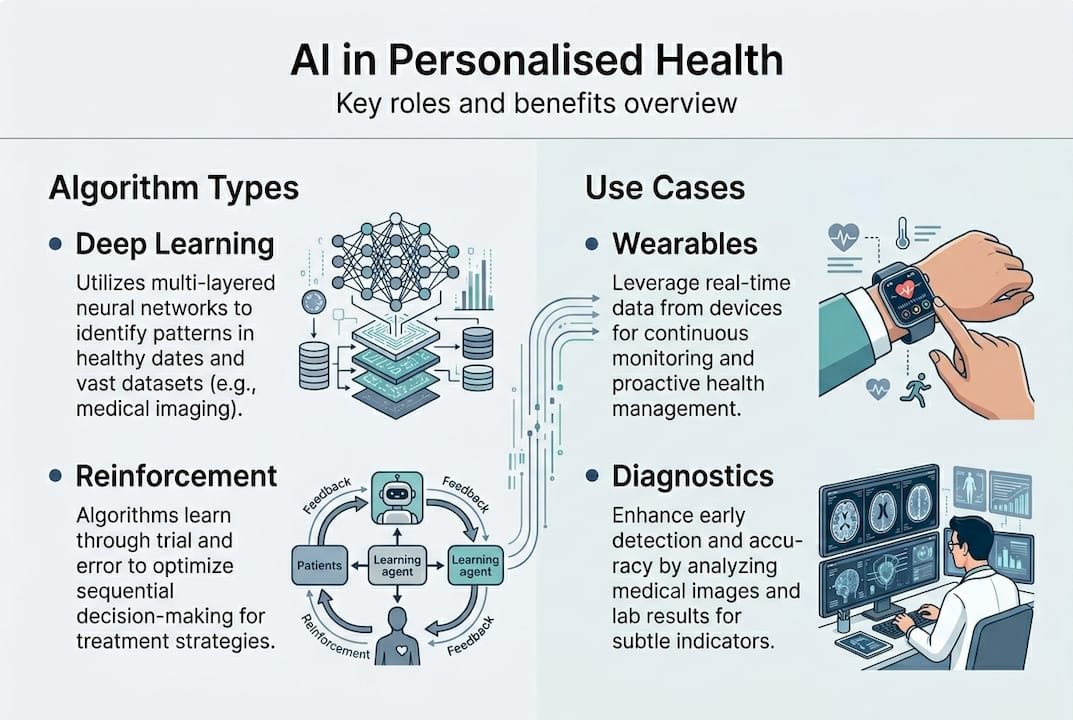
- Different AI algorithms like CNNs, XGBoost, and reinforcement learning excel in specific health applications.
- Effective use of AI requires validation, clinician oversight, and combining human judgment with data insights.
Artificial intelligence in health is not a distant promise — it is already delivering measurable, quantifiable improvements in diagnostics, training optimisation, and long-term disease risk reduction for people who know how to use it. Machine learning and deep learning now process multimodal data spanning imaging, electronic health records, genomics, and wearable sensors to enable personalised medicine at a level of precision previously impossible. If you have been dismissing AI as a tech trend, the evidence suggests that position is costing you performance, insight, and potentially years of healthy life.
Table of Contents
- What AI algorithms really do in health
- Practical examples: From wearables to diagnostics
- The limits and risks: Bias, black boxes, and equity
- Optimising your health: Real-world strategies using AI
- The truth: AI as an amplifier, not a replacement for human health wisdom
- Next steps: Putting advanced AI health tools to work for you
- Frequently asked questions
Key Takeaways
| Point | Details |
|---|---|
| AI excels at personalisation | AI tailors health and performance suggestions by analysing your individual data streams. |
| Expert oversight is vital | Human clinicians are still essential for safety, empathy, and interpretation alongside AI. |
| Bias and black-box issues | Algorithmic bias and lack of transparency can limit AI’s effectiveness, so check for oversight and data diversity. |
| Application boosts results | Integrating validated AI tools with smart human strategies delivers measurable gains for health and fitness. |
What AI algorithms really do in health
Most people picture AI as a single, monolithic system. In reality, health AI is a family of distinct algorithm types, each designed for specific tasks and data environments. Understanding the differences matters because it changes what you can reasonably expect from any AI tool you encounter.
Supervised learning trains models on labelled datasets, such as thousands of labelled medical images, so the model can classify new inputs. Convolutional neural networks (CNNs) built on this approach now achieve an AUC above 0.95 in imaging diagnostics, meaning they correctly distinguish disease from no disease in more than 95% of cases. Unsupervised learning finds hidden structure in unlabelled data, making it ideal for discovering novel patient subgroups or identifying patterns in genomic data that no clinician has yet defined. Ensemble methods such as XGBoost combine multiple weaker models into a single stronger predictor, consistently reaching 85 to 90% accuracy in clinical risk scoring. Reinforcement learning is the most dynamic approach, letting an algorithm learn from feedback loops, which makes it uniquely suited to adaptive treatment protocols that update in real time as your physiological data changes.
CNNs now achieve AUC scores above 0.95 in medical imaging, while ensemble methods like XGBoost consistently deliver 85 to 90% accuracy in clinical risk prediction — performance that rivals or exceeds specialist clinicians in defined tasks.
The full research article published in Frontiers in Digital Health confirms that these AI diagnostics capabilities apply across imaging, electronic health records, genomics, and continuous wearable data streams — not any single domain alone.
Here are the five areas where this translates into concrete, usable value:
- Early disease detection: Pattern recognition in imaging and biomarker data catches risk signals years before symptoms emerge
- Personalised risk scoring: Genomic and lifestyle data feed models that calculate your individual risk, not population averages
- Training and recovery optimisation: Wearable data informs load management, sleep quality, and recovery protocols in real time
- Metabolic and nutritional guidance: AI cross-references biomarkers with dietary and activity data to produce targeted recommendations
- Medication and intervention matching: Predictive models identify which treatments are most likely to work for a specific biological profile
These capabilities, when properly implemented, represent a fundamentally different approach to health than the generalised advice most people receive. The AI-driven wellness strategies emerging from this research base are built on individual data, not population averages.
| Algorithm type | Strengths | Limitations | Typical use case |
|---|---|---|---|
| CNNs (deep learning) | High accuracy on visual data | Data and compute intensive | Medical imaging, ECG analysis |
| XGBoost (ensemble) | Fast, interpretable, robust | Requires feature engineering | Risk scoring, clinical prediction |
| Unsupervised clustering | Discovers novel patterns | Outputs need expert interpretation | Genomic subgroup discovery |
| Reinforcement learning | Adapts in real time | Complex to validate and audit | Adaptive training protocols |
| Large language models | Natural language, coaching | Prone to hallucination, bias | Sleep and fitness coaching |
Practical examples: From wearables to diagnostics
Understanding the algorithm types is useful. Seeing them work in specific health contexts is where the insight becomes actionable.
Consider early type 2 diabetes detection. AI models trained on wearable continuous glucose monitoring data, combined with activity patterns and sleep architecture, can identify insulin resistance trajectories months before a fasting glucose test would flag anything abnormal. This is not theoretical. These tools are in clinical use now, and for anyone serious about longevity, catching metabolic drift at this stage is the difference between a simple intervention and years of pharmaceutical management.
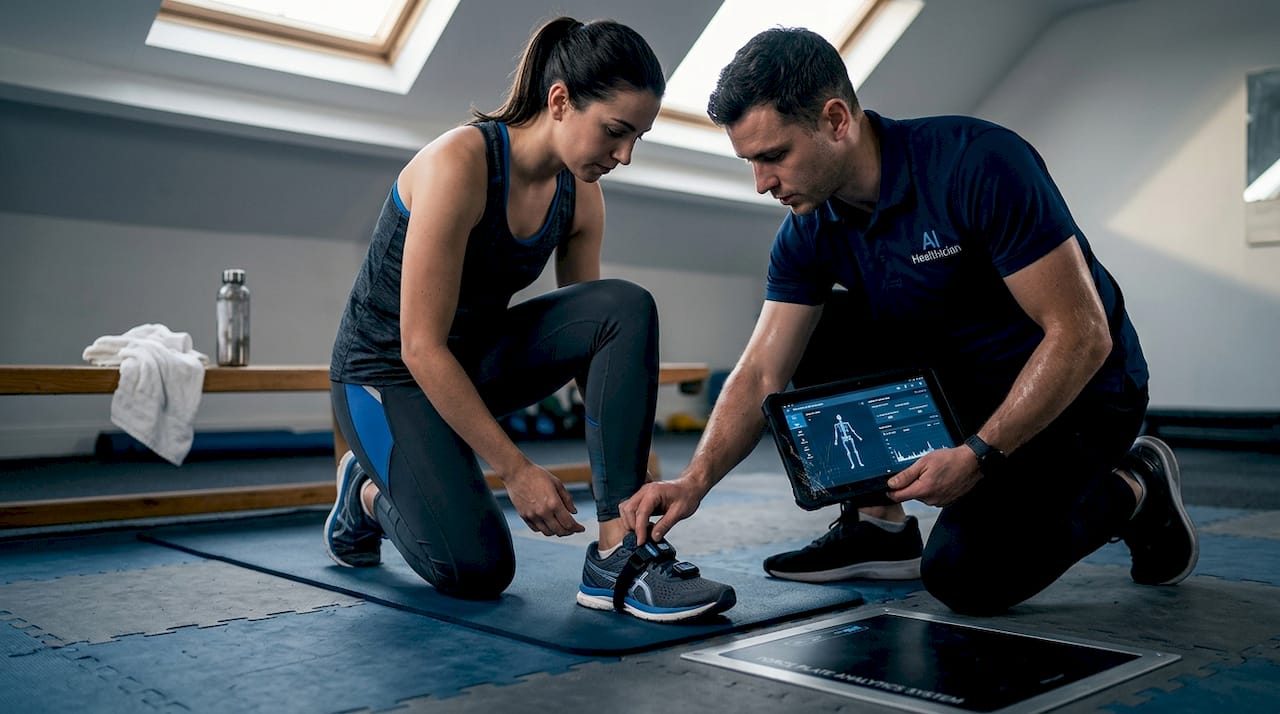
For athletic injury prevention, deep reinforcement learning models monitor biomechanical data from force plates, GPS trackers, and accelerometers. By tracking subtle changes in movement asymmetry and training load accumulation, these systems flag injury risk before any subjective signs appear. Research confirms that AI-guided training load management achieves a 43% reduction in injuries among high-performance athletes — a figure that should stop any serious athlete in their tracks.
Sleep optimisation is another compelling case. Large language models (LLMs) trained on sleep science literature and integrated with wearable sleep stage data now outperform expert clinicians on standardised sleep coaching assessments, scoring 88% versus 71% on multiple choice question benchmarks. Athletes who use AI-guided sleep coaching report faster recovery, better hormonal regulation, and improved next-day cognitive performance. The data is the driver, not a generic wind-down routine.
Here is how raw wearable data becomes a personalised fitness recommendation in practice:
- Data collection: Your wearable captures heart rate variability (HRV), sleep stages, step count, skin temperature, and blood oxygen saturation continuously
- Preprocessing: The AI system cleans the data, removes artefacts, and normalises your readings against your personal baseline rather than population norms
- Pattern recognition: Supervised and unsupervised models identify deviations from your individual optimal ranges and flag trends over time
- Context integration: The system cross-references your wearable data with any available biomarker results, training logs, or health records
- Recommendation generation: A personalised output is produced, such as a modified training load, a recovery day, or a nutrition adjustment, with the reasoning made explicit
- Iterative refinement: As you respond to recommendations, the model updates, improving accuracy and specificity over time
The performance improvements documented in wearable optimisation research show a consistent 12.3% gain in athletic performance metrics when AI-guided training is compared to traditional periodisation alone.
| AI application | Population | Measured outcome |
|---|---|---|
| AI training load management | Elite endurance athletes | 12.3% performance gain |
| DRL injury prevention | High-performance team sports | 43% reduction in injuries |
| LLM sleep coaching | General and athletic users | 88% vs 71% expert benchmark |
| Early diabetes detection | Metabolic risk individuals | Months earlier identification |
For more detail on how athlete AI data use translates into measurable gains, the protocols are well documented.
Pro Tip: Do not treat your wearable as a standalone tool. The real value emerges when wearable data is reviewed alongside clinical biomarkers, such as cortisol, ferritin, and HRV trends, by a practitioner who can contextualise the patterns. AI identifies the signal; human expertise interprets the story behind it.
The limits and risks: Bias, black boxes, and equity
If you are going to build your health strategy around AI tools, you need to understand where they fail — not to dismiss them, but to use them intelligently.
The most significant documented risk is algorithmic bias. When training datasets underrepresent certain populations, the resulting models perform significantly worse for those groups. A striking example: pneumonia detection AI shows 23% higher false-negative rates for rural patients compared to urban counterparts, because rural presentation patterns were underrepresented in training data. For you as an individual, this means that any AI tool trained predominantly on one demographic may not be calibrated for your physiology, ethnicity, or lifestyle context.
Black-box opacity is the second major concern. Most high-performing models, particularly deep learning networks, cannot easily explain why they reached a conclusion. This is problematic in health contexts where understanding the reasoning is essential for clinical decision-making and for your own informed consent. Explainable AI (XAI) tools such as SHAP (SHapley Additive exPlanations) and LIME (Local Interpretable Model-Agnostic Explanations) help by attributing model outputs to specific input variables, but they are not yet universally applied.
Overfitting and concept drift are technical risks with real-world consequences. A model that overfits to its training data performs beautifully on historical examples but degrades when real-world conditions shift. Concept drift occurs when the underlying data relationships change over time, which happens frequently in health as populations, behaviours, and environmental factors evolve.
Key risks for health-conscious and athletic users:
- Models trained on general populations may not reflect your physiological baseline
- AI tools without interpretability features cannot tell you why a recommendation was made
- Automated recommendations can conflict with each other when integrated from multiple platforms
- Overreliance on AI outputs without clinical cross-checking creates a false sense of certainty
- Regulatory oversight of consumer AI health tools varies enormously across markets
Pro Tip: Before committing to any AI health tool, ask directly whether the training dataset reflects your demographic, and whether the model uses SHAP or LIME for output interpretability. If the provider cannot answer these questions clearly, treat their outputs with appropriate scepticism. Strong precision health approaches always disclose their data sources and validation methods.
Optimising your health: Real-world strategies using AI
Knowing what AI can and cannot do positions you to use it strategically. Here is a practical framework for integrating AI into your health optimisation without the common pitfalls.
- Start with validated testing: Before any AI tool can personalise anything meaningfully, it needs high-quality baseline data. Commission clinical-grade biomarker panels, metabolic assessments, and where relevant, genomic analysis. Consumer wearable data alone is insufficient as a starting point for serious health optimisation
- Integrate a data dashboard: Use a platform that aggregates your wearable metrics, lab results, and lifestyle inputs into a single view. This is where AI pattern recognition adds its clearest value, spotting trends across data streams that no single test would reveal
- Apply clinician oversight at every decision point: AI can flag that your HRV has dropped 18% over six weeks and correlate it with disrupted sleep architecture and rising resting heart rate. A clinician contextualises that against your training history, stress load, and hormonal data to determine whether you need a recovery week or a deeper investigation. The research is clear that AI for injury reduction and performance requires clinician oversight to be used safely
- Iterate and review regularly: AI models improve with longitudinal data. A single snapshot provides limited personalisation. A six-month data trail provides a genuinely predictive model of your individual responses. Schedule quarterly reviews where your data, your AI outputs, and your clinical results are assessed together
The peak performance analytics available through integrated platforms are only as good as the quality of the data you feed them. Garbage in, garbage out applies to health AI exactly as it does to any other system.
For data-driven health examples of how this four-step process plays out in practice, the evidence base is growing rapidly. The priority now, as stated in Frontiers in Digital Health, is robust validation and ethical data practices to ensure the tools you rely on meet a defensible standard.
Pro Tip: When evaluating an AI health platform, ask three questions: Has the model been validated in a population similar to yours? Does it integrate with clinical oversight rather than replacing it? Is the data governance transparent and GDPR-compliant? These three criteria filter out the vast majority of tools that generate noise rather than actionable insight.
The truth: AI as an amplifier, not a replacement for human health wisdom
Here is where most articles on AI in health get it fundamentally wrong. They frame it as a binary: either AI will replace clinicians, or it is overblown. Both positions miss the point entirely.
The model that actually works is what researchers call the centaur approach, where human expertise and AI capability are paired deliberately. The AI processes scale and complexity that no clinician could handle manually. The clinician applies contextual judgement, ethical reasoning, and empathy that no algorithm can replicate. Neither is sufficient alone. Together, they produce outcomes that neither can achieve independently.
AI augments but cannot replace the art of medicine, the Boston Consulting Group argues, and crucially, it requires a redesign of health systems, not just a layer of technology on top of broken processes. This distinction matters for you as an individual. Plugging an AI wearable into an otherwise passive health approach will not transform your longevity outcomes. The AI must be embedded in an active, iterative, expert-guided strategy.
The uncomfortable truth is that most people who invest in AI health tools underutilise them because they expect the technology to do the thinking. The AI health trend insights that genuinely shift outcomes come from individuals who treat AI outputs as the starting point of a conversation with a clinician, not as the final word. Your agency, your daily decisions, and your relationship with an expert who knows your full picture remain irreplaceable. AI is the most powerful analytical instrument your health team has ever had. It is not, and should never be, the whole team.
Next steps: Putting advanced AI health tools to work for you
The gap between knowing how AI works and actually benefiting from it comes down to the quality of testing and oversight behind your tools. At AI Healthician, our protocols are built on precisely this foundation: functional testing that generates the data AI needs to produce genuinely personalised insights, combined with expert review that ensures recommendations are safe, contextually sound, and actionable.
If you are ready to move from theory to measurable optimisation, our advanced DNA health analysis provides genomic data that feeds directly into personalised risk and performance modelling. For metabolic precision, our full metabolic analysis with 3D body composition scanning gives your health team the physiological baseline that AI requires. And if metabolic rate is the starting point you need, our resting metabolic testing delivers clinical-grade data from a single focused assessment. Every test is designed to turn biological data into a protocol, not a report.
Frequently asked questions
How do AI algorithms personalise health recommendations?
AI cross-references your wearable outputs, genetic profile, and health records simultaneously, identifying patterns specific to your biology rather than population averages. This multimodal data processing is what separates genuine personalisation from generic wellness advice.
What are the risks of relying on AI health tools alone?
Algorithmic bias from underrepresented training data can produce higher error rates for certain populations, and black-box opacity makes it difficult to challenge incorrect outputs without clinician oversight.
Can AI help athletes prevent injuries and boost performance?
Yes, deep reinforcement learning applied to biomechanical and training load data achieves a 43% injury reduction in high-performance athletes, with clinician oversight required to translate AI outputs into safe practice.
Will AI replace doctors or trainers?
No. AI augments human expertise by processing data at scale, but clinical judgement, empathy, and contextual reasoning remain essential and irreplaceable components of effective health decision-making.


