


 matt@aihealthician.co.uk


Most people believe managing weight is the key to health, but that only scratches the surface. True metabolic health is far more complex, hinging on how your body handles blood sugar, pressure, fats, and inflammation. For driven athletes and entrepreneurs, metabolic health determines energy, recovery, and long-term success. This guide clears up common myths, reveals the real science behind metabolism, and shows you how to use data for true performance longevity.
Table of Contents
- Defining Metabolic Health and Common Myths
- Core Markers and Measurement Methods
- From Data to Action: Optimising for Results
- Linking Metabolic Health to Disease Risk
- Avoiding Pitfalls and Misinterpretation
Key Takeaways
| Point | Details |
|---|---|
| Understanding Metabolic Health | Metabolic health is determined by various biomarkers, not just body weight, including blood glucose control, blood pressure, and inflammation markers. |
| Myth Busting | Common myths such as ‘thin means healthy’ and ‘metabolic health is just lifestyle choices’ misrepresent complex biological factors influencing metabolism. |
| Prioritising Measurement | Accurate and consistent measurement of metabolic markers is crucial for identifying risks and enables targeted interventions. |
| Tailored Interventions | Personalised strategies based on unique metabolic data yield better health outcomes than generic dietary advice or lifestyle changes. |
Defining Metabolic Health and Common Myths
Metabolic health refers to how efficiently your body manages blood sugar, blood pressure, lipids, and inflammation. Think of it as your body’s internal operating system—when it runs smoothly, everything functions better. When it doesn’t, chronic disease risk climbs rapidly.
Most people believe metabolic health is simply about weight or calories. That’s false. Your metabolism depends on complex biological systems working in concert, not willpower alone. Poor metabolic health increases risk of heart disease and type 2 diabetes, yet many assume they can fix it through exercise and diet alone—ignoring the inflammatory, hormonal, and microbiological factors underneath.
What Metabolic Health Actually Is
Metabolic health encompasses five key biomarkers:
- Blood glucose control – how your body manages insulin and glucose
- Blood pressure – arterial force and vascular health
- Lipid profiles – cholesterol and triglyceride balance
- Inflammation markers – systemic inflammatory status
- Body composition – where fat is distributed, not just total weight
You can be lean and metabolically unhealthy. You can be overweight and metabolically healthy. Weight alone tells you almost nothing.
Your metabolic health determines disease risk far more than the number on the scale.
This matters for competitive athletes and entrepreneurs especially. Improved metabolic efficiency means better energy, faster recovery, and sharper cognitive performance. It’s the difference between grinding through your day and operating at 100 percent.
Common Myths That Mislead You
Myth 1: “It’s just about lifestyle choices.”
Biology matters far more than personal discipline. Multiple biological and environmental factors influence metabolism, including genetics, inflammation status, gut bacteria composition, and hormonal patterns. A 45-year-old entrepreneur with poor sleep and hidden inflammation won’t fix metabolic health through willpower alone.
Myth 2: “Being thin means metabolically healthy.”
Lean doesn’t equal healthy. Many thin people have elevated glucose, high blood pressure, or poor lipid profiles. Fat distribution matters more than total fat—visceral fat around organs is far more damaging than subcutaneous fat.
Myth 3: “You can’t change your metabolism.”
This one’s backwards. Metabolic health responds powerfully to precise interventions when you measure it properly. Targeted nutrition, strategic exercise timing, stress management, and sleep optimisation all shift metabolic markers measurably.
Myth 4: “Metabolic syndrome is just one problem.”
It’s a cluster of related dysfunctions—high blood sugar, elevated blood pressure, poor lipids, and abdominal obesity occurring together. One marker suggests systemic dysfunction worth investigating.
Measuring your metabolic health reveals which levers actually move. Data beats assumptions every time.
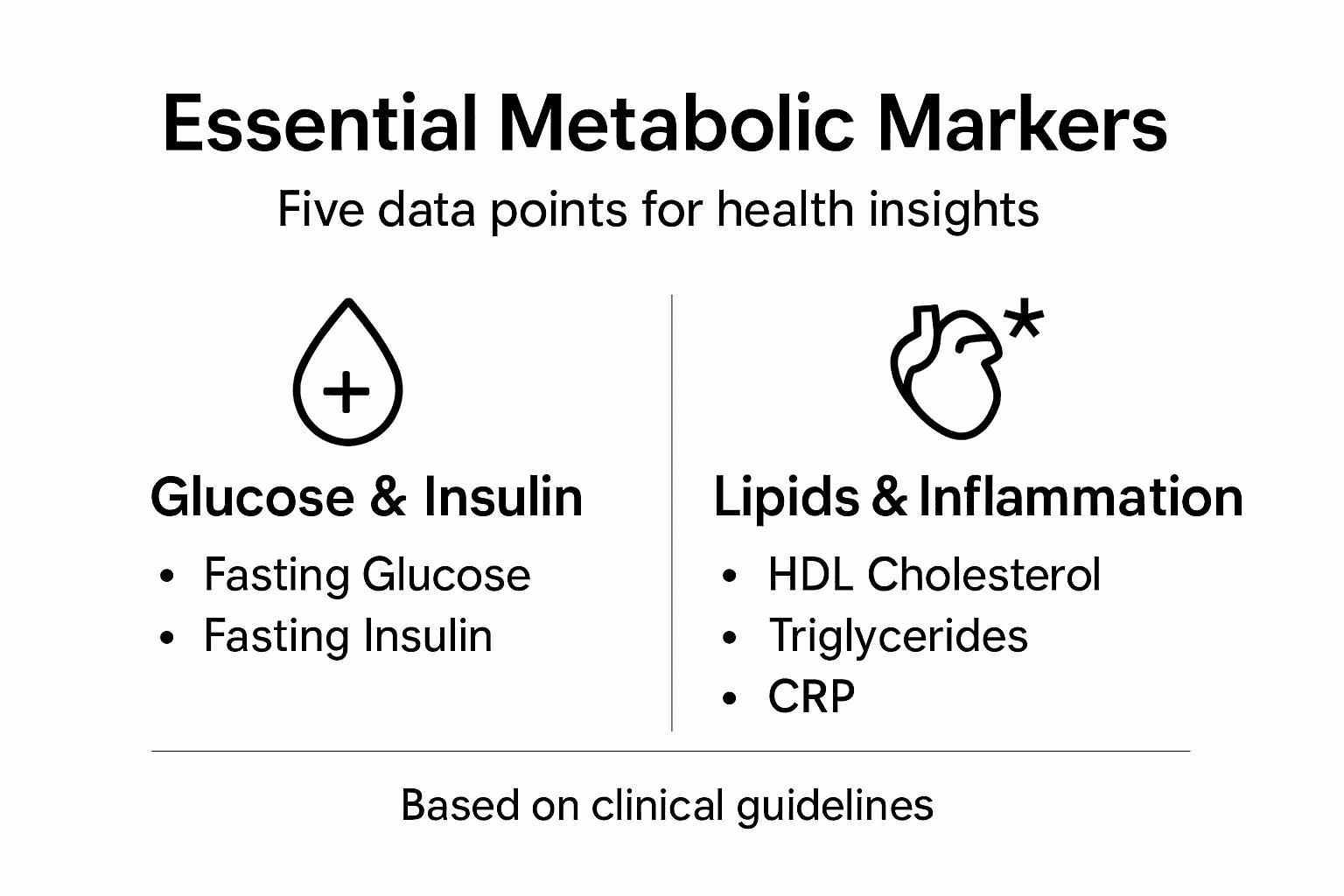
Pro tip: Request bloodwork measuring fasting glucose, insulin, triglycerides, HDL cholesterol, and inflammatory markers like CRP—these five markers form your metabolic baseline and show exactly where interventions matter most.
Core Markers and Measurement Methods
Measuring metabolic health requires more than standard blood tests. You need objective data on how your body actually functions—energy expenditure, body composition, and biochemical markers working together. Without this, you’re flying blind.

Think of metabolic measurement like a sports performance analysis. A football manager doesn’t just watch highlights; they track sprint speed, acceleration patterns, decision-making timing. Similarly, physiological biomarkers help diagnose, monitor, and predict disease risk whilst revealing exactly where interventions matter most.
The Five Essential Biomarkers
Focus on these measurable markers first:
- Fasting glucose – blood sugar at rest (normal: below 100 mg/dL)
- Fasting insulin – pancreatic output and insulin sensitivity
- Triglycerides – blood fat linked to inflammation and energy metabolism
- HDL cholesterol – “protective” cholesterol (higher is better)
- Blood pressure – arterial stress, typically monitored at rest
These five tell you whether your metabolic machinery is functioning efficiently. A single abnormal marker warrants investigation. Multiple abnormalities suggest metabolic syndrome.
Advanced Measurement Techniques
When basic bloodwork shows dysfunction, deeper testing becomes valuable. Energy expenditure assessment and body composition analysis quantify metabolic function precisely using clinical-grade methods.
Key advanced measurements include:
- Indirect calorimetry – measures actual calories your body burns at rest (resting metabolic rate)
- DXA scanning – maps lean muscle versus fat mass distribution
- Glucose tolerance testing – reveals how your body handles carbohydrates over time
- Inflammatory markers – CRP and cytokines indicating systemic inflammation
Standard blood tests catch obvious problems. Advanced testing reveals hidden dysfunction before symptoms appear.
For competitive athletes, resting metabolic rate matters enormously. A 45-year-old entrepreneur burning 1,400 calories at rest versus 1,800 tells a completely different story about recovery capacity and energy availability for performance.
This table shows the differences between standard and advanced metabolic health measurements:
| Measurement Type | What It Assesses | Clinical Relevance |
|---|---|---|
| Standard blood test | Basic markers only | Detects overt dysfunction |
| Indirect calorimetry | Resting calorie expenditure | Reveals energy efficiency |
| DXA scan | Body composition detail | Maps fat and muscle distribution |
| Glucose tolerance test | Dynamic sugar handling | Finds hidden insulin resistance |
| Inflammatory markers | CRP, cytokines | Identifies silent inflammation |
Why Data Consistency Matters
Single measurements mean little. Track these markers quarterly over 12 months to identify patterns. Fasting glucose trending upward over six months signals metabolic stress long before diabetes develops. Triglycerides dropping 30 percent post-intervention proves your strategy works.
Data collection requires consistency—same time of day, same fasting state, same testing methods. Otherwise you’re comparing apples to oranges.
Pro tip: Request a comprehensive metabolic panel annually and track results in a spreadsheet, noting interventions alongside each test—this longitudinal data reveals which lifestyle changes actually shift your markers, eliminating guesswork.
From Data to Action: Optimising for Results
Data without action is just noise. Collecting metabolic markers means nothing unless you translate findings into precise, measurable interventions. This is where most people fail—they test, see results, then guess at what comes next.
Your competitive advantage comes from closing the gap between testing and implementation. Not everyone does this. Most athletes and entrepreneurs collect data then abandon it. You won’t.
From Measurement to Personalised Strategy
Your metabolic data is unique. Two entrepreneurs with identical triglyceride levels might need completely different interventions based on their genetic background, gut microbiome composition, and environmental stressors. Customised dietary and lifestyle interventions optimised using metabolic data produce superior outcomes compared to generic approaches.
This is precision health. Not one-size-fits-all nutrition plans. Not generic “eat less, move more” advice.
Translating data into action requires structure:
- Identify dysfunction – which specific markers are abnormal
- Understand mechanisms – why those markers shifted (inflammation, insulin resistance, poor recovery, etc.)
- Design interventions – targeted changes addressing root cause, not symptoms
- Measure response – retest at 8–12 weeks to validate whether your strategy works
- Iterate and refine – adjust based on actual data, not assumptions
Personalised interventions drive results generic advice cannot match.
A 48-year-old entrepreneur with elevated fasting insulin but normal glucose needs different nutrition timing than someone with elevated glucose but normal insulin. Their root causes differ. Their solutions must differ.
Prioritising Your Interventions
Not all metabolic dysfunction requires equal attention. Some markers move easily with simple changes. Others require months of consistent work. Start with the highest-leverage interventions—those shifting multiple markers simultaneously.
High-leverage changes typically include:
- Sleep optimisation – improves insulin sensitivity, reduces inflammation, restores energy expenditure
- Carbohydrate timing – aligns carbs with training, stabilises glucose and insulin
- Stress management – lowers cortisol, reduces visceral fat accumulation
- Protein adequacy – preserves lean mass during fat loss, stabilises glucose
Notice nutrition appears three times. That’s not coincidence—it’s the highest-leverage domain for metabolic change.
Test one intervention at a time. Change sleep quality for 8 weeks whilst keeping nutrition and exercise constant. Measure. Then add a second intervention. This reveals which changes actually moved your markers.
Tracking Progress That Matters
Retest bloodwork at 12 weeks, not 4 weeks. Metabolic adaptation takes time. Tracking too frequently creates noise and false conclusions. Quarterly testing reveals genuine trends whilst filtering daily fluctuations.
Beyond bloodwork, track performance markers correlating with metabolic health:
- Energy levels (1–10 scale daily)
- Sleep quality and duration
- Workout recovery speed
- Cognitive sharpness during afternoon focus work
- Hunger patterns throughout the day
These subjective markers often shift before objective blood markers change, signalling whether your strategy is working.
Pro tip: Create a simple spreadsheet tracking blood markers, intervention dates, and performance outcomes side by side—this visual map reveals which specific changes moved your markers, so you can replicate success and abandon what doesn’t work for your biology.
Linking Metabolic Health to Disease Risk
Poor metabolic health doesn’t announce itself. You won’t feel cardiovascular disease developing until you’re in the hospital. That’s why measuring it matters—it reveals disease risk years before symptoms appear.
Think of metabolic markers as early warning lights on your dashboard. Ignore them long enough, and the engine fails. Most people don’t notice until the damage is irreversible.
The Hidden Cost of Metabolic Dysfunction
You’ve likely heard metabolic syndrome mentioned casually. It’s far more serious than the term suggests. Metabolic dysfunction significantly increases mortality risk from cardiovascular disease and cancer, even among normal-weight individuals.
This is critical. You can look fit and still carry dangerous metabolic dysfunction. A lean 42-year-old entrepreneur with elevated blood pressure, poor glucose control, and high triglycerides faces greater disease risk than an overweight person with healthy metabolic markers.
Metabolic syndrome involves a cluster of abnormalities:
- Elevated fasting glucose (prediabetic range)
- High blood pressure (130/85 or above)
- Elevated triglycerides (above 150 mg/dL)
- Low HDL cholesterol (below 40 mg/dL for men)
- Abdominal fat accumulation (visceral obesity)
Having three or more simultaneously classifies metabolic syndrome. The more markers abnormal, the higher your disease risk multiplier.
To clarify how metabolic syndrome is diagnosed and its health implications, here’s a summary table:
| Marker | Diagnostic Threshold | Associated Risk |
|---|---|---|
| Fasting glucose | ≥100 mg/dL | Prediabetes, diabetes risk |
| Blood pressure | ≥130/85 mmHg | Hypertension, heart disease |
| Triglycerides | ≥150 mg/dL | Cardiovascular events |
| HDL cholesterol | <40 mg/dL (men) | Atherosclerosis risk |
| Abdominal fat | Visceral obesity present | Elevated chronic disease risk |
Metabolic dysfunction causes disease progression through dysregulated energy pathways, not simply excess weight.
From Dysfunction to Chronic Disease
How does poor metabolic health become disease? The pathway is well-mapped. Insulin resistance develops first—your cells stop responding to insulin properly. Your pancreas compensates by producing more insulin. This hyperinsulinaemia triggers inflammation system-wide.
Chronic inflammation damages arterial walls, accelerates atherosclerosis, and impairs liver function. Fatty liver disease emerges silently. Over years, this progresses to liver fibrosis, cirrhosis, or cancer. Meanwhile, elevated blood sugar damages blood vessels and nerves, leading toward type 2 diabetes.
The timeline matters. Most people don’t develop type 2 diabetes overnight. It typically takes 5–10 years of progressively worsening glucose control. During that window, your metabolic data would show the problem. You could intervene and reverse the trajectory.
Disease risks linked to poor metabolic health include:
- Type 2 diabetes (8–10 times higher risk)
- Cardiovascular disease (3–4 times higher risk)
- Fatty liver disease (progressive scarring)
- Cognitive decline and dementia
- Certain cancers (colorectal, breast, pancreatic)
Why Competitive Athletes Need This Too
You assume athletes are metabolically healthy. Many aren’t. Intense training without adequate recovery, poor nutrition timing, or chronic stress can create metabolic dysfunction despite excellent fitness. A runner with perfect VO₂ max but elevated fasting insulin is heading toward problems.
Metabolic health and athletic performance are interdependent. Improved insulin sensitivity means better energy availability during training. Lower inflammation improves recovery speed. Better glucose control stabilises performance consistency.
Measuring these markers reveals performance ceilings you can’t see otherwise.
Pro tip: Track your metabolic markers annually and compare year-over-year trends—if any marker worsens, that’s your signal to reassess interventions before dysfunction accelerates into disease.
Avoiding Pitfalls and Misinterpretation
Raw metabolic data without context is dangerous. A single elevated triglyceride reading doesn’t mean you’re headed toward heart disease. A fasting glucose of 105 mg/dL doesn’t confirm diabetes. Misinterpreting these numbers leads to unnecessary panic or, worse, false reassurance.
The gap between data and understanding is where mistakes happen. Most people either catastrophise single abnormal results or dismiss patterns that matter. Neither approach serves you.
The Complexity Hidden in Numbers
Metabolic health exists across a spectrum, not in binary categories. Individual variability in genetics, epigenetics, and environmental exposures means metabolic data requires nuanced, personalised interpretation rather than oversimplified comparisons.
Your triglyceride of 160 mg/dL might mean something entirely different than someone else’s identical reading. One person might have poor carbohydrate tolerance. Another might have poor sleep or chronic stress. A third might have undiagnosed inflammatory disease. The number is the same. The underlying cause differs. The intervention must differ.
Common misinterpretations include:
- Single markers in isolation – one abnormal result without context
- Reference range confusion – assuming “normal” ranges apply equally to athletes or older populations
- Ignoring temporal trends – focusing on one snapshot rather than direction of change
- Genetic dismissal – assuming poor markers are unchangeable because of family history
- Lifestyle oversimplification – attributing all dysfunction to diet when sleep or stress dominates
One abnormal marker tells you something shifted. Multiple markers trending together reveal the real problem.
Weight Status Doesn’t Define Metabolic Health
This deserves emphasis: you can be lean and metabolically unhealthy. You can be overweight and metabolically healthy. Metabolic dysfunction occurs independently of body weight classification, requiring careful interpretation beyond weight-based categories.
A 48-year-old entrepreneur weighing 82 kilograms with normal blood pressure, excellent glucose control, and low inflammation is metabolically healthier than a lean 35-year-old with elevated insulin, poor lipids, and high CRP. Weight tells you almost nothing about metabolic function.
This matters because health systems often dismiss abnormal metabolic markers in lean individuals. “Your weight looks good,” they say, ignoring poor glucose control. That’s a critical error. Measure actual function, not appearance.
Avoiding Over-Testing and Paranoia
Testing monthly won’t reveal trends—it creates noise. Your metabolic markers fluctuate daily based on stress, sleep, recent exercise, and even timing of last meal. Quarterly or annual testing reveals genuine patterns whilst filtering daily variation.
Similarly, one abnormal result doesn’t demand immediate intervention. Retest before assuming dysfunction. Confirm the abnormality. Understanding whether it’s chronic or transient changes your response entirely.
Testing frequency should follow this structure:
- Initial baseline – comprehensive testing establishing starting point
- Post-intervention – retest at 12 weeks after implementing changes
- Ongoing monitoring – annually for maintenance, or quarterly if addressing active dysfunction
Testing more frequently wastes money and creates false alarm cycles.
Pro tip: Always request your raw lab results and reference ranges directly—don’t rely on provider summaries—so you can track actual values over time and notice subtle directional trends before they become problematic.
Unlock the Full Potential of Your Metabolic Health with Data-Driven Precision
If you are ready to move beyond guesswork and generic advice, understanding your metabolic health through precise measurement is the ultimate game changer. The article highlights common pitfalls like relying on weight alone or ignoring inflammatory and hormonal factors that silently sabotage your energy, recovery, and long-term wellness. Don’t let hidden metabolic dysfunction hold you back from performing at your best.

Explore DNA Health Testing and cutting-edge diagnostics at AI Healthician to uncover the root causes of your metabolic markers. Our tailored approach translates complex biological data into personalised, measurable interventions. Take control now and feel the difference as you boost energy, reduce disease risk, and sharpen focus. Visit AI Healthician today and start your journey to data-powered metabolic optimisation.
Frequently Asked Questions
What is metabolic health?
Metabolic health refers to how efficiently your body manages blood sugar, blood pressure, lipids, and inflammation. It indicates your body’s internal functioning and overall disease risk, beyond just weight.
Why is measuring metabolic health important?
Measuring metabolic health helps identify potential risks for chronic diseases, such as type 2 diabetes and cardiovascular issues. It allows individuals to monitor their metabolic efficiency and make informed adjustments to their lifestyle for better health outcomes.
What are the key biomarkers for assessing metabolic health?
The five key biomarkers for assessing metabolic health include fasting glucose, fasting insulin, triglycerides, HDL cholesterol, and blood pressure. These markers provide insight into your body’s metabolic functioning.
How frequently should metabolic health markers be tested?
It’s recommended to test metabolic markers quarterly over 12 months to identify patterns. Annual comprehensive testing aids in monitoring long-term health while ensuring you’re making progress with any implemented lifestyle changes.


