


 matt@aihealthician.co.uk


TL;DR:
- Gut health influences metabolism immune response mood and overall resilience beyond digestion.
- Comprehensive assessment combines biological tests and personal experiences for accurate insights.
- Expert interpretation and targeted lifestyle changes maximize the benefits of gut health testing.
Gut health is far more than digestive comfort. It shapes your metabolism, your immune response, your mood, and your long-term risk of chronic disease. Yet most people only think about their gut when something goes obviously wrong. The reality is that gut health influences everything from energy regulation to brain function, meaning that even those without obvious symptoms can benefit enormously from a structured, personalised assessment. This article walks through why gut health assessment matters, what it actually involves, and how to turn your results into measurable, lasting improvements.
Table of Contents
- How gut health drives whole-body wellness
- What is gut health and how do we assess it?
- Methods and tools for assessing gut health
- From test results to action: Making gut health insights work for you
- Why most gut health assessments are misunderstood
- Transform your wellbeing with expert-guided gut insights
- Frequently asked questions
Key Takeaways
| Point | Details |
|---|---|
| Beyond digestion | Assessing gut health reveals impacts on metabolism, immunity, and energy, even for those without digestive symptoms. |
| Objective and subjective | True gut assessments blend clinical tests and personal experiences for a complete picture. |
| Choose tests smartly | Clinician-guided, validated assessments are crucial—especially with the variability of DTC kits. |
| Turn insights into action | Use results for tailored improvement, focusing on function and trends rather than isolated scores. |
How gut health drives whole-body wellness
Your gut is not simply a tube that processes food. It is a complex, dynamic ecosystem housing trillions of microorganisms that interact with virtually every system in your body. When that ecosystem is balanced, it supports efficient nutrient absorption, regulated inflammation, and a robust immune response. When it is not, the consequences extend far beyond bloating or discomfort.
One of the most significant but underappreciated connections is between the gut and metabolic health. The microbiome influences how your body processes glucose, stores fat, and responds to insulin. Poor microbial diversity has been linked to insulin resistance, obesity, and elevated inflammatory markers. If you are tracking your metabolic health data and finding unexplained patterns, the gut is often the missing variable.
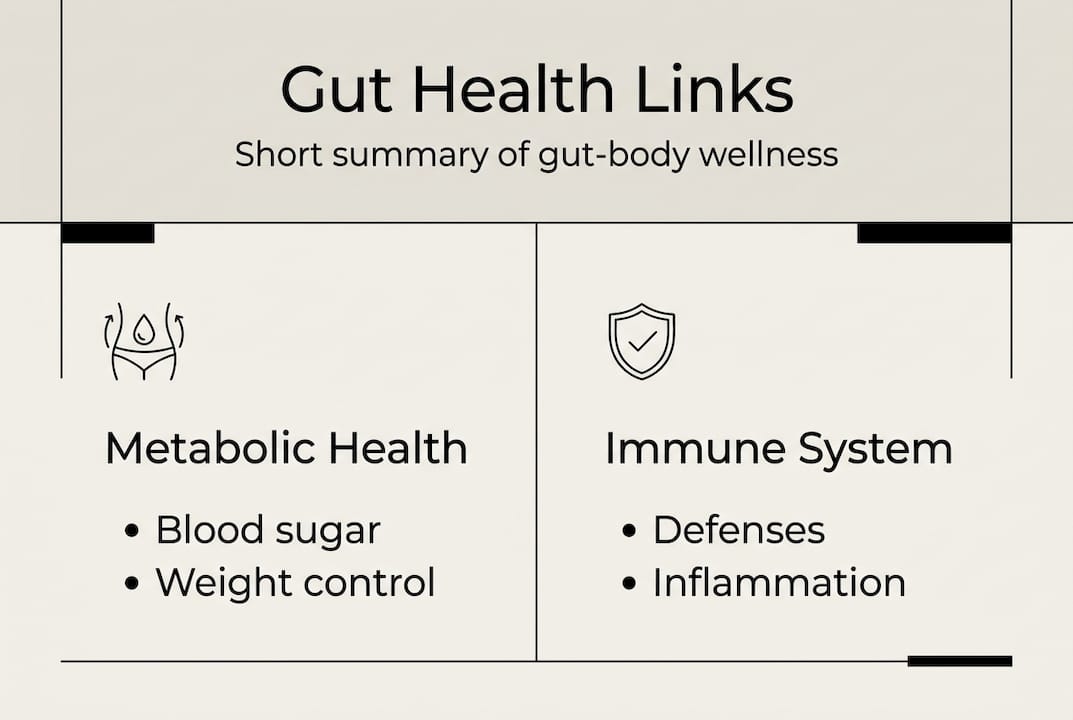
The immune connection is equally striking. Roughly 70 to 80 per cent of your immune cells reside in gut-associated lymphoid tissue. This means that chronic low-grade gut inflammation can quietly undermine your immune resilience, leaving you more susceptible to infection, autoimmune flare-ups, and slow recovery from illness. Understanding why measuring metabolic health matters is incomplete without factoring in gut function.
Mental health is another domain where gut assessment delivers unexpected value. The gut-brain axis, a bidirectional communication network involving the vagus nerve and neurotransmitter production, means that gut health affects emotional wellbeing, stress resilience, and even cognitive clarity. Many clients report improved mood and focus following targeted gut interventions, before they ever notice digestive changes.
Dysbiosis, the term for a disrupted microbial balance, sits at the centre of many of these concerns. Comprehensive gut assessment is now considered vital for diagnosing and managing conditions linked to dysbiosis, including type 2 diabetes and obesity. Key areas where gut imbalance shows up include:
- Persistent low energy despite adequate sleep
- Unexplained weight gain or difficulty losing weight
- Frequent infections or slow wound healing
- Mood instability, anxiety, or brain fog
- Elevated inflammatory markers on blood tests
Gut health assessment is not a diagnostic tool for the unwell alone. It is a precision instrument for anyone seeking to understand and optimise the biological systems that govern their long-term performance and resilience.
What is gut health and how do we assess it?
Gut health is best understood as the absence of disease combined with the presence of optimal digestive function, a balanced microbial ecosystem, intact mucosal barriers, and efficient immune regulation. That is a broader definition than most people expect, and it explains why assessment goes well beyond a simple stool test.
A thorough gut health assessment combines both objective physiological measurements and subjective patient experiences. Assessment combines these two streams because neither alone tells the full story. Someone can have textbook microbial diversity yet still experience significant symptoms. Conversely, someone can feel perfectly well while harbouring measurable gut inflammation.

Objective tools measure what is actually happening in the gut at a biological level. Subjective tools capture how the gut is affecting your lived experience. Both are necessary for a complete picture. Modern methodologies now include genetic sequencing of microbial communities, functional digestion tests, and non-invasive diagnostics that require no invasive procedures.
| Measure type | Examples | What it reveals |
|---|---|---|
| Objective | Calprotectin, metagenomics, breath tests | Inflammation, microbial composition, fermentation patterns |
| Objective | Zonulin, secretory IgA, short-chain fatty acids | Gut barrier integrity, immune activity, microbial metabolism |
| Subjective | Symptom questionnaires, Bristol Stool Scale | Digestive comfort, transit time, quality of life impact |
| Subjective | Food and mood diaries, sleep logs | Lifestyle triggers, gut-brain interactions |
A particularly important point for health-conscious individuals is that gut imbalance can exist without any obvious symptoms. This is sometimes called silent dysbiosis. You may feel broadly well yet carry measurable inflammation, reduced microbial diversity, or compromised barrier function. These subclinical patterns are precisely what a gut microbiome analysis is designed to surface before they translate into more serious health consequences.
The key areas assessed in a structured gut health review include:
- Microbial diversity and species composition
- Gut permeability and barrier integrity
- Digestive enzyme activity and nutrient absorption efficiency
- Immune markers such as calprotectin and secretory IgA
- Fermentation patterns and short-chain fatty acid production
Understanding the full scope of health diagnostics helps contextualise where gut assessment fits within a broader personalised health strategy.
Methods and tools for assessing gut health
Not all gut health tests are created equal. The method used determines the depth of insight you receive, and choosing the wrong tool can leave you with data that is difficult to act on or, worse, misleading.
At the clinical end of the spectrum, current methods include sequencing technologies, functional gastrointestinal tests, and non-invasive diagnostics. The two most widely used sequencing approaches are 16S rRNA gene sequencing and shotgun metagenomics. The former identifies microbial communities by targeting a specific gene region. It is cost-effective and widely available. Shotgun metagenomics sequences the entire genetic material present in a sample, providing a far richer picture of microbial function, not just who is there but what they are doing.
Breath tests are used to detect small intestinal bacterial overgrowth and assess carbohydrate fermentation patterns. Wireless gastrointestinal capsule technology, though less common, can measure pH, pressure, and transit time throughout the entire gut without any invasive procedures. These tools provide functional data that sequencing alone cannot capture.
| Feature | Clinician-guided tests | Direct-to-consumer (DTC) tests |
|---|---|---|
| Accuracy | High, validated methods | Variable, often unvalidated |
| Interpretation | Expert-guided, contextualised | Self-directed, limited context |
| Regulatory oversight | Regulated, quality-controlled | Largely unregulated |
| Cost | Higher, reflects depth of insight | Lower, reflects limited scope |
| Actionability | High, linked to personalised protocols | Low to moderate, generic advice |
DTC gut tests show high variability and limited reliability, with results from the same sample sometimes differing significantly between providers. This is not a minor caveat. It means that acting on DTC results without clinical guidance carries a genuine risk of misinterpretation.
For gut microbiome testing approaches to be genuinely useful, they need to be paired with expert interpretation that accounts for your full clinical picture, not just the raw numbers.
Reviewing a biomarker analysis guide can help you understand how individual markers fit into a broader physiological narrative before you invest in testing.
Pro Tip: Always ask whether a test uses validated methodology and whether results are interpreted by a qualified clinician. The cheapest option is rarely the most actionable one.
From test results to action: Making gut health insights work for you
Receiving your gut health results is the beginning, not the end. The data only becomes valuable when it is translated into targeted, sustainable changes to your diet, lifestyle, and supplementation strategy.
Here is a structured approach to getting genuine value from your assessment:
- Interpret with a qualified expert. Raw microbiome data is complex. Empirical microbiome indexes and functional scores can predict gut-related risk factors, but they require expert guidance to interpret meaningfully. A clinician can distinguish between a clinically significant finding and normal biological variation.
- Apply findings to tailored diet and lifestyle changes. This might mean increasing dietary fibre diversity to support microbial richness, adjusting meal timing to reduce fermentation-related symptoms, or addressing specific deficiencies flagged by absorption markers. Use your personalised health checklist as a starting framework.
- Monitor for trends, not one-off snapshots. A single test captures a moment in time. Gut composition shifts with diet, stress, sleep, and illness. Reassessing at intervals allows you to track genuine progress rather than reacting to natural fluctuation.
- Focus on function, not taxonomy. Knowing you have a particular species present is far less useful than knowing whether your gut is producing adequate short-chain fatty acids, maintaining barrier integrity, and supporting immune regulation. Functional outcomes are the real target.
No validated definition of dysbiosis currently exists, which means caution is essential when interpreting results independently. This is not a reason to avoid testing. It is a reason to ensure expert involvement at every stage.
Future developments in precision nutrition and advanced biomarker panels will make gut assessment even more actionable. For now, using your results as part of a dynamic, evolving wellness strategy is the most evidence-aligned approach. The assess metabolic health guide provides a useful framework for integrating gut data with broader metabolic insights.
Pro Tip: Resist the urge to chase a ‘perfect’ microbiome profile. There is no universal ideal. Your goal is a gut that functions well for your specific physiology, not one that matches a generic benchmark.
Why most gut health assessments are misunderstood
The gut health space is saturated with noise. Probiotic marketing, influencer-endorsed microbiome kits, and oversimplified advice about specific bacteria have created a widespread misconception: that gut health is about having the right bugs in the right quantities. It is not.
Hype often exceeds scientific consensus in this field. Function matters far more than a list of microbial species. Two people can have very different microbial compositions and both have excellent gut function. Two others can share a similar microbiome profile yet experience entirely different health outcomes. Context, diet, stress load, sleep quality, and genetics all modulate what your microbiome actually does.
The most common mistake we see is clients arriving with DTC test results, convinced they need to eliminate certain bacteria or flood their gut with a specific probiotic strain. Without clinical context, these conclusions are often wrong and occasionally counterproductive.
True personalisation through comprehensive health diagnostics means targeting functional improvement: better energy, reduced inflammation, improved metabolic markers, and greater resilience. That requires integrated data, expert interpretation, and a willingness to treat your gut as a dynamic system rather than a fixed profile to be optimised once and forgotten.
Transform your wellbeing with expert-guided gut insights
Understanding your gut at a biological level is one of the most powerful steps you can take towards lasting metabolic resilience and whole-body wellness. The gap between generic advice and genuine personalisation lies in the quality of your data and the expertise behind its interpretation.

At AI Healthician, we combine validated gut microbiome analysis with expert-guided interpretation to ensure your results translate into precise, actionable protocols. Our DNA health testing adds a further layer of biological insight, connecting your genetic predispositions with your current gut function. If you are ready to move beyond guesswork and build a genuinely personalised health strategy, this is where that journey begins.
Frequently asked questions
Can gut health assessments prevent chronic diseases?
Gut health screening aids early identification of risk factors for metabolic, immune, and neurological conditions, enabling earlier, more targeted intervention before disease becomes established.
How reliable are home testing kits for gut health?
DTC gut tests show high variability and lack regulatory oversight, meaning results can differ significantly between providers and should never be acted on without clinical guidance.
What symptoms should prompt gut health assessment?
Chronic bloating, unexplained fatigue, shifts in bowel habits, or poor metabolic results are common indicators, though symptoms affecting quality of life can be subtle and easily attributed to other causes.
Are there risks to frequent gut testing?
Excessive reliance on DTC tests without clinical context can cause confusion or unnecessary anxiety; appropriate testing frequency and timing should always be guided by a qualified clinician.


