


 matt@aihealthician.co.uk


Most people chase symptoms with quick fixes, yet wonder why fatigue, inflammation, and poor recovery persist despite treatments. The difference lies in addressing root causes rather than masking problems. Functional health offers a systems biology approach that examines interconnected body systems to uncover underlying dysfunction, enabling health-conscious individuals and biohackers to achieve measurable gains in performance, resilience, and longevity. This guide explains functional health’s principles, methodologies, evidence base, and practical applications to help you optimise your biology with precision.
Table of Contents
- Understanding Functional Health: Core Principles And Approach
- Core Methodologies And Data-Driven Tools In Functional Health
- Evaluating The Evidence: Benefits And Criticisms Of Functional Health
- Practical Applications For Biohackers And Health-Conscious Individuals
- Discover Personalised Functional Health Services At AI Healthician
- What Is Functional Health? Common Questions Answered
Key takeaways
| Point | Details |
|---|---|
| Root cause focus | Functional health targets underlying dysfunction across interconnected body systems rather than isolated symptoms |
| Advanced testing | Uses 60-90 biomarkers with narrow optimal ranges to detect early imbalances before disease develops |
| Personalised protocols | Combines nutrition, lifestyle, supplements, and biohacking tools tailored to individual data and goals |
| Evidence and debate | Clinical trials show improvements in chronic conditions, yet critics question costs and rigour |
| Biohacker integration | Wearables, genetics, and trend tracking enhance functional health strategies for measurable optimisation |
Understanding functional health: core principles and approach
Functional health represents a shift from conventional medicine’s symptom-focused model to a comprehensive framework examining why dysfunction occurs. Traditional care often treats isolated complaints with medications targeting specific pathways, whereas functional health emphasises interconnected body systems like gut, hormones, immune function, detoxification, and metabolism to restore performance, resilience, and longevity. This systems biology perspective recognises that imbalances in one area ripple through others, requiring holistic assessment rather than fragmented intervention.
The patient-centred approach begins with comprehensive history taking that maps symptoms, lifestyle factors, environmental exposures, and genetic predispositions. Practitioners spend extended consultations understanding your unique context, identifying patterns conventional doctors might miss during brief appointments. This depth allows for targeted investigation into root causes such as nutrient deficiencies, chronic inflammation, hormonal dysregulation, or gut microbiome disruption.
Functional health prioritises optimal function over absence of disease. Standard medical ranges indicate whether you fall within population norms, often missing early dysfunction. Functional practitioners use tighter optimal ranges to catch subtle imbalances years before they manifest as diagnosable conditions. For example, fasting insulin below 5 mIU/L indicates excellent metabolic health, whilst standard labs only flag values above 25 mIU/L as problematic. This proactive stance aligns perfectly with biohackers seeking peak performance rather than merely avoiding illness.
The ultimate goal extends beyond symptom relief to achieving sustained energy, cognitive clarity, metabolic efficiency, and reduced disease risk. By addressing underlying drivers, functional health creates lasting improvements rather than temporary suppression of warning signals. This functional health testing guide explains how precision diagnostics reveal hidden imbalances conventional tests overlook.
Key principles include:
- Biochemical individuality: your optimal ranges differ based on genetics, age, sex, and activity level
- Upstream intervention: correcting root causes prevents downstream complications
- Dynamic balance: health exists on a spectrum requiring continuous optimisation
- Evidence-informed practice: combining research with clinical experience and patient outcomes
Functional health transforms reactive sick care into proactive performance optimisation, empowering individuals to take ownership of their biology through data-driven insights and personalised interventions.
Core methodologies and data-driven tools in functional health
Functional health practitioners employ comprehensive assessment tools to build detailed pictures of your physiology. Initial consultations typically span 60-90 minutes, gathering extensive histories covering diet, sleep, stress, exercise, environmental toxins, medications, and family health patterns. This detective work identifies potential triggers and contributors to current dysfunction, guiding subsequent testing priorities.
Advanced functional lab testing covers 60-90 markers including high-sensitivity C-reactive protein, fasting insulin, vitamin D, sex hormones, thyroid panel, homocysteine, and methylation indicators to detect early dysfunction before disease develops. Unlike standard labs using broad population ranges, functional testing applies narrow optimal ranges that catch subtle imbalances. For instance, vitamin D levels above 50 nmol/L satisfy conventional standards, yet functional practitioners target 100-150 nmol/L for immune resilience and bone health.
Commonly measured biomarkers and their functional ranges include:
| Biomarker | Standard range | Functional optimal range | Clinical significance | | — | — | — | | Fasting insulin | 2-25 mIU/L | 2-5 mIU/L | Early insulin resistance detection | | hs-CRP | 0-10 mg/L | 0-1 mg/L | Systemic inflammation marker | | Vitamin D | 50-250 nmol/L | 100-150 nmol/L | Immune function and bone health | | Homocysteine | 5-15 µmol/L | 6-9 µmol/L | Cardiovascular and methylation status | | HbA1c | 20-42 mmol/mol | 20-36 mmol/mol | Long-term glucose control |
Personalised nutrition plans form the foundation of functional health interventions. Rather than generic dietary advice, practitioners analyse food sensitivities, macronutrient ratios, and micronutrient status to design protocols matching your metabolic needs. This might involve elimination diets to identify triggers, targeted supplementation to correct deficiencies, or metabolic typing to optimise fuel sources for your biochemistry.

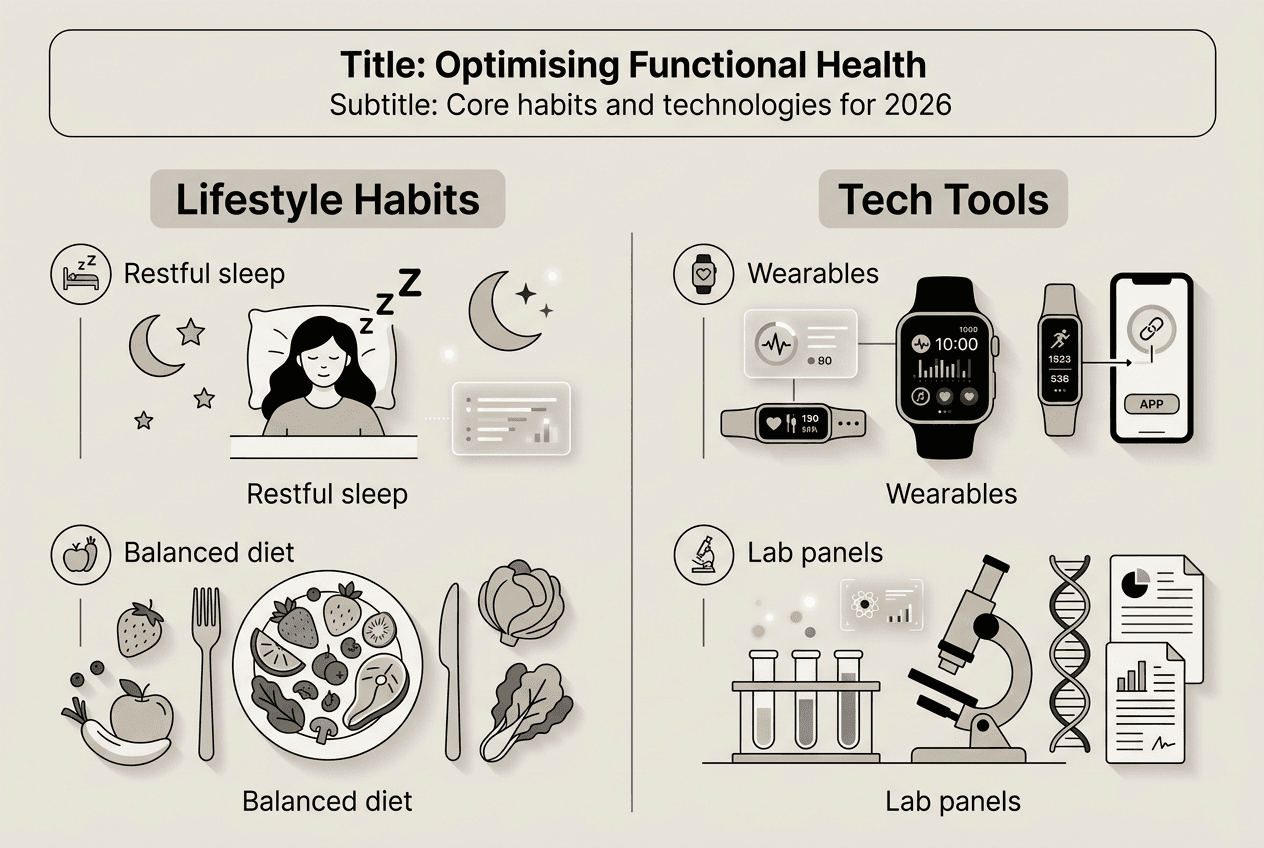
Lifestyle modifications address sleep quality, stress management, movement patterns, and circadian rhythm alignment. These foundational elements profoundly influence hormones, inflammation, and recovery capacity. Functional practitioners recognise that no supplement compensates for poor sleep or chronic stress, prioritising these basics before advanced interventions.
Supplementation, bioidentical hormones, and peptides serve as precision tools when testing reveals specific deficiencies or imbalances. Unlike blanket recommendations, functional health uses lab data to guide dosing and track response. For example, methylated B vitamins support individuals with MTHFR genetic variants affecting folate metabolism, whilst adaptogens like ashwagandha modulate cortisol patterns revealed through salivary testing.
Biohackers amplify functional health through technology integration. Wearables track heart rate variability, sleep architecture, and activity patterns, providing continuous data streams complementing periodic lab testing. Continuous glucose monitors reveal how specific foods affect your metabolic response, enabling personalised dietary refinement. Genetic tests identify predispositions guiding preventative strategies, whilst advanced diagnostics and data-driven wellness platforms synthesise multiple data sources into actionable insights.
Pro tip: Start with comprehensive metabolic and hormone panels before investing in specialised tests. Foundational markers like fasting insulin, thyroid function, and inflammation often reveal primary dysfunction, whilst expensive niche tests may distract from core issues requiring attention first.
Evaluating the evidence: benefits and criticisms of functional health
Emerging research demonstrates functional health’s potential for chronic disease management. A 2025 randomised controlled trial found functional nutrition programmes improved quality of life and biochemical markers in patients with inflammatory bowel disease and liver conditions compared to standard care. Participants experienced reduced inflammation, better symptom control, and enhanced metabolic function through personalised dietary interventions targeting gut health and nutrient status.
Patient-reported outcomes consistently show high satisfaction with functional health approaches. Many individuals struggling with chronic fatigue, digestive issues, hormonal imbalances, and autoimmune conditions report significant improvements after conventional medicine offered limited solutions. The comprehensive assessment and personalised protocols address multiple contributing factors simultaneously, often yielding better results than isolated pharmaceutical interventions.
Functional health’s preventative focus potentially reduces long-term disease risk by correcting imbalances before they progress to serious conditions. Early detection of insulin resistance, chronic inflammation, or hormonal dysfunction enables intervention years before diabetes, cardiovascular disease, or metabolic syndrome develop. This proactive stance aligns with longevity optimisation goals, targeting healthspan extension rather than merely treating established disease.
Despite promising outcomes, critics highlight concerns about functional health’s scientific rigour and accessibility. The field lacks large-scale randomised controlled trials comparing functional approaches to conventional care across diverse populations. Whilst individual studies show benefits, the evidence base remains smaller than for established medical treatments, making definitive conclusions challenging.
Costs present significant barriers for many individuals. Functional health consultations, extensive lab testing, and supplement protocols often exceed £1,000-3,000 annually, with minimal insurance coverage in most regions. This expense limits access to affluent populations, raising equity concerns about who benefits from these optimisation strategies.
Over-supplementation risks emerge when practitioners prescribe extensive protocols without adequate monitoring. Taking high doses of fat-soluble vitamins, minerals, or hormones without proper testing and follow-up can create new imbalances or toxicities. Some critics argue functional health encourages unnecessary testing and interventions in healthy individuals seeking marginal gains.
The importance of hybrid approaches combining functional and conventional medicine cannot be overstated. Functional health excels at chronic disease management and optimisation but should not replace acute care or proven treatments for serious conditions. Integrating both paradigms allows you to benefit from functional health’s root cause focus whilst accessing conventional medicine’s life-saving interventions when needed.
Personalised interpretation of lab results requires expertise, especially across different ages, sexes, and activity levels. Optimal ranges for a 25-year-old athlete differ from a 55-year-old sedentary individual. Elevated creatine kinase might indicate muscle damage in most people but represents normal training adaptation in strength athletes. This functional health testing guide emphasises context-dependent interpretation to avoid misdiagnosis.
| Benefit | Criticism |
|---|---|
| Addresses root causes and interconnected systems | Limited large-scale RCT evidence compared to conventional treatments |
| Personalised protocols based on individual data | High costs with minimal insurance coverage |
| Early dysfunction detection before disease develops | Risk of over-testing and unnecessary supplementation |
| Patient-centred care with extended consultations | Potential delays in proven treatments for serious conditions |
| Integrates lifestyle, nutrition, and biohacking tools | Requires expertise for proper interpretation across populations |
Functional health works best as a complement to conventional medicine, leveraging each paradigm’s strengths whilst mitigating limitations through informed integration and personalised application.
Practical applications for biohackers and health-conscious individuals
Implementing functional health begins with prioritising early optimisation using functional reference ranges over standard lab thresholds. Request comprehensive panels covering metabolic, hormonal, inflammatory, and nutritional markers, then compare results against optimal ranges rather than merely checking for disease. This proactive stance identifies improvement opportunities before dysfunction progresses.
Trend tracking via repeated testing every 3-6 months reveals whether interventions move markers in desired directions. Single snapshots provide limited insight, whilst longitudinal data demonstrates progress and highlights areas needing adjustment. Integrate wearable data showing daily patterns in sleep, heart rate variability, and activity to complement periodic lab testing. This combination creates a comprehensive picture of your physiological state and response to interventions.
Biohackers should prioritise functional ranges, track biomarker trends, and optimise foundational lifestyle factors before pursuing advanced interventions. Basic biohacks deliver substantial returns with minimal risk or expense:
- Circadian rhythm alignment: expose yourself to bright light within 30 minutes of waking, dim lights after sunset, and maintain consistent sleep-wake times to optimise hormone production and metabolic function
- Sufficient protein intake: consume 1.6-2.2 grams per kilogram bodyweight daily to support muscle maintenance, satiety, and metabolic health
- Time-restricted eating: limit food intake to an 8-10 hour window, allowing 14-16 hour overnight fasts to enhance autophagy and insulin sensitivity
- Stress modulation: practise daily breathing exercises, meditation, or nature exposure to manage cortisol patterns and autonomic balance
- Movement variability: combine resistance training, cardiovascular exercise, and low-intensity activity throughout the week to optimise different physiological adaptations
Athletes require special considerations when interpreting functional health markers. Intense training elevates inflammatory markers like C-reactive protein and creatine kinase as normal adaptive responses, not pathology. Context matters: chronically elevated inflammation outside training periods signals overtraining or inadequate recovery, whilst transient spikes post-workout represent healthy stress adaptation. Work with practitioners understanding athletic physiology to avoid misinterpreting training effects as dysfunction.
Women benefit from timing hormone testing to specific menstrual cycle phases for accurate interpretation. Oestrogen, progesterone, and luteinising hormone fluctuate dramatically across the cycle, making random testing misleading. Test oestrogen and luteinising hormone on days 2-4 of your cycle, progesterone on days 19-21, to capture meaningful values. Post-menopausal women and those using hormonal contraception follow different protocols requiring practitioner guidance.
Avoiding over-supplementation requires discipline and data-driven decision making. Only supplement nutrients shown deficient through testing, start with conservative doses, and retest after 8-12 weeks to assess response. More is not better: excessive vitamin A, iron, or fat-soluble vitamins create toxicity risks, whilst high-dose antioxidants may blunt beneficial training adaptations. This metabolic health improvement guide and functional tests for athletes provide frameworks for evidence-based optimisation.
Integrating functional health with conventional care ensures comprehensive support. Inform your GP about functional testing and interventions, especially if taking supplements or making significant dietary changes. Some conditions require pharmaceutical management alongside functional approaches, whilst others benefit from functional health as primary treatment. Collaborative care combining both paradigms delivers optimal outcomes for complex chronic conditions.
Pro tip: Focus on the 20% of interventions delivering 80% of results. Sleep optimisation, stress management, and nutrition quality typically outperform expensive supplements or advanced biohacks. Master fundamentals before pursuing cutting-edge strategies, tracking objective markers to validate whether interventions actually improve your physiology.
Discover personalised functional health services at AI Healthician
Ready to transform functional health knowledge into measurable optimisation? AI Healthician combines advanced diagnostics with personalised protocols designed for health-conscious individuals and biohackers seeking data-driven performance gains. Our DNA health testing reveals genetic predispositions guiding targeted prevention strategies, whilst comprehensive metabolic and longevity assessments identify current imbalances requiring intervention.

Explore The Longevity Blueprint for detailed analysis of biomarkers influencing healthspan and disease risk, or investigate metabolic efficiency through our Active Metabolic Test measuring real-time energy utilisation. Expert consultations translate complex data into actionable protocols tailored to your unique biology, goals, and lifestyle. Take control of your health optimisation journey with precision diagnostics and evidence-informed strategies designed to deliver measurable, lasting results.
What is functional health? Common questions answered
What distinguishes functional health from conventional medicine?
Functional health focuses on identifying and correcting root causes of dysfunction across interconnected body systems, whilst conventional medicine typically treats isolated symptoms with pharmaceuticals. Functional practitioners spend extended time understanding your unique context, use optimal reference ranges to detect early imbalances, and employ personalised nutrition, lifestyle, and supplement protocols rather than standardised drug prescriptions.
How do functional lab reference ranges differ from standard ranges?
Standard lab ranges represent population averages indicating disease presence or absence, often flagging only severe dysfunction. Functional ranges use tighter optimal thresholds catching subtle imbalances years before disease develops, enabling early intervention. For example, fasting insulin below 5 mIU/L indicates excellent metabolic health functionally, whilst standard ranges only flag values above 25 mIU/L as problematic.
Can biohackers track functional health improvements at home?
Yes, wearables monitoring heart rate variability, sleep quality, and activity patterns provide continuous data complementing periodic lab testing. Continuous glucose monitors reveal metabolic responses to foods, whilst at-home blood spot or saliva tests measure hormones, inflammation, and nutrients. Combine these tools with professional interpretation to ensure accurate assessment and appropriate interventions.
Is functional health suitable for everyone including acute conditions?
Functional health excels at chronic disease management and optimisation but should not replace emergency care or proven treatments for acute, life-threatening conditions. It works best as a complement to conventional medicine, addressing root causes whilst accessing conventional interventions when needed. Always consult qualified practitioners for serious health concerns requiring immediate medical attention.
What are signs to avoid over-supplementation in functional health?
Only supplement nutrients shown deficient through testing, avoid mega-doses without professional guidance, and retest after 8-12 weeks to assess response. Warning signs include digestive upset, unusual fatigue, or worsening symptoms after starting new supplements. Fat-soluble vitamins like A, D, E, and K plus minerals like iron and copper pose toxicity risks at high doses, requiring careful monitoring and evidence-based dosing.


