


 matt@aihealthician.co.uk


Your physical capacity reveals more about your biological age than the number of candles on your birthday cake. Research shows that individuals with better strength, endurance, balance, and flexibility display markers of younger biological age, regardless of chronological years. Functional testing transforms this insight into actionable data, providing health-conscious individuals and athletes with precise measurements to guide training, recovery, and longevity strategies. Unlike standard health checks that capture static snapshots, functional assessments evaluate how your body performs under real-world demands, revealing opportunities for targeted interventions that enhance both immediate performance and long-term vitality.
Table of Contents
- Understanding Functional Testing And Its Relevance
- How Functional Testing Applies To Athletic Performance
- The Role And Limits Of Biomarker Testing In Functional Assessments
- Putting Functional Testing Into Practice For Health And Longevity
- Enhance Your Journey With Expert Functional Testing Services
- Frequently Asked Questions
Key takeaways
| Point | Details |
|---|---|
| Functional testing measures physical capacity | Assessments evaluate strength, endurance, balance, and flexibility to reveal biological age markers and performance potential |
| Physical capacity predicts longevity | Each incremental improvement in functional performance associates with 60% lower odds of accelerated ageing |
| Sport-specific testing optimises training | Tailored assessments enable athletes to personalise load management, track progression, and prevent injury |
| Biomarkers complement but don’t replace training | Blood tests identify deficiencies that limit performance but adaptation requires structured exercise and recovery |
| Consistent retesting reveals trends | Periodic functional assessments track interventions’ effectiveness and guide adjustments for continuous improvement |
Understanding functional testing and its relevance
Functional testing assesses your body’s practical abilities through measurements of physical performance and physiological markers. Rather than simply checking whether values fall within normal ranges, these assessments evaluate how well your systems work together during real activities. The approach examines multiple domains that collectively determine your capacity to move, adapt, and thrive.
Physical capacity encompasses four primary domains. Strength measures your ability to generate force, endurance evaluates sustained effort over time, balance assesses stability and coordination, and flexibility determines range of motion. Each domain contributes uniquely to overall function, and together they paint a comprehensive picture of biological capability.
The Midlife Aging and Performance Study (MAPS) showed better performance in strength, endurance, balance, and flexibility correlates with younger biological age. This research demonstrates that functional capacity serves as a biological clock, often more accurate than chronological age in predicting health outcomes. Individuals who maintain higher physical capacity across these domains display cellular and systemic markers associated with slower ageing processes.
Functional testing provides the foundation for personalised health interventions by identifying specific weaknesses and strengths. Rather than following generic wellness programmes, you can target exact areas requiring improvement. An athlete might discover excellent cardiovascular endurance but poor hip mobility, whilst another individual shows strong balance but inadequate grip strength. These insights enable precise training adjustments.
Monitoring ageing through functional assessments offers advantages over traditional health markers alone. Blood pressure, cholesterol, and glucose levels matter, but they don’t reveal how efficiently your body performs integrated tasks. Functional tests capture the dynamic interplay between systems, showing whether your cardiovascular, musculoskeletal, and neurological components work harmoniously.
Key functional testing components include:
- Strength assessments such as grip dynamometry, leg press capacity, and isometric holds
- Endurance evaluations including VO2 max testing, lactate threshold analysis, and sustained effort protocols
- Balance measurements through single-leg stands, stability platform tests, and dynamic movement screens
- Flexibility assessments examining joint range of motion and tissue extensibility
- Composite scores integrating multiple domains for overall functional age determination
Pro Tip: Establish baseline measurements across all functional domains before implementing interventions, then retest every 12 to 16 weeks to track trends and validate whether your training, nutrition, and recovery strategies produce desired adaptations.
How functional testing applies to athletic performance
Athletes require testing protocols tailored to their sport’s specific demands. A rugby player needs different functional assessments than a marathon runner because their performance hinges on distinct physical qualities. Sport-specific testing evaluates the exact capacities that determine competitive success, enabling coaches and athletes to optimise training with precision.
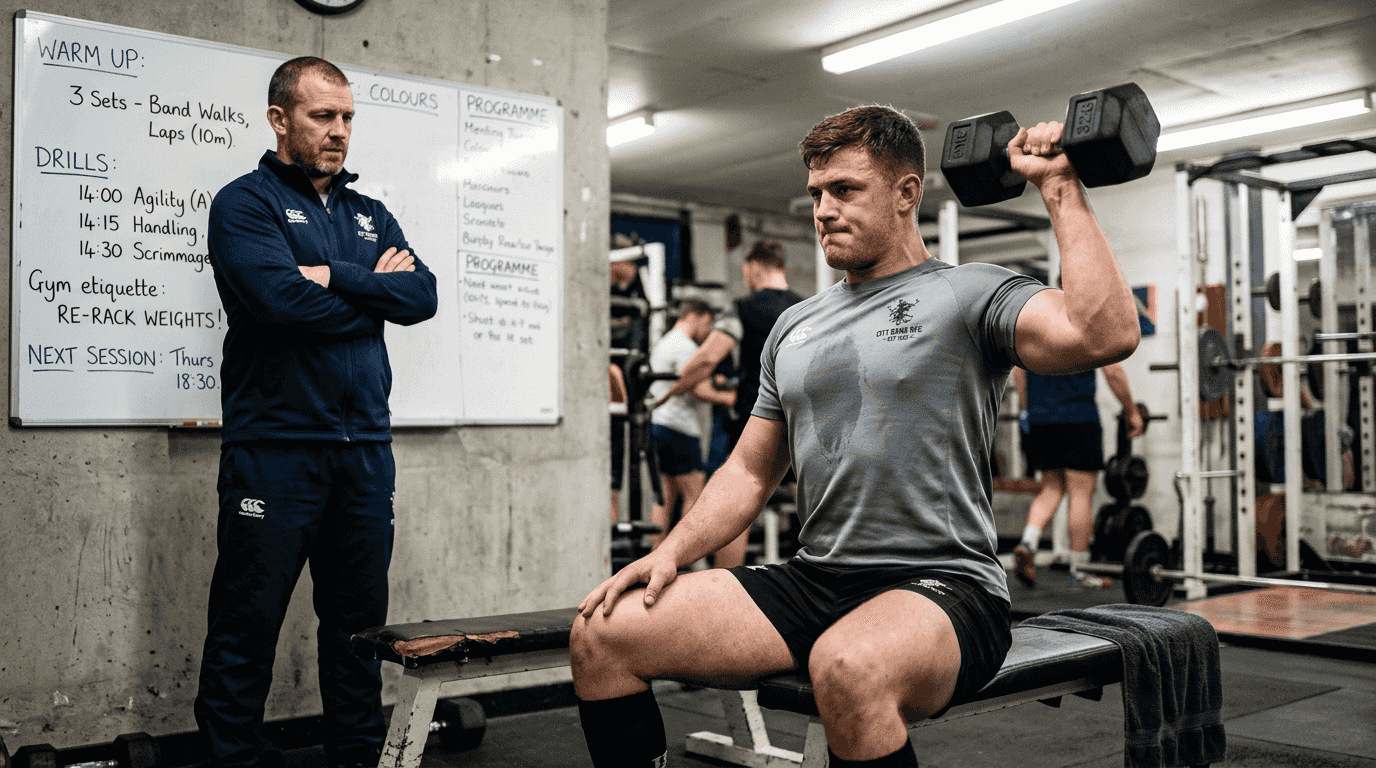
Testing in intermittent sports is crucial for optimising training and performance in adult athletes. Intermittent sports like football, basketball, and tennis demand repeated high-intensity efforts interspersed with recovery periods. Functional tests for these athletes measure acceleration capacity, repeated sprint ability, change of direction speed, and recovery efficiency between efforts.
Load management represents one of functional testing’s most valuable applications in athletics. By tracking performance markers over time, athletes and coaches identify when training stress exceeds recovery capacity. Declining scores in jump height, sprint times, or grip strength signal accumulated fatigue, prompting strategic deload periods before performance deteriorates or injury risk escalates.
Optimised training prescription emerges from understanding individual functional profiles. Functional health tests for athletes reveal whether an athlete needs more power development, improved aerobic capacity, enhanced mobility, or better neuromuscular coordination. This data-driven approach replaces guesswork with targeted programming that addresses actual limitations.
Monitoring progression validates whether training interventions produce expected adaptations. Regular functional testing creates objective benchmarks showing improvement rates across different physical qualities. An endurance athlete might track changes in lactate threshold and running economy, whilst a strength athlete monitors force production and rate of force development.
Technology integration amplifies functional testing’s value. GPS tracking systems, heart rate variability monitors, and motion capture platforms complement traditional assessments. This synergy between deep health testing endurance metrics and real-time performance data creates comprehensive athlete profiles.
Functional testing serves as the compass guiding athletic development, transforming subjective feelings about fitness into objective markers that drive intelligent training decisions and sustainable performance gains.
Integrating functional testing into training cycles:
- Conduct comprehensive baseline assessments during off-season or preparation phases to establish starting points across all relevant functional domains.
- Implement sport-specific tests during pre-season to evaluate readiness for competition demands and identify remaining weaknesses requiring attention.
- Perform abbreviated monitoring tests weekly or bi-weekly throughout competitive seasons to track fatigue accumulation and recovery status.
- Schedule detailed reassessments every 8 to 12 weeks during training blocks to measure adaptation rates and validate programming effectiveness.
- Adjust training variables based on testing outcomes, increasing load when performance trends upward and modifying protocols when stagnation or decline appears.
- Compare results across seasons and years to evaluate long-term development trajectories and inform career planning decisions.
The role and limits of biomarker testing in functional assessments
Biomarker testing and functional performance assessments serve different but complementary purposes. Blood tests, hormone panels, and metabolic markers reveal your body’s internal environment and physiological state. Functional tests measure what your body can actually do with that physiology. Both matter, but neither replaces the other.
Biomarker testing does not directly improve sports performance; adaptation mainly depends on training and recovery. Knowing your testosterone level, cortisol ratio, or inflammatory markers provides valuable context, but these numbers don’t create fitness. Structured training stress, adequate recovery, proper nutrition, and consistent sleep drive adaptation. Biomarkers help identify whether internal conditions support or hinder this process.
Some biomarkers directly impact performance capacity whilst others offer limited actionable insight for athletes. Iron status, haemoglobin levels, and thyroid function significantly influence energy production and oxygen delivery. Correcting deficiencies in these areas removes genuine barriers to performance. However, obsessing over every marker that falls slightly outside reference ranges often distracts from training fundamentals.
| Biomarker category | Performance impact | Action priority |
|---|---|---|
| Iron, ferritin, haemoglobin | High – directly affects oxygen transport and energy | Address deficiencies immediately through diet or supplementation |
| Thyroid hormones (TSH, T3, T4) | High – regulates metabolism and recovery capacity | Investigate abnormal values with medical professional |
| Vitamin D, B12, folate | Moderate – supports immune function and recovery | Correct deficiencies, maintain adequate levels |
| Testosterone, oestrogen, cortisol | Moderate – influences adaptation and stress response | Monitor trends, address only if significantly abnormal |
| Advanced lipid panels, inflammatory markers | Low for immediate performance – relevant for long-term health | Track for longevity, not short-term gains |
Pro Tip: Prioritise correcting genuine deficiencies identified through blood panel analysis for performance whilst maintaining focus on training quality, sleep consistency, and nutritional adequacy as your primary performance drivers.
Biomarker testing excels at removing barriers rather than creating performance. An athlete with low iron stores will struggle regardless of training quality. Identifying and correcting this deficiency restores normal capacity, allowing training adaptations to occur. However, optimising already-normal markers rarely produces meaningful performance improvements.
The athlete wellness checklist integrates biomarker monitoring within a broader framework including sleep quality, nutrition adequacy, training load, psychological stress, and recovery practices. This holistic approach prevents over-reliance on any single metric whilst ensuring all factors supporting performance receive appropriate attention.
Context matters enormously when interpreting biomarkers. Elevated creatine kinase might indicate muscle damage requiring rest, or simply reflect recent hard training in a well-adapted athlete. Slightly low testosterone could signal overtraining syndrome, or fall within normal variation for an individual. Working with professionals experienced in athletic populations prevents misinterpretation and unnecessary interventions.
Putting functional testing into practice for health and longevity
Transforming functional testing insights into tangible health improvements requires systematic application. Data alone changes nothing; strategic interventions based on that data drive results. The process involves initial assessment, interpretation, personalised programming, consistent execution, and periodic reassessment to validate progress.
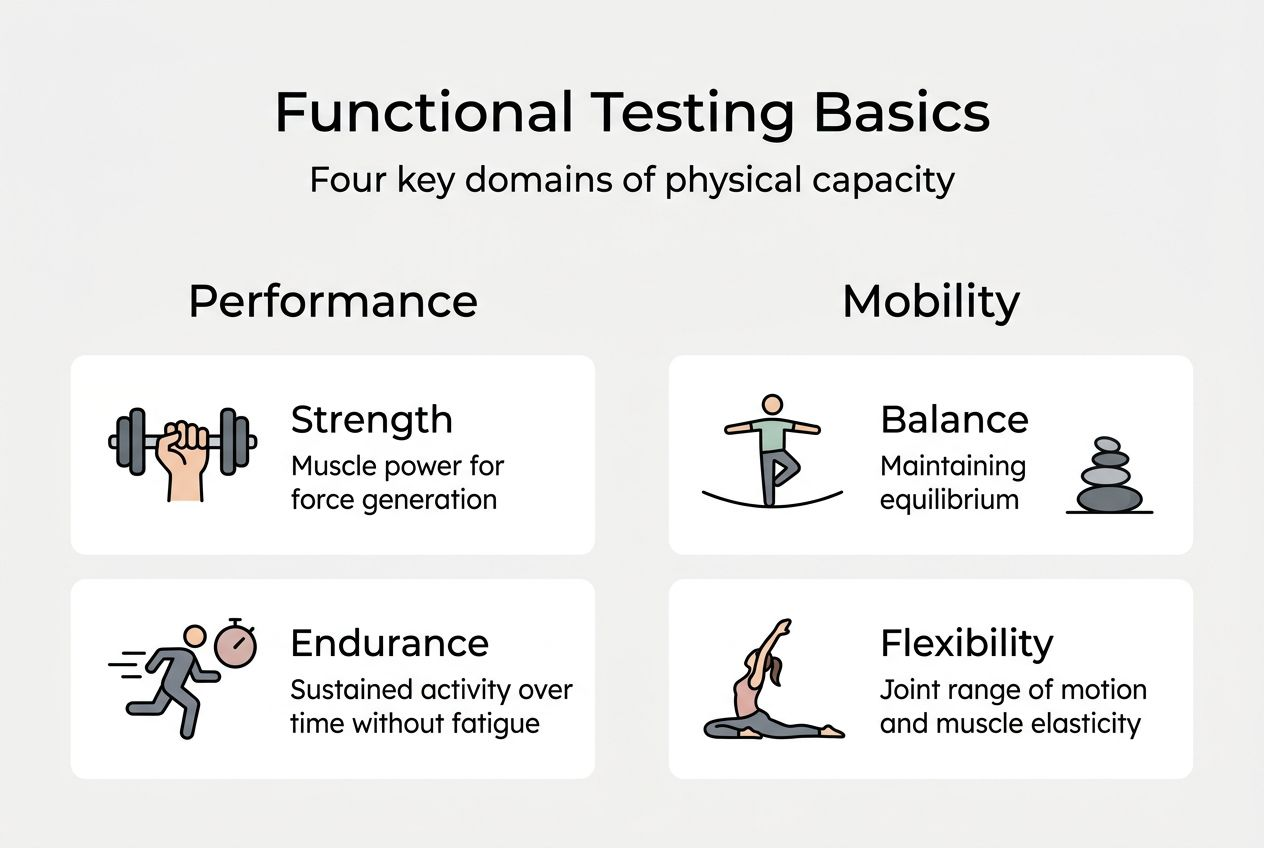
Each incremental rise in physical capacity corresponds with a 60% odds reduction of accelerated ageing. This remarkable finding emphasises that improving functional performance delivers profound longevity benefits. Every gain in strength, endurance, balance, or flexibility contributes to a younger biological age and reduced disease risk.
Combining functional testing with consistent lifestyle practices creates synergistic effects. Testing identifies priorities, training builds capacity, nutrition fuels adaptation, sleep enables recovery, and stress management preserves resilience. These elements work together, with testing serving as the navigation system guiding your journey towards enhanced vitality.
Implementing functional testing for health and longevity:
- Schedule comprehensive baseline testing covering strength, endurance, balance, and flexibility domains to establish your current functional age and identify specific weaknesses limiting overall capacity.
- Consult with qualified professionals to interpret results within the context of your goals, medical history, and lifestyle constraints, ensuring recommendations align with your capabilities and priorities.
- Develop personalised intervention protocols targeting identified weaknesses whilst maintaining strengths, balancing challenge with sustainability to ensure long-term adherence and progressive adaptation.
- Execute training, nutrition, and recovery plans consistently for 12 to 16 weeks, tracking subjective markers like energy levels, sleep quality, and perceived exertion alongside objective performance indicators.
- Conduct follow-up functional assessments to measure changes across all domains, comparing results against baseline to validate intervention effectiveness and identify areas requiring adjustment.
- Refine your approach based on testing outcomes, intensifying successful strategies whilst modifying or replacing interventions that failed to produce expected improvements.
- Establish ongoing testing rhythms aligned with your training cycles, using quarterly or biannual assessments to monitor long-term trends and ensure continued progress towards health and longevity goals.
Improved physical capacity manifests in daily life beyond structured exercise. Better balance reduces fall risk, enhanced strength enables independent living into advanced age, superior endurance supports active leisure pursuits, and maintained flexibility preserves mobility and comfort. These functional gains translate directly into quality of life improvements.
Longevity outcomes extend beyond lifespan to encompass healthspan, the years lived with vitality and independence. Functional testing guides interventions that compress morbidity, delaying disease onset and disability whilst extending active years. The goal isn’t merely living longer but maintaining robust physical capacity throughout your lifespan.
Working with health professionals experienced in functional assessment and exercise prescription optimises results. These specialists understand how to progress training safely, interpret testing data accurately, and adjust plans when progress stalls. Their expertise prevents common pitfalls like overtraining, inappropriate exercise selection, or misinterpreting normal variation as concerning trends.
The metabolic health improvement workflow demonstrates how functional testing integrates within broader health optimisation strategies. Metabolic capacity underpins physical performance, and improving metabolic efficiency through targeted interventions enhances both immediate function and long-term health outcomes.
Enhance your journey with expert functional testing services
AI Healthician specialises in transforming biological data into actionable performance and longevity strategies. Our comprehensive testing services provide the precise insights you need to optimise training, enhance recovery, and extend healthspan through evidence-informed interventions tailored to your unique physiology.
Explore our DNA health testing services to uncover genetic factors influencing your athletic potential, injury risk, and optimal training responses. Combine genetic insights with our resting active metabolic test to understand your metabolic efficiency at rest and during activity, enabling precise nutrition and training adjustments. For athletes seeking detailed metabolic profiling during exercise, our active metabolic test reveals substrate utilisation patterns and identifies optimal training zones for performance gains. Start your functional testing journey today and unlock the personalised data driving measurable improvements in health, performance, and longevity.
Frequently asked questions
What does functional testing include and how does it differ from standard health checks?
Functional testing evaluates physical performance across strength, endurance, balance, and flexibility domains through practical assessments like grip strength, VO2 max, stability tests, and range of motion measurements. Standard health checks typically measure static markers such as blood pressure, cholesterol, and glucose levels without assessing how your body performs integrated physical tasks. Functional tests reveal biological age and capacity for real-world activities, whilst traditional checks identify disease risk factors.
How does functional testing benefit athletes specifically?
Athletes gain sport-specific insights through tailored assessments measuring capacities directly relevant to competitive performance, such as repeated sprint ability, power output, or lactate threshold. Testing enables precise load management by identifying fatigue accumulation before injury risk escalates, optimises training prescription by revealing exact weaknesses requiring attention, and tracks adaptation rates to validate programming effectiveness. This data-driven approach replaces guesswork with objective benchmarks guiding intelligent training decisions.
What role does biomarker testing play within functional assessments?
Biomarker testing identifies physiological conditions that may limit performance or recovery, such as iron deficiency, thyroid dysfunction, or hormonal imbalances, but does not directly create fitness adaptations. Blood tests complement functional assessments by revealing whether internal environments support training adaptations or present barriers requiring correction. Prioritise addressing genuine deficiencies whilst recognising that structured training, adequate recovery, proper nutrition, and consistent sleep drive actual performance improvements.
How often should functional testing be performed for best results?
Establish comprehensive baselines initially, then retest every 12 to 16 weeks during training blocks to measure adaptation rates and validate intervention effectiveness. Athletes may implement abbreviated monitoring tests weekly or bi-weekly during competitive seasons to track fatigue and recovery status. Annual or biannual detailed assessments suffice for general health and longevity purposes, though more frequent testing benefits individuals implementing significant training or lifestyle changes requiring close monitoring.
What are the next steps for someone interested in starting functional testing?
Begin by identifying qualified professionals or services offering comprehensive functional assessments aligned with your goals, whether athletic performance enhancement or health optimisation. Schedule baseline testing covering all relevant domains to establish starting points and identify priorities. Work with experienced practitioners to interpret results and develop personalised intervention protocols addressing weaknesses whilst maintaining strengths. Commit to consistent execution of recommended training, nutrition, and recovery strategies, then schedule follow-up assessments to measure progress and refine your approach.


